THE NOVELOR · Issue 01 · Autumn 2026
Places
The Grand Tour: Three Cities, Three Hotels, One European Journey
Three cities, three hotels, one European journey. Six nights in October, from a Munich lift to a Roman terrace.
- Words
- Michel Ruge
- Pictures
- Marcel Kuhls
- Plates
- 96 photographs
- Reading
- 14 min
The old Grand Tour was a young man's education: north to south, over the Alps, towards Rome. It took months and usually a tutor. Ours took six nights and a camera, and it began, less romantically, on an airport terrace with a leather holdall and a camel coat.
The plan was simple. Three cities, one hotel in each, all three run by the same family company. We wanted to see whether a single idea of hospitality could feel different in Munich, in Milan and in Rome, and what changes when you stop reviewing a hotel and start living in it for a while.
What follows is not a ranking. It is a record of hours: when the light came in, who brought the coffee, where the evening went.
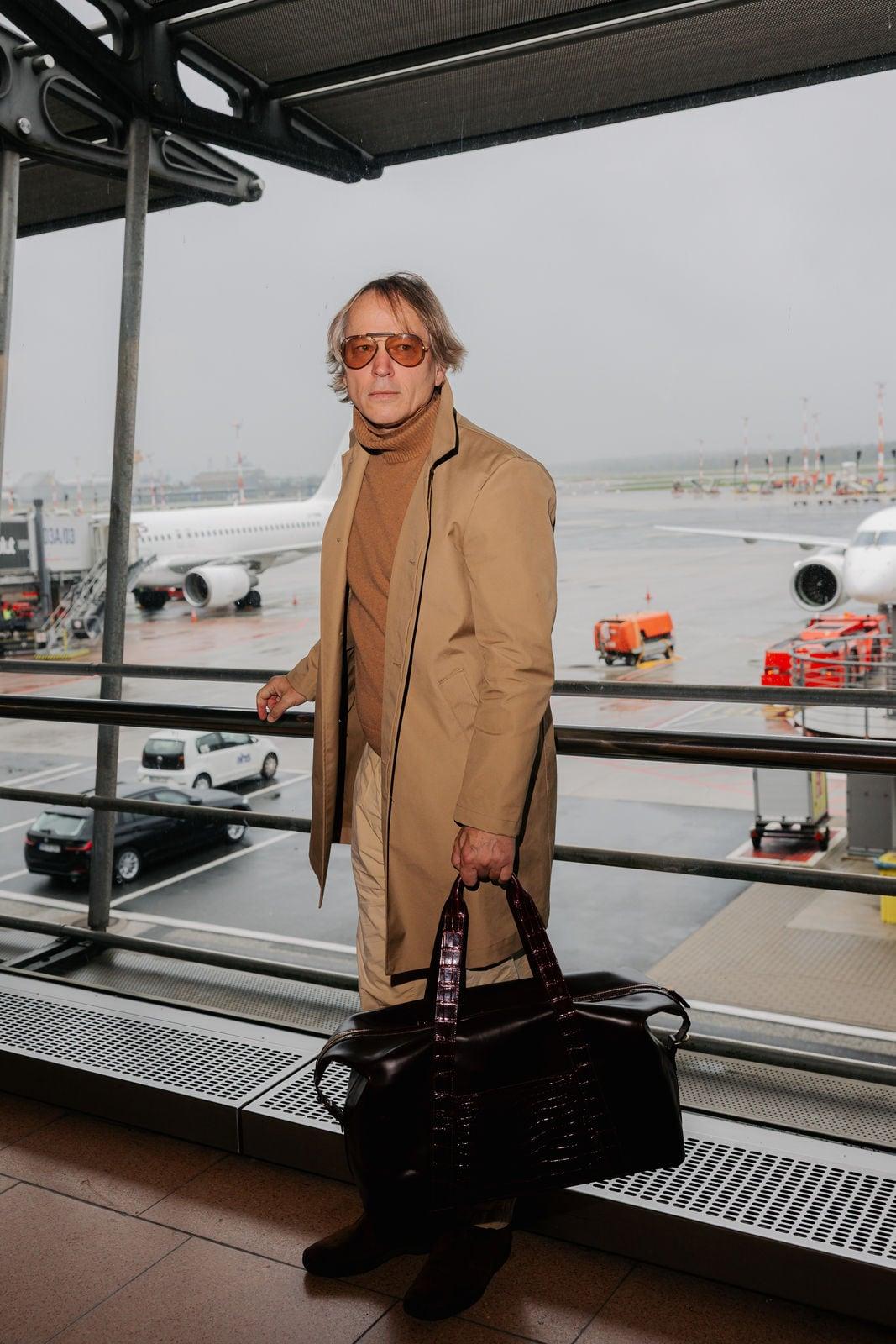
Pl. 1 · Before departure.
Chapter I
24 – 26 October
Chapter 01: Munich
The Charles Hotel
Munich, Bavaria
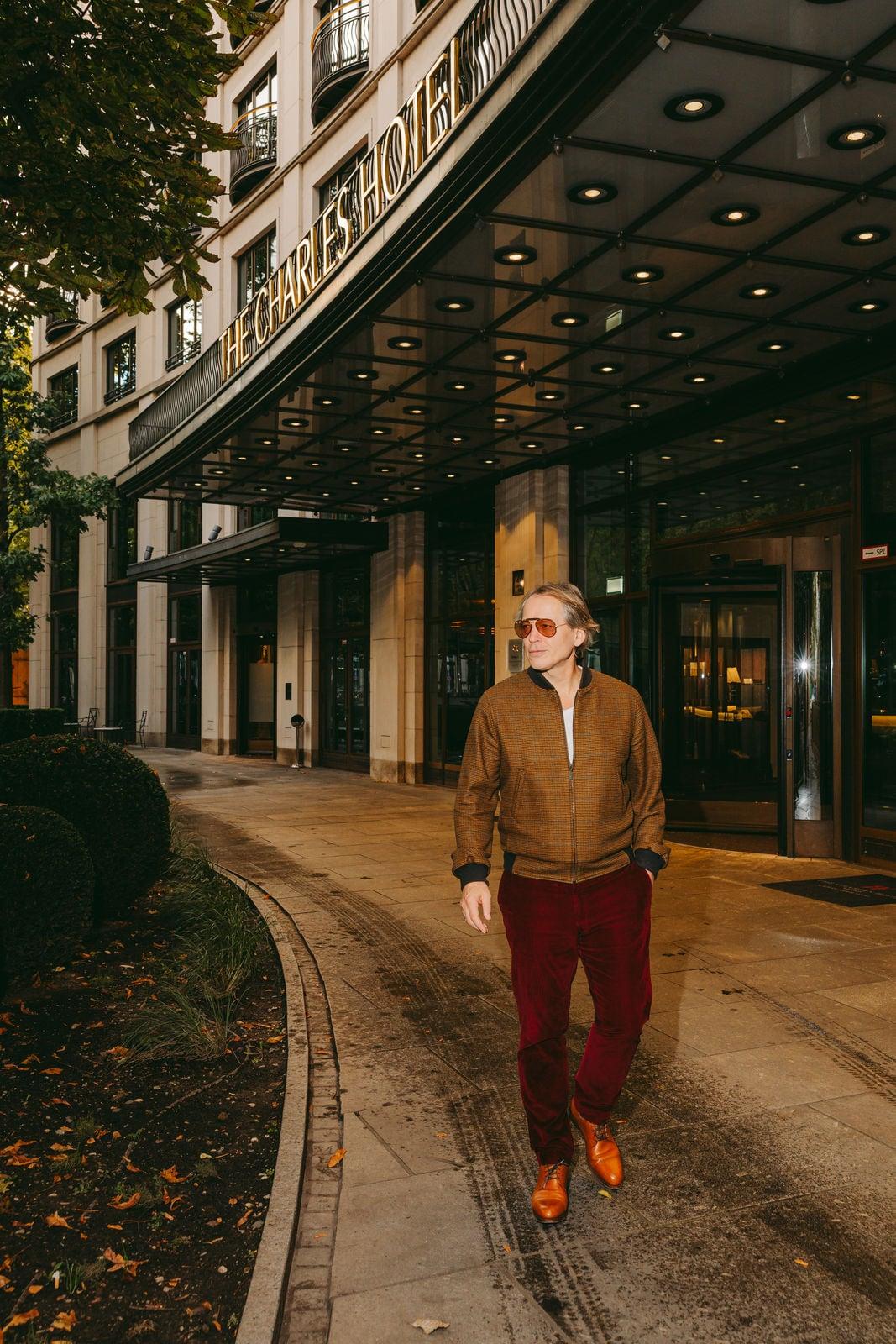
The Charles stands on the edge of the Old Botanical Garden, a short walk from the main station and somehow far from it. We arrived in the late afternoon. The room had green curtains, a balcony and a view of rooftops that turned copper as the sun went down.
Hotels reveal themselves in small mechanical things. Here it was the lift: panelled in warm wood, lit like the inside of a violin case. Michel rode it more often than strictly necessary.
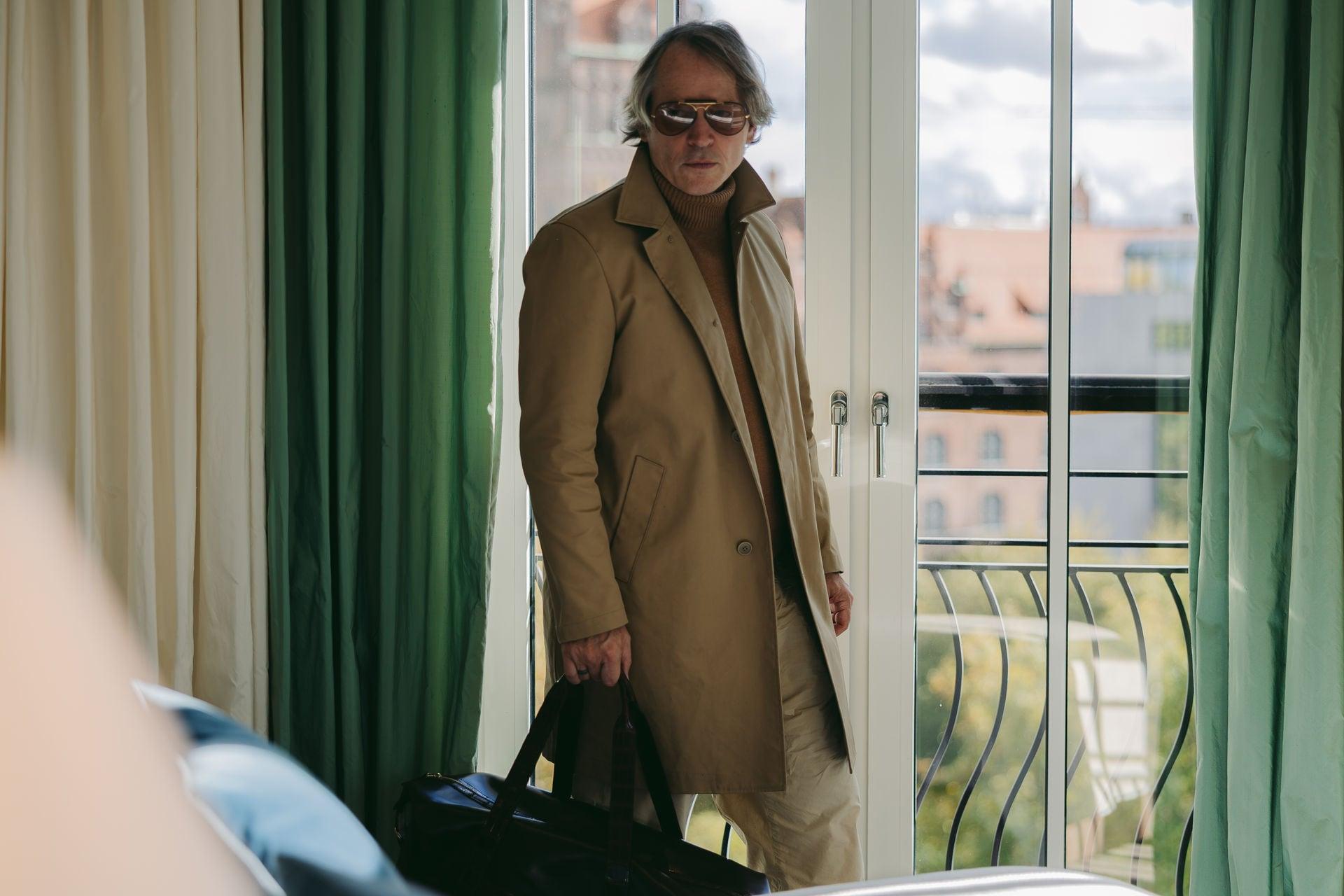
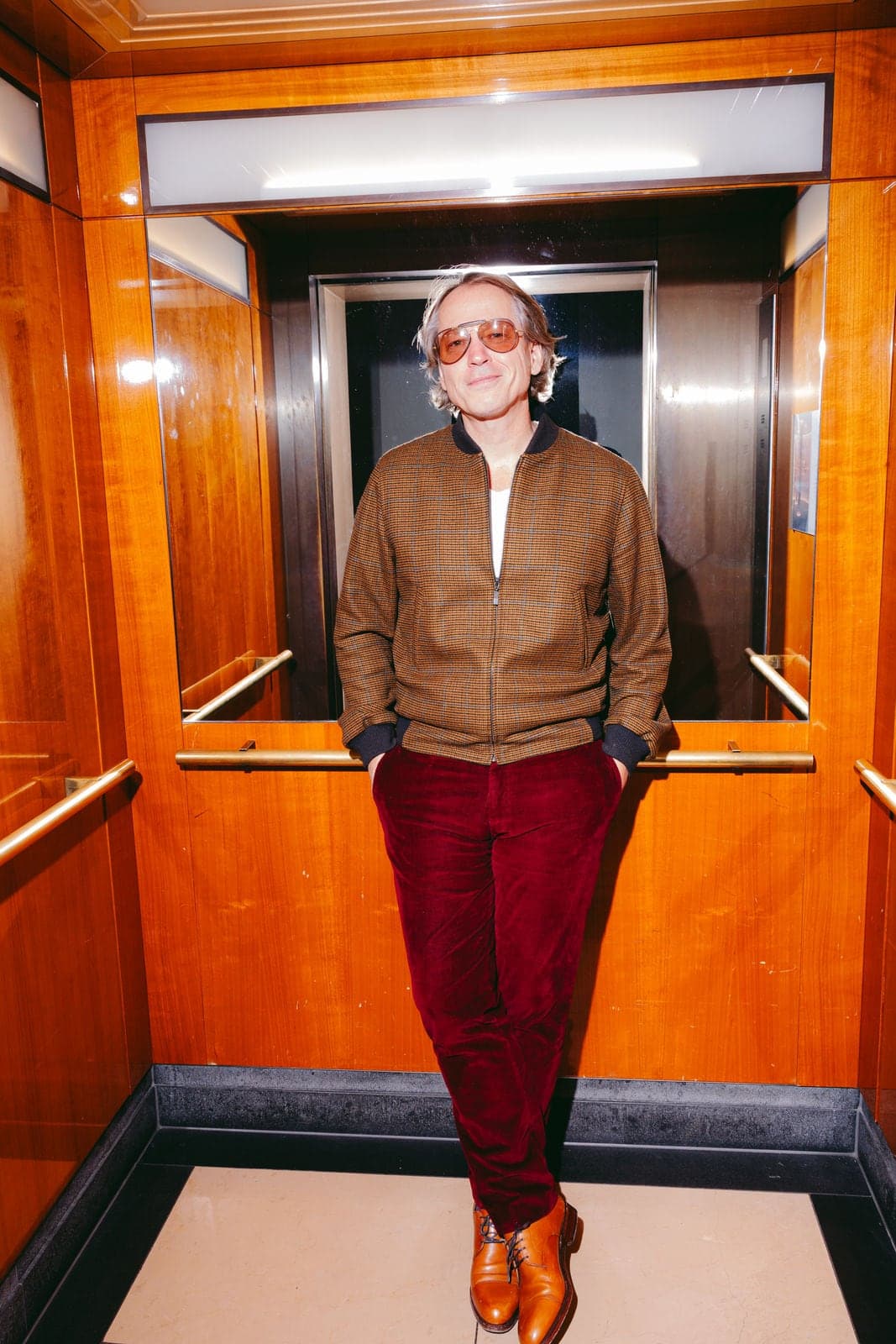
Pl. 2–3 · Arrival, and the lift.
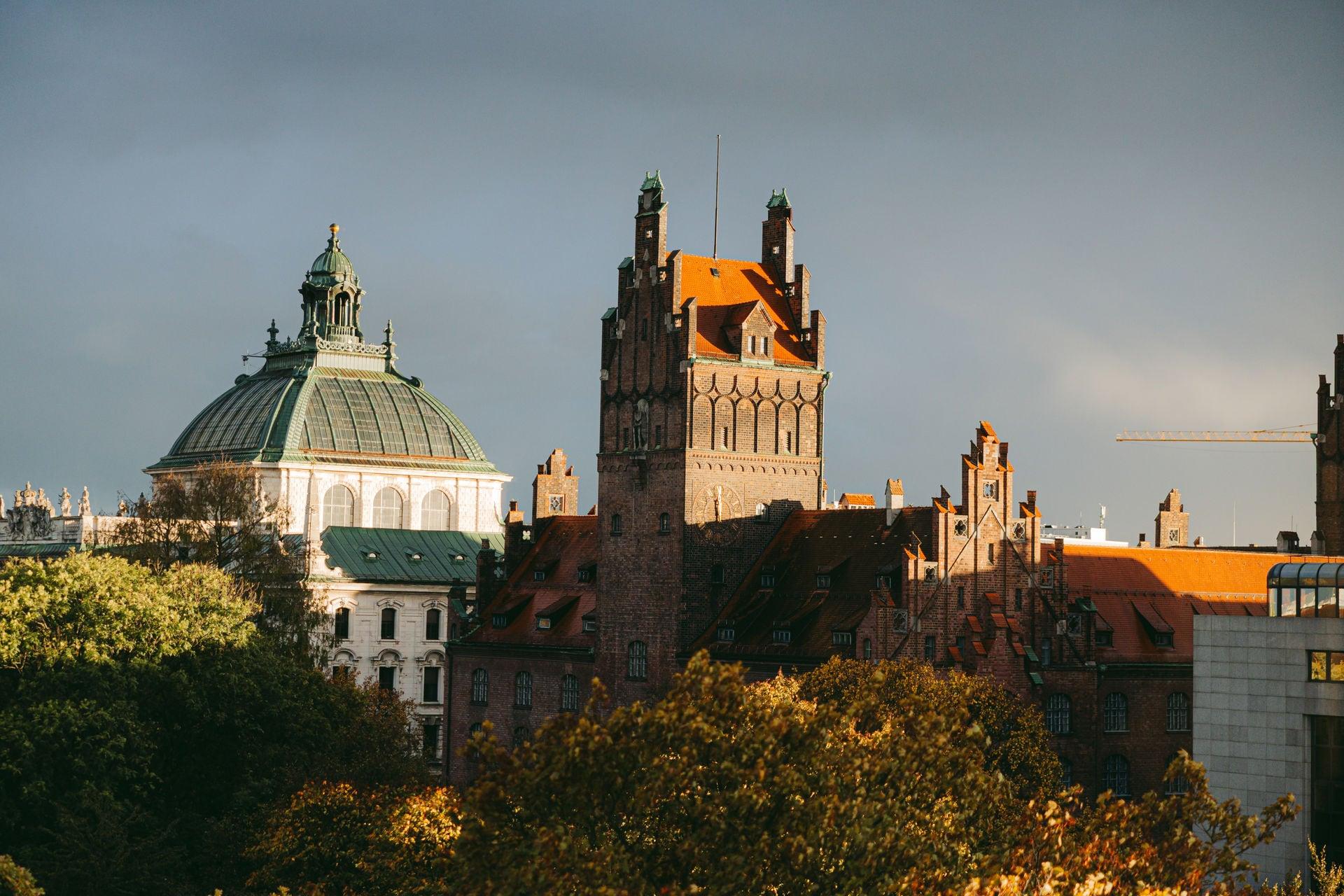
Pl. 4 · The view from the room as the light went.
Pl. 5
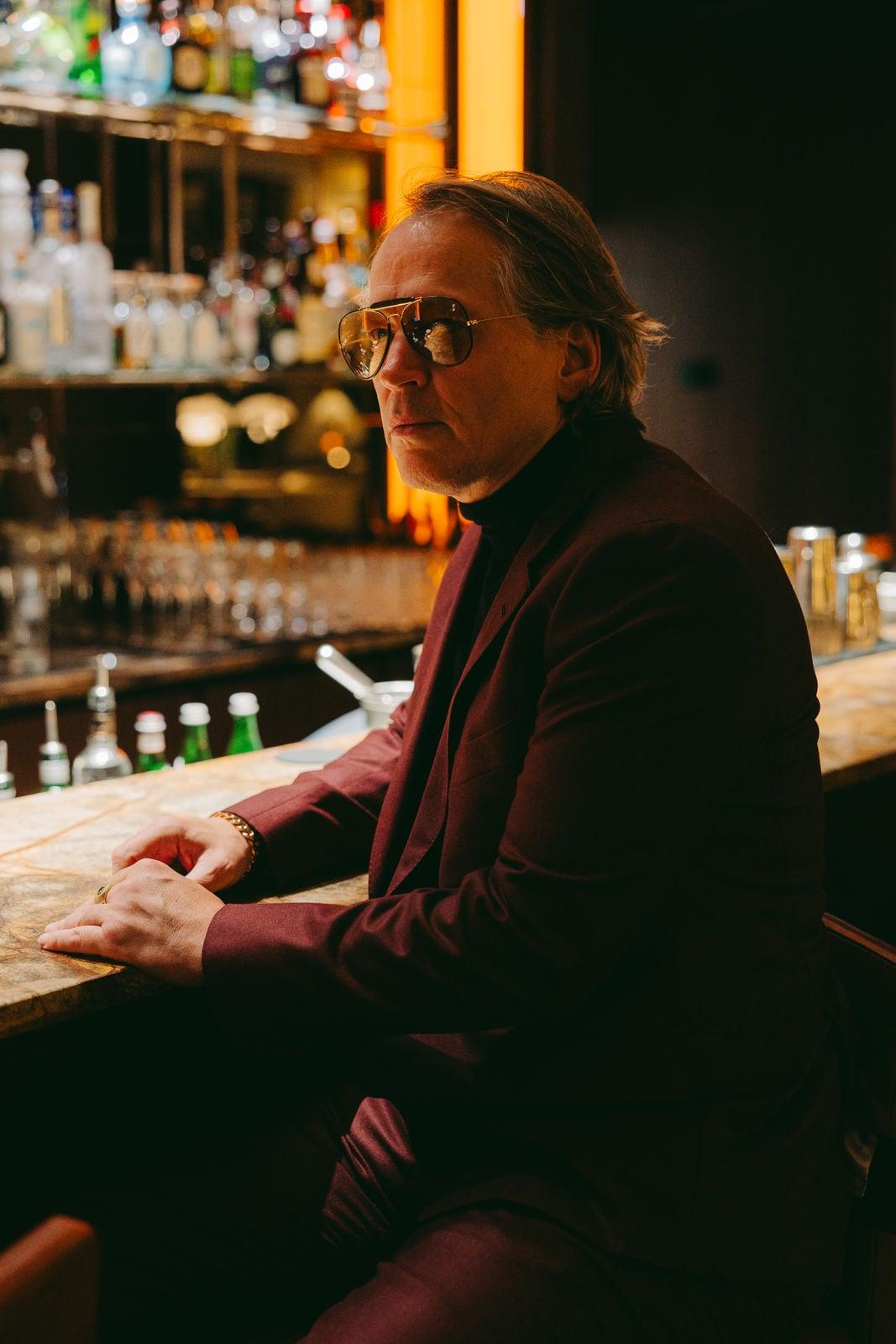
Evenings in Munich start at the bar of Florio, the hotel's Italian restaurant. The shelves are lit from behind so the bottles glow amber, and the bartenders work with the calm of people who have done this thousands of times and still care how it looks.
A cocktail was strained into a coupe. Another arrived with a twist of citrus. Nobody hurried us towards dinner.
A drink, made
5 plates
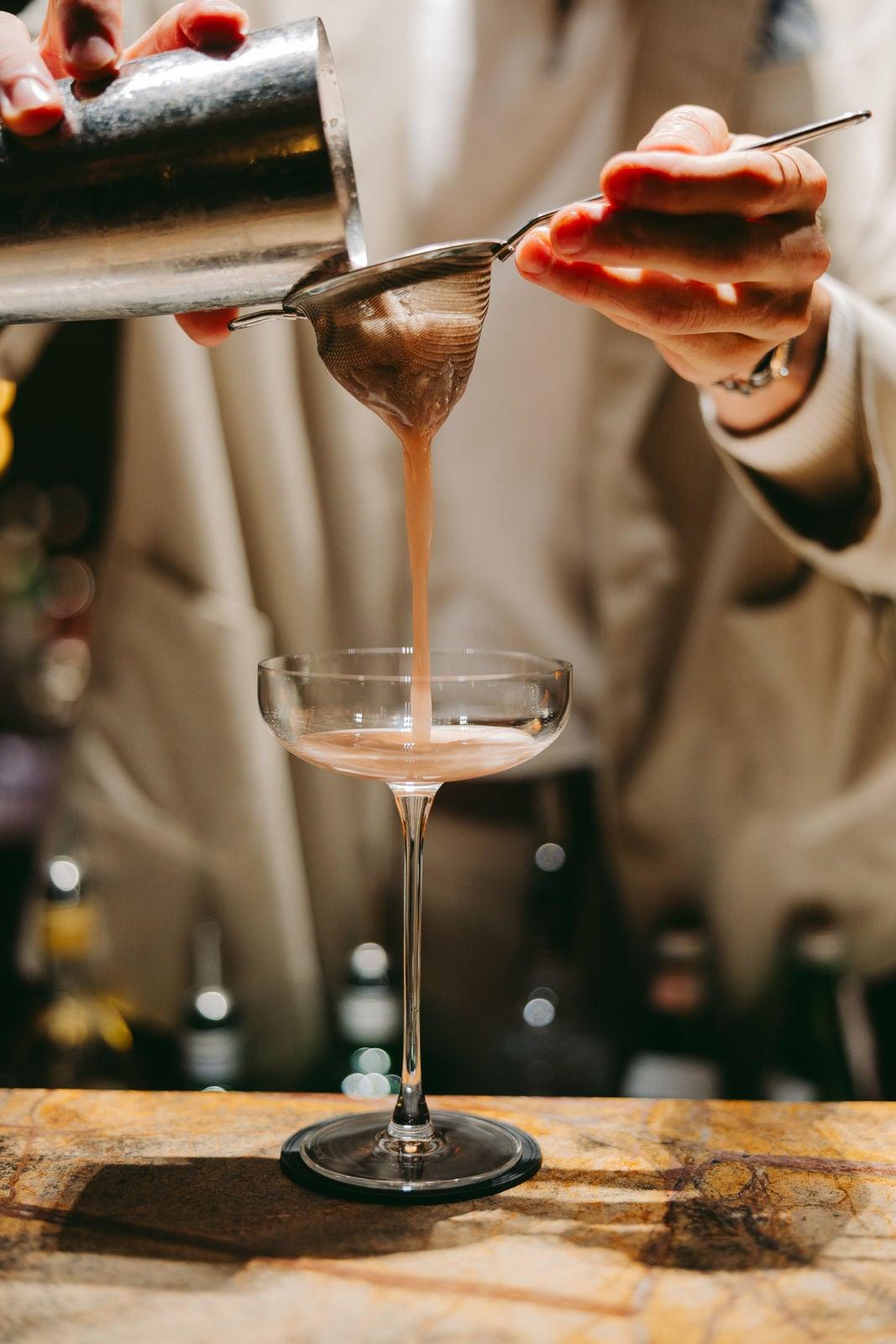
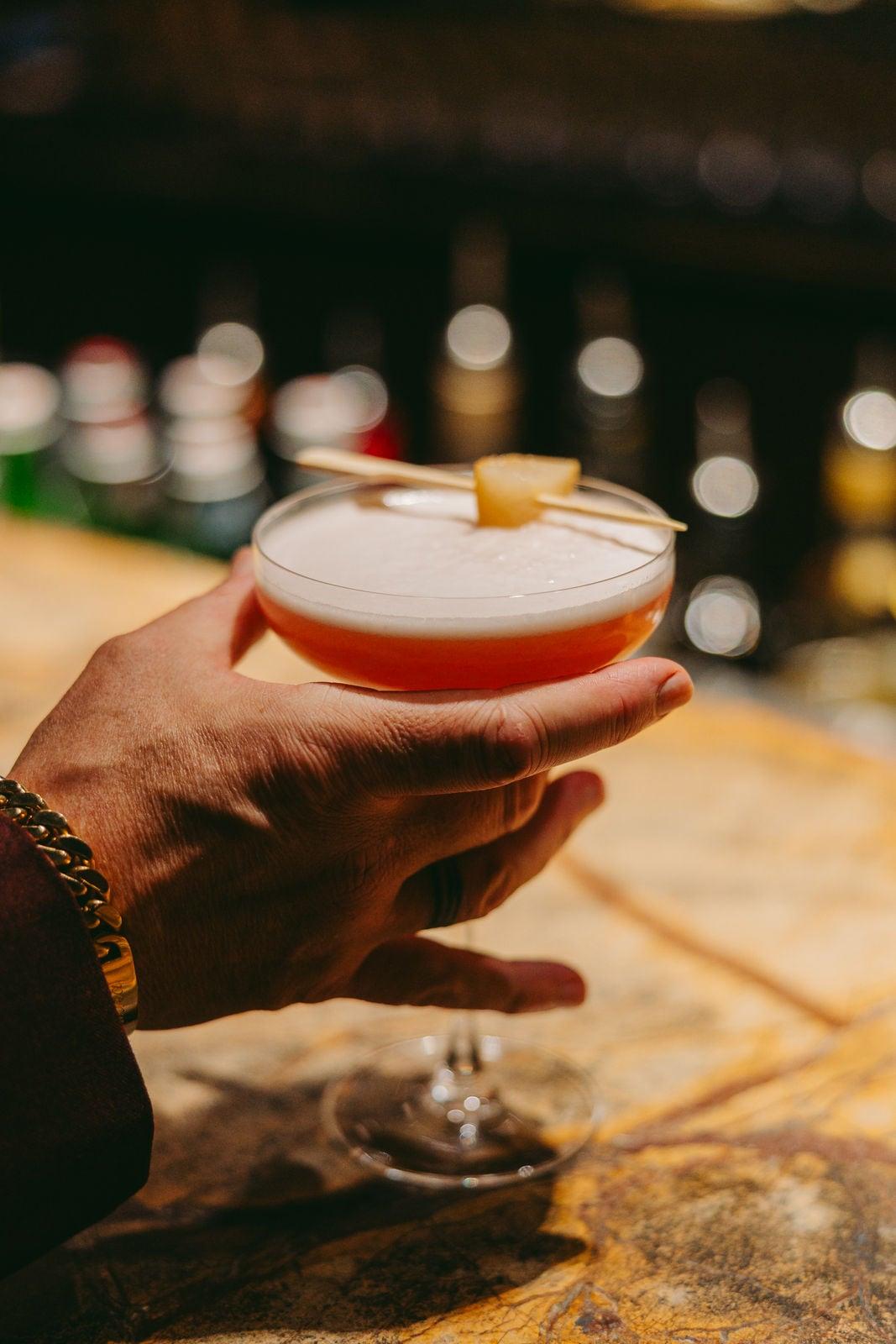
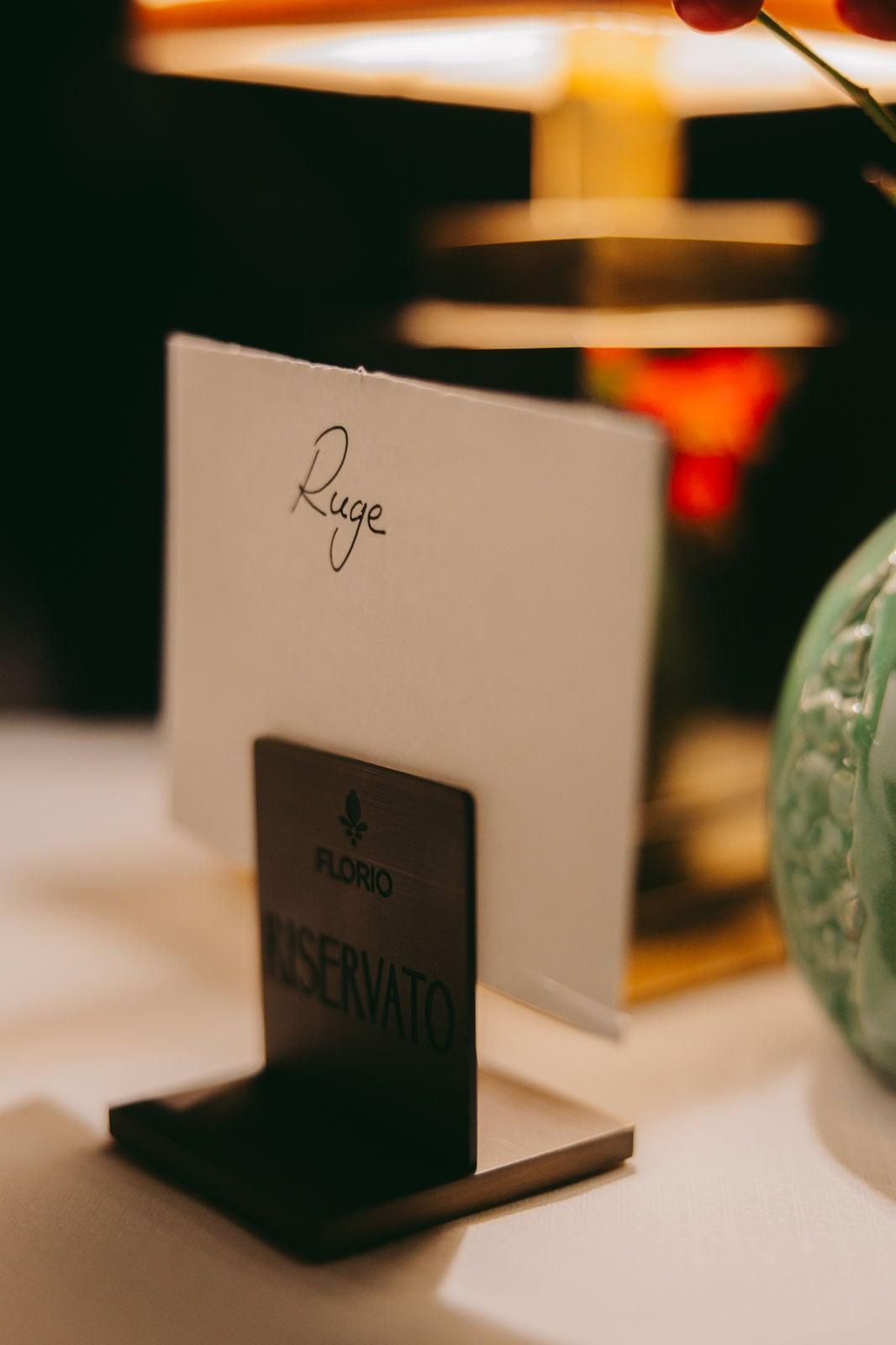
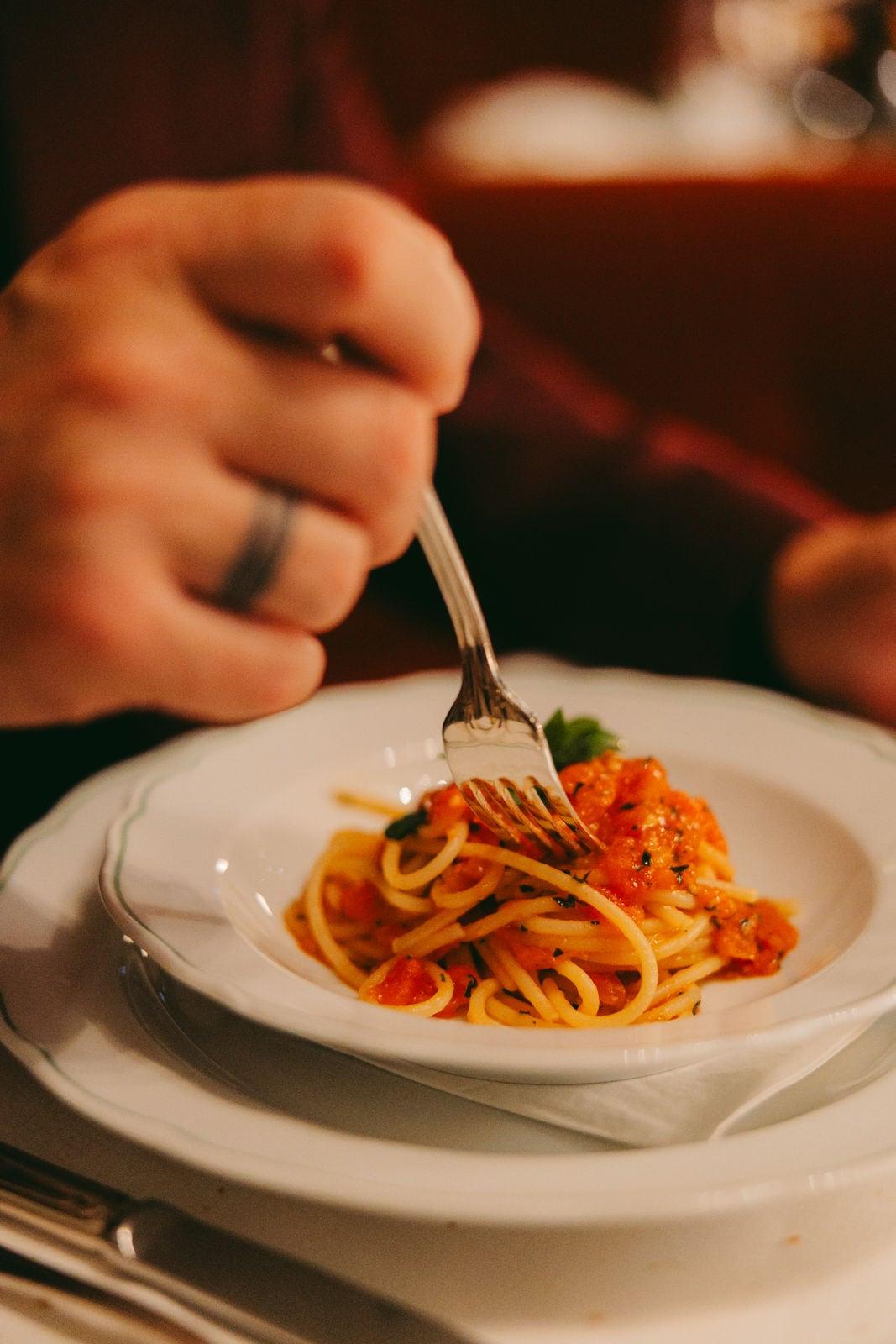
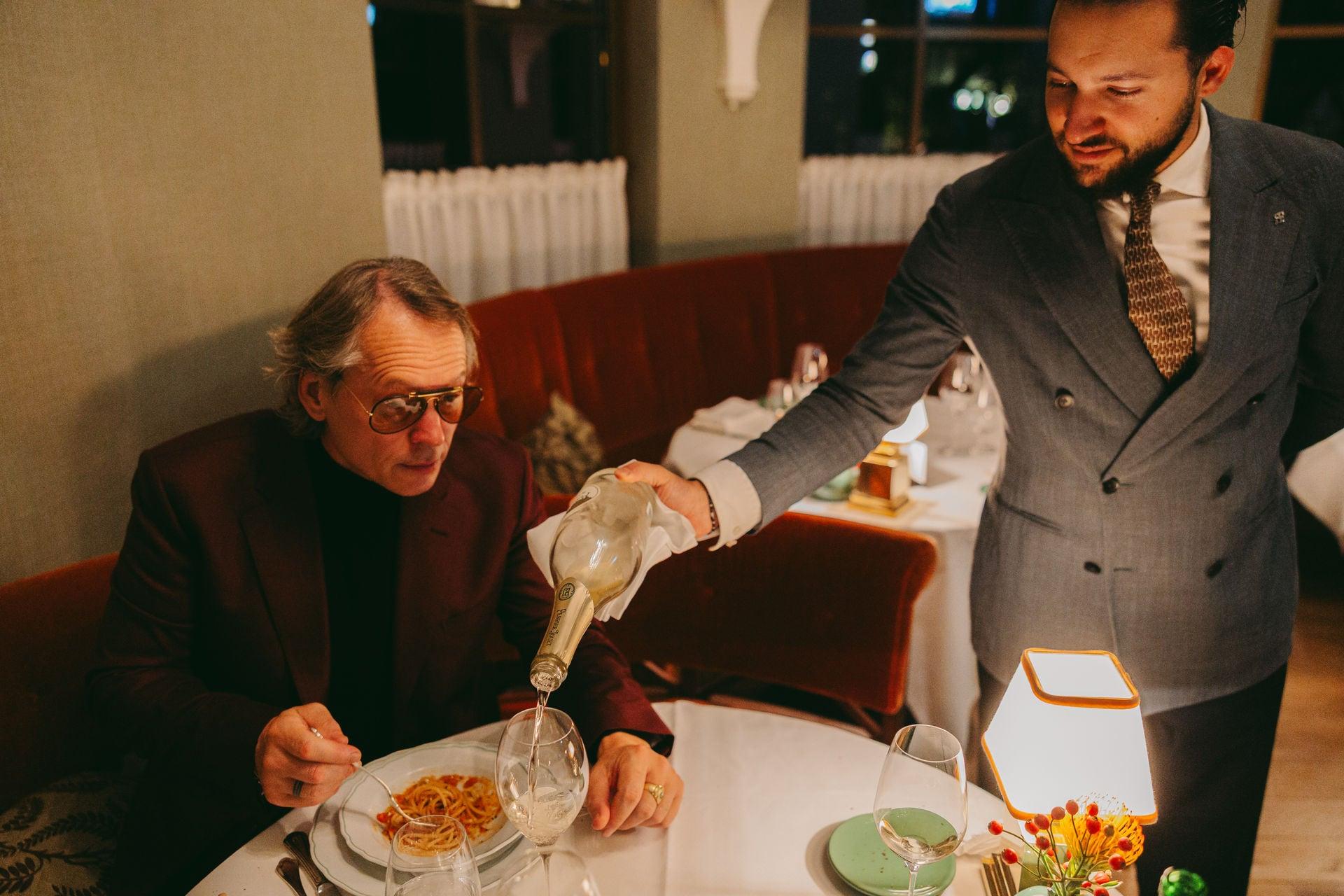
Pl. 6–10 · The bar, then the table. One evening in five frames.
At dinner a card on the table carried a name written by hand. It is a small thing and it works every time.
The next morning we left the hotel for an hour of culture. It was raining. The Lenbachhaus is a few minutes away, and its Kandinsky rooms, painted a deep blue, made a strong case for staying indoors.
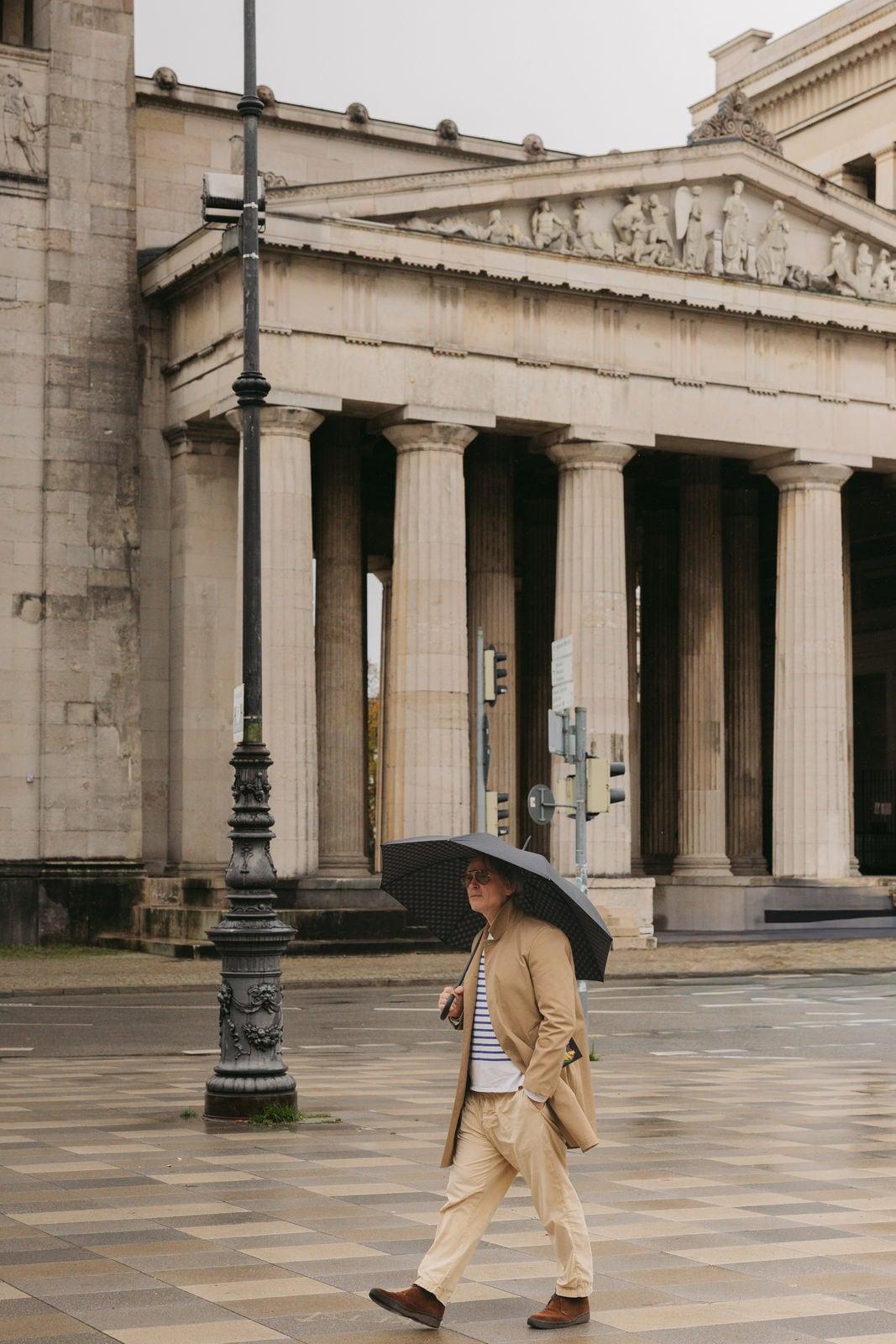
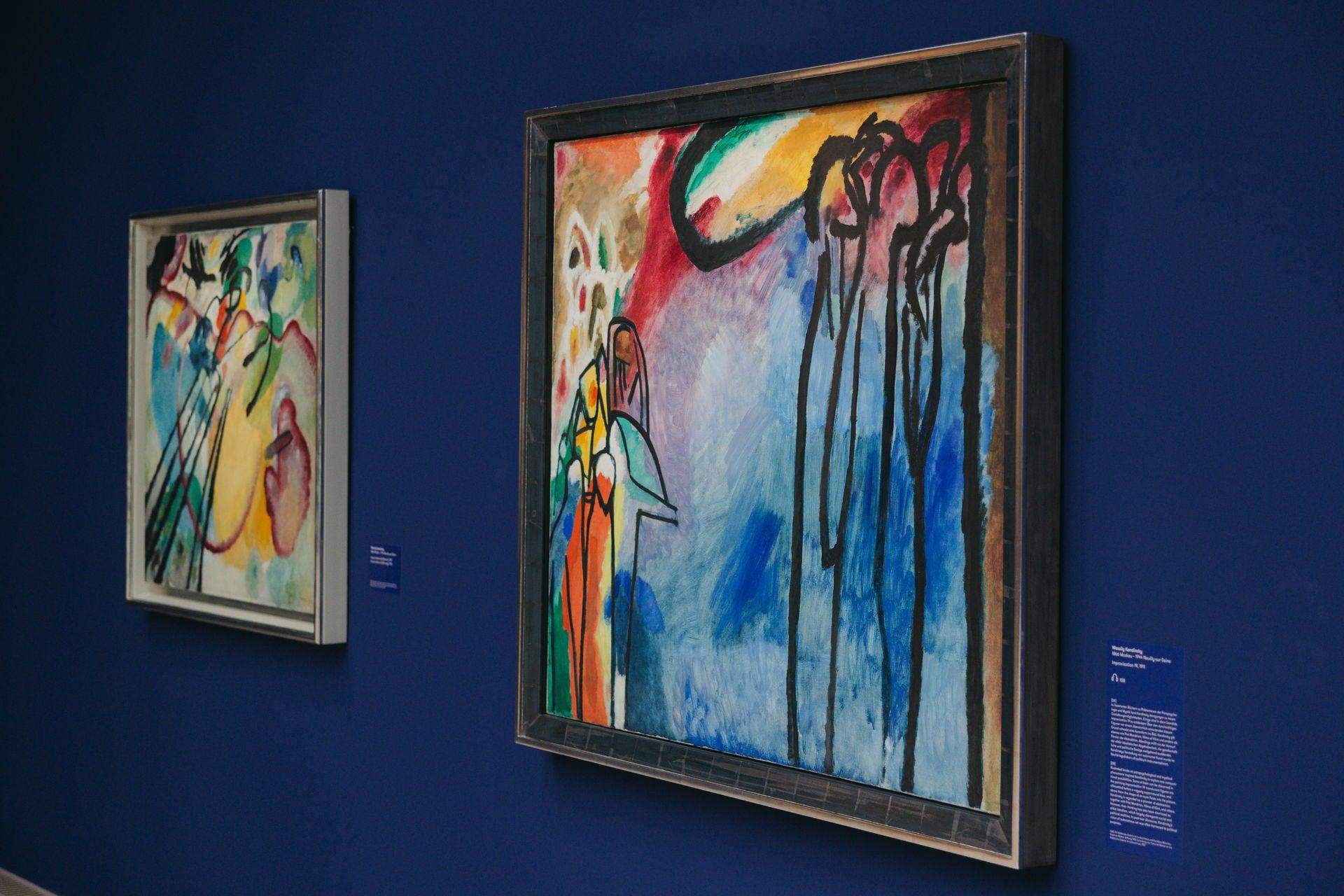
Pl. 11–12 · Königsplatz in the rain; Kandinsky on blue walls at the Lenbachhaus.
“Hotels reveal themselves in small mechanical things.”
Back at the hotel, the afternoon went the way afternoons in good hotels should. The bed was turned down. A bath was run. A bottle appeared in an ice bucket without anyone being asked.
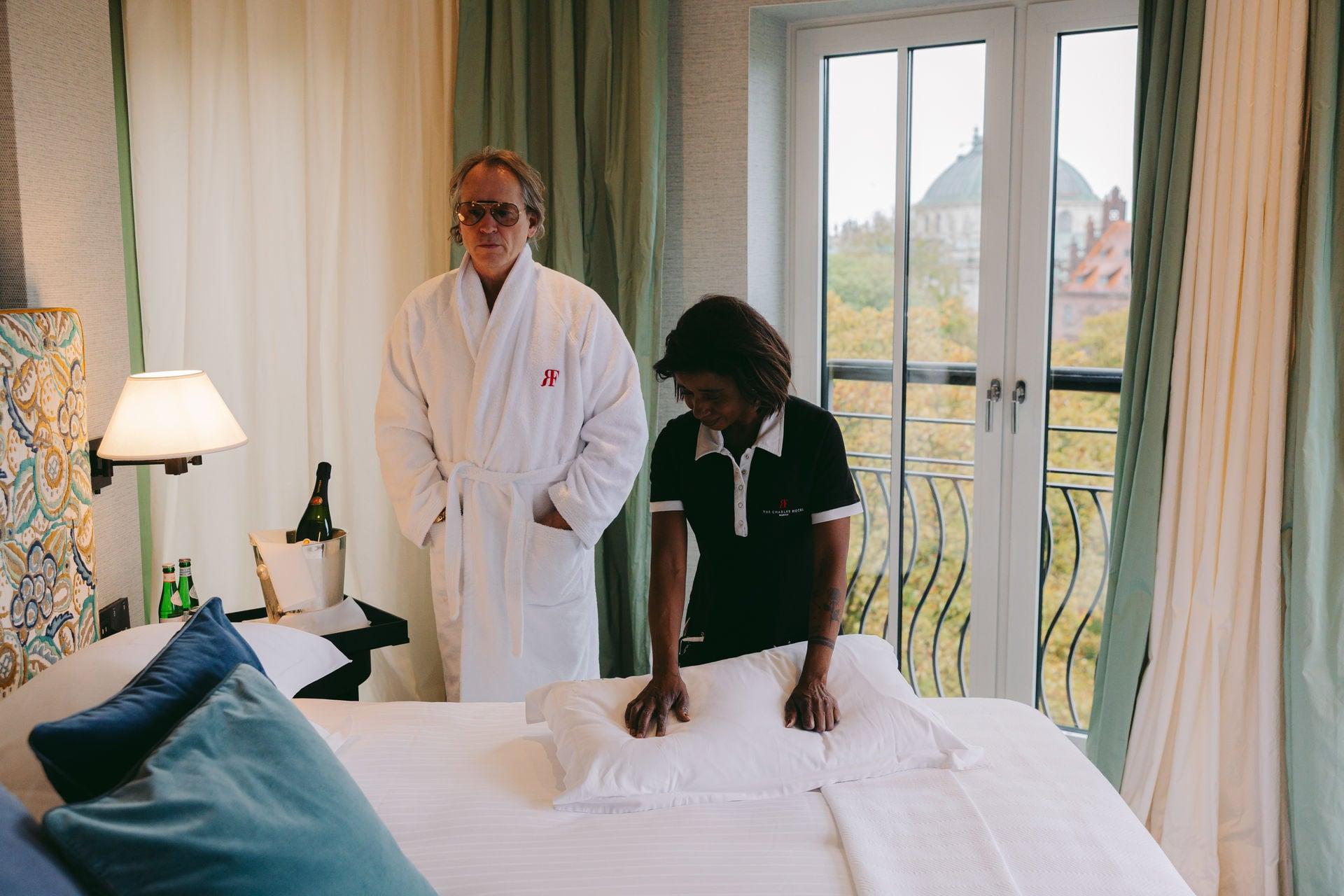
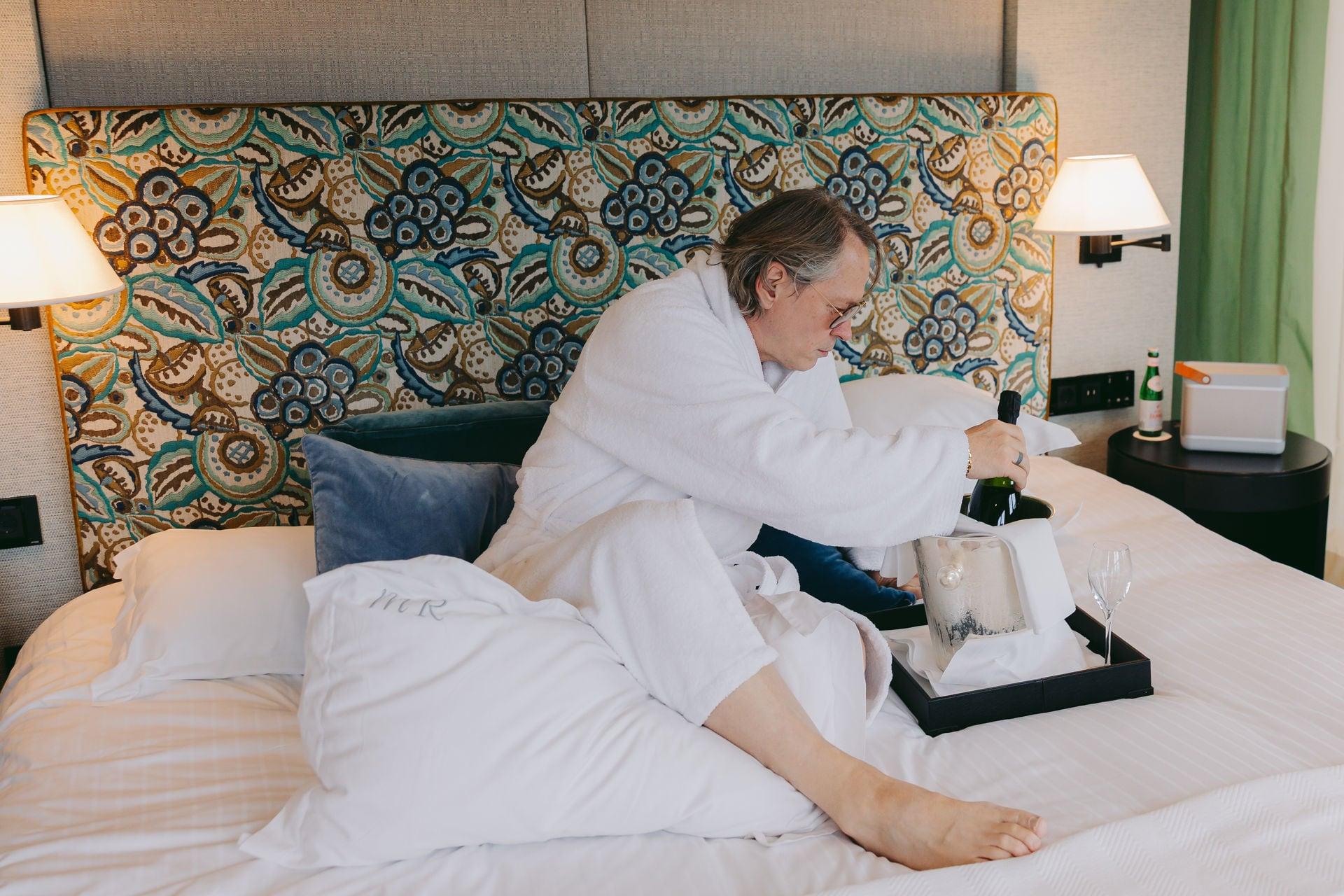
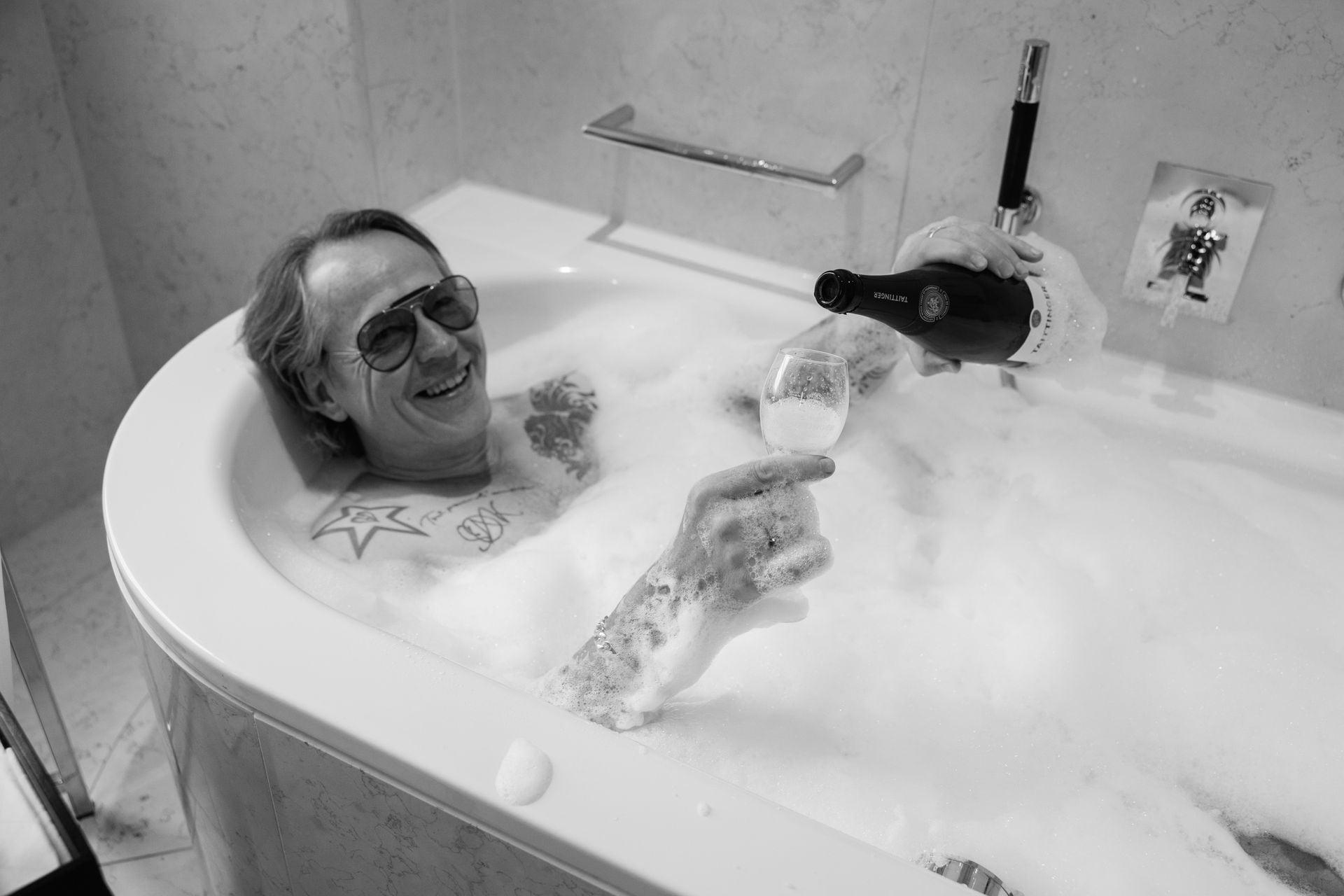
Pl. 13–15 · Sunday afternoon: turndown, a tray, a bath.
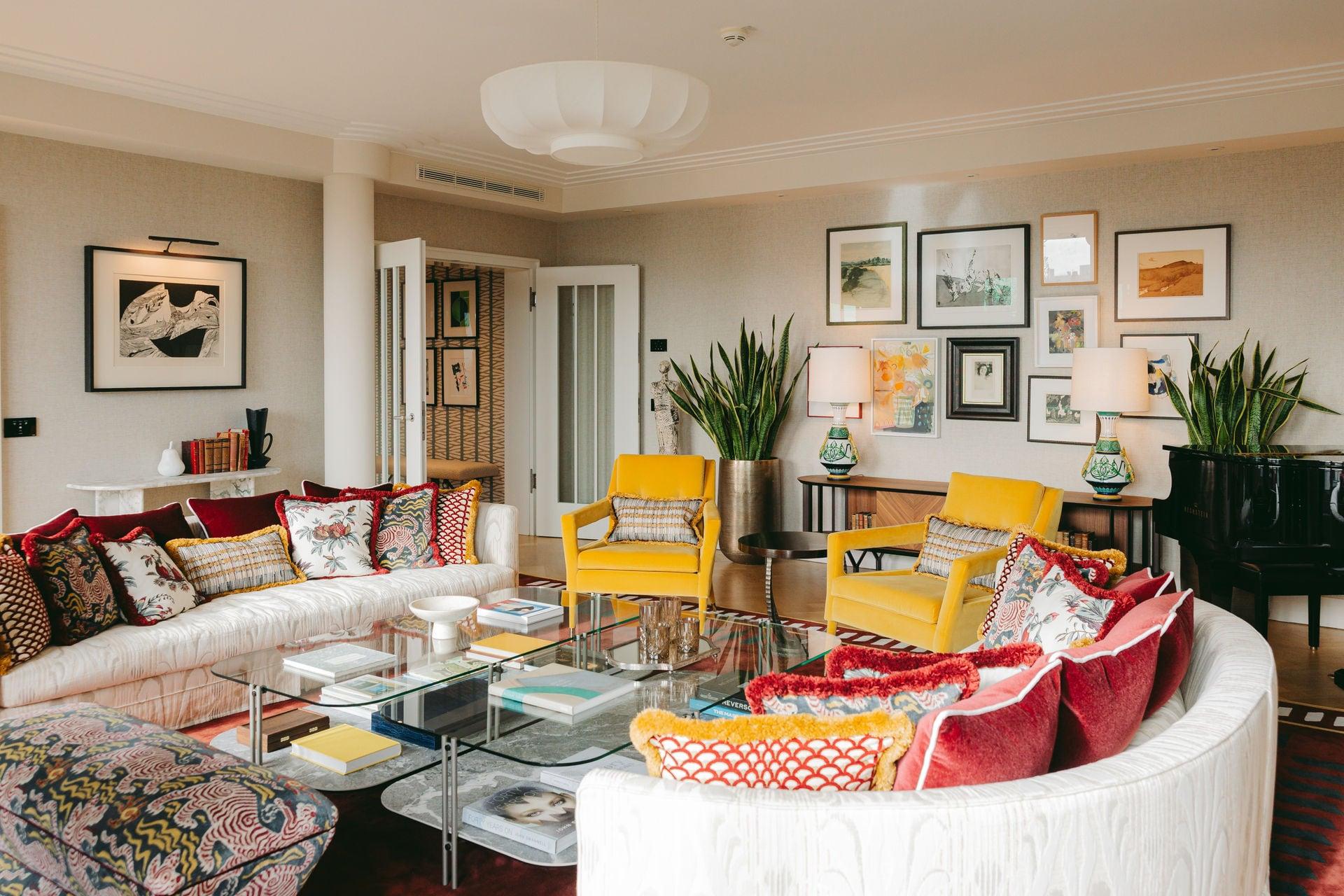
On the last morning we were shown a suite on one of the upper floors: a salon with patterned sofas and yellow armchairs, a dining room with red velvet chairs, a study lined with botanical prints. From the balcony you look straight at the green dome of the Palace of Justice.
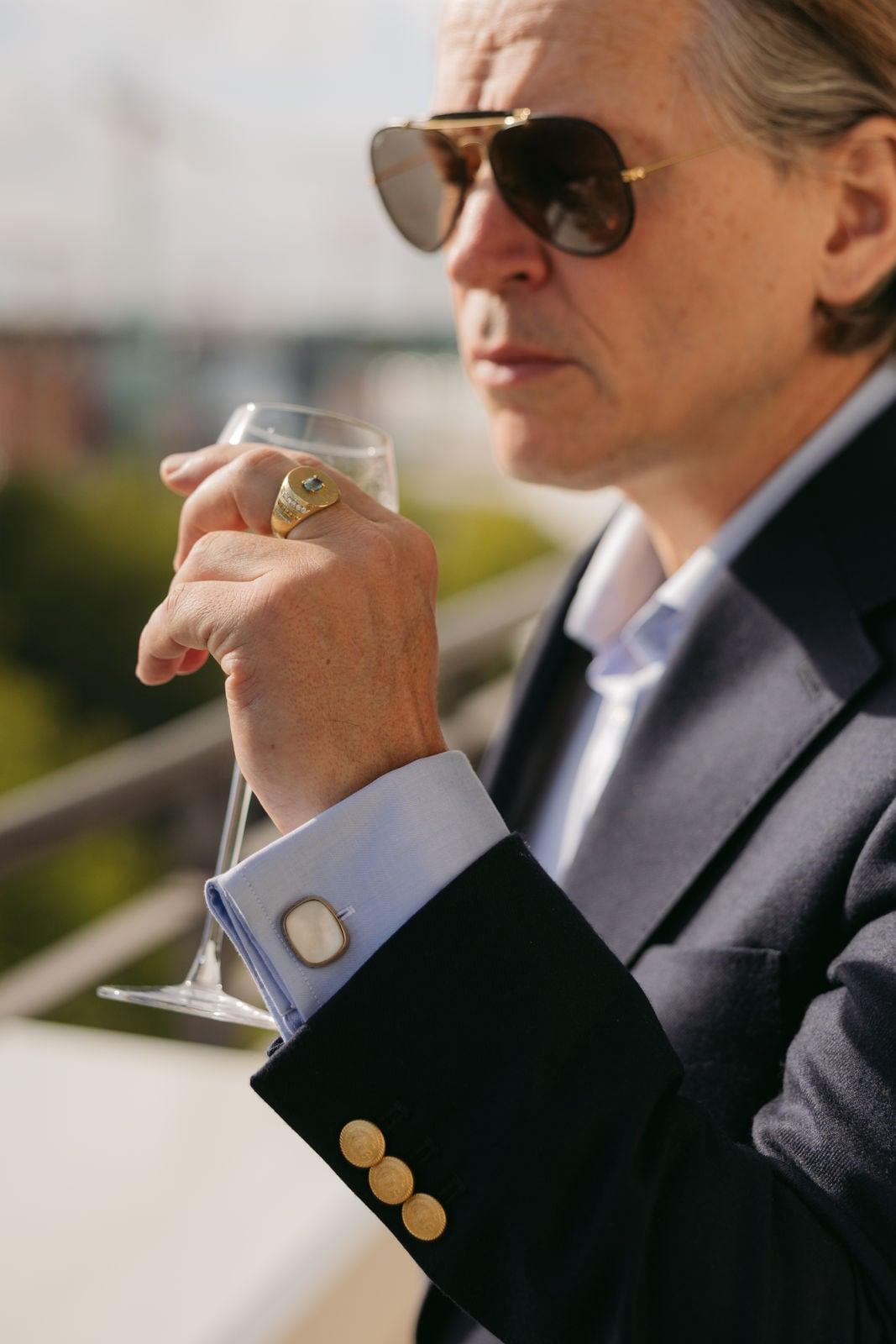
Michel stood out there for a long time with a glass of white wine. It was before noon. Nobody judged him.
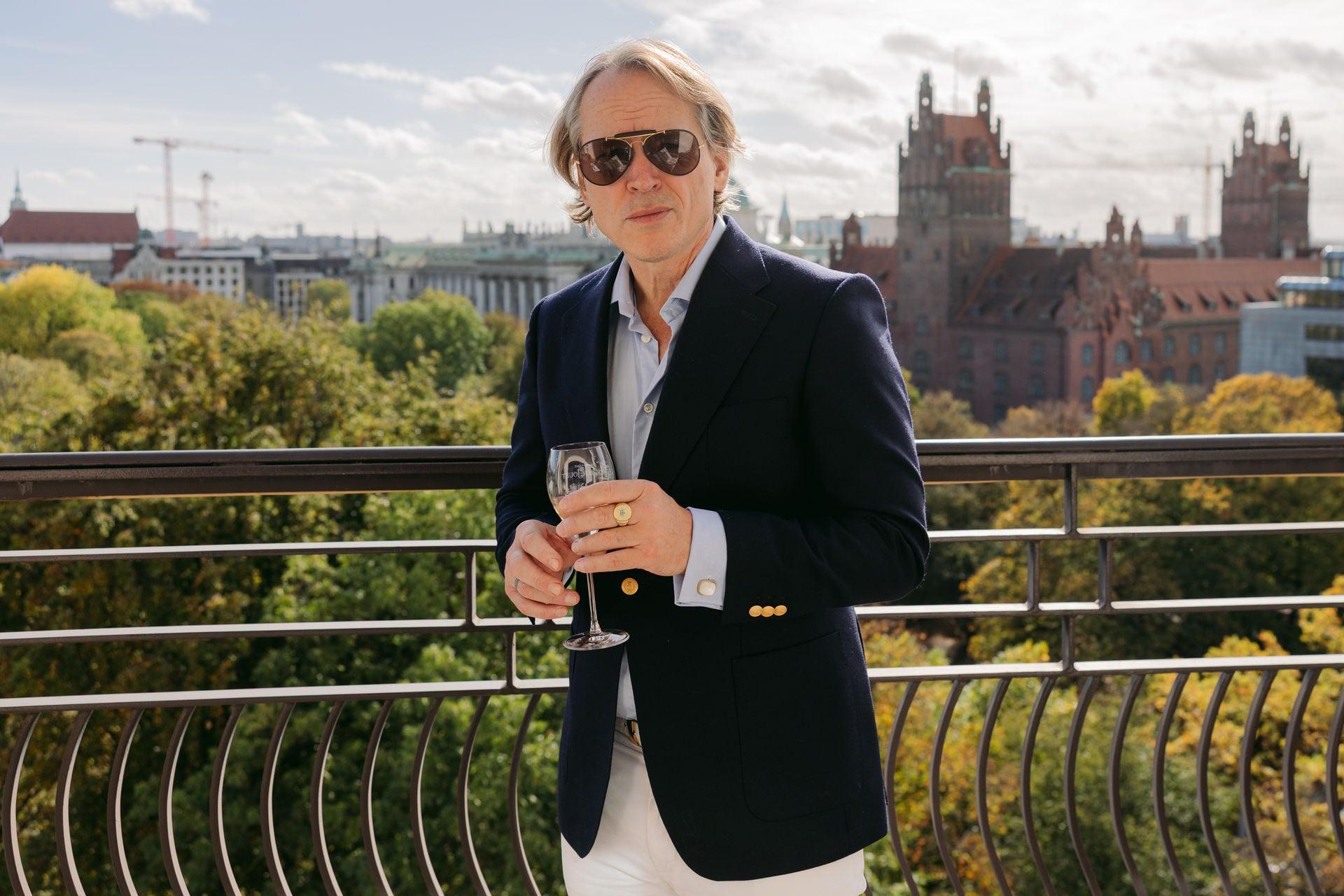
Pl. 16 · The balcony, late morning.
Pl. 17–18
Chapter II
26 – 28 October
Chapter 02: Milan
The Carlton
Milan, Lombardy
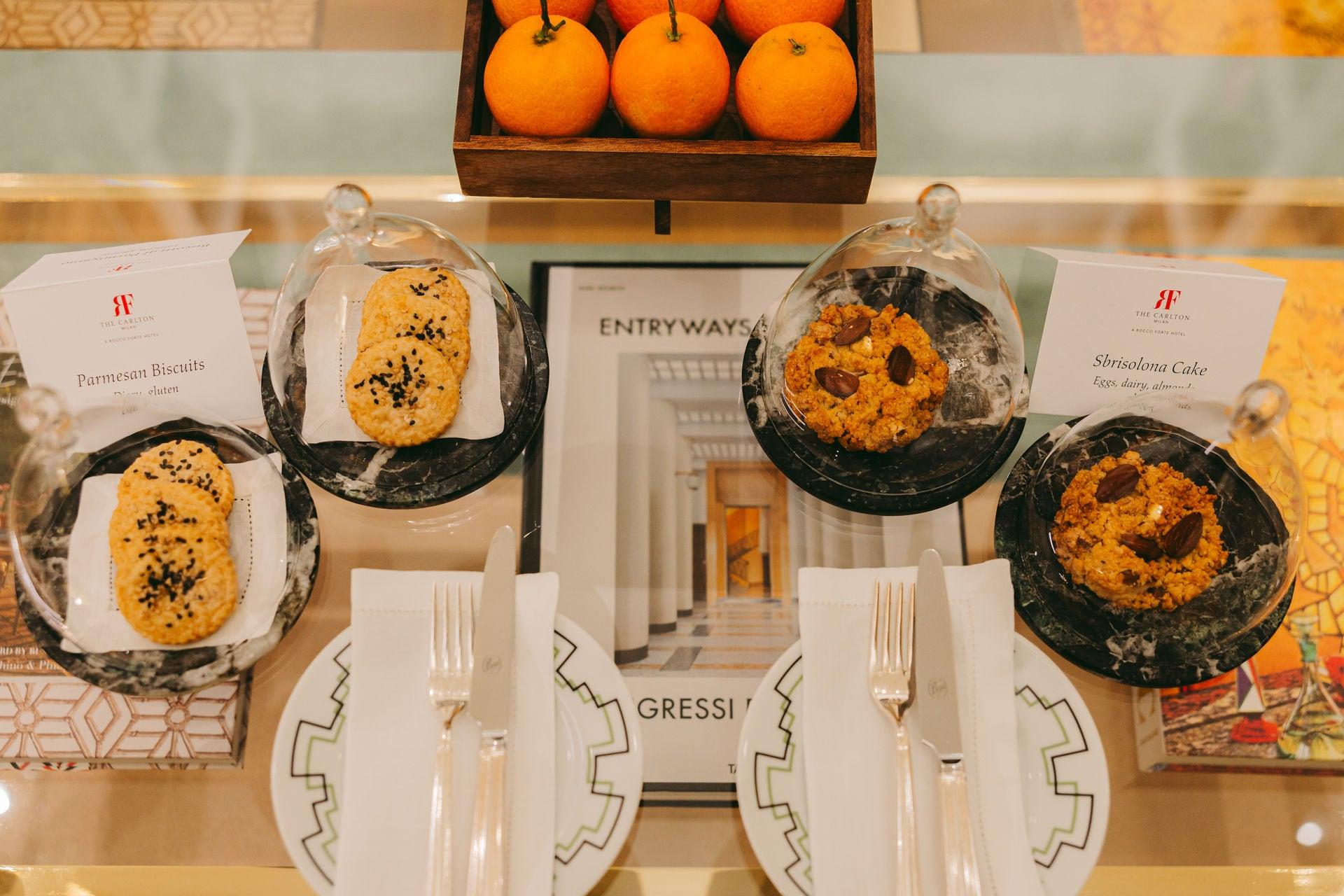
We reached Milan as it got dark, which turned out to be the right way to meet the city. A tray of oranges and pastries waited in the room. The lobby was all dark columns and a wall of gold, like the inside of a jewellery box someone had decided to live in.
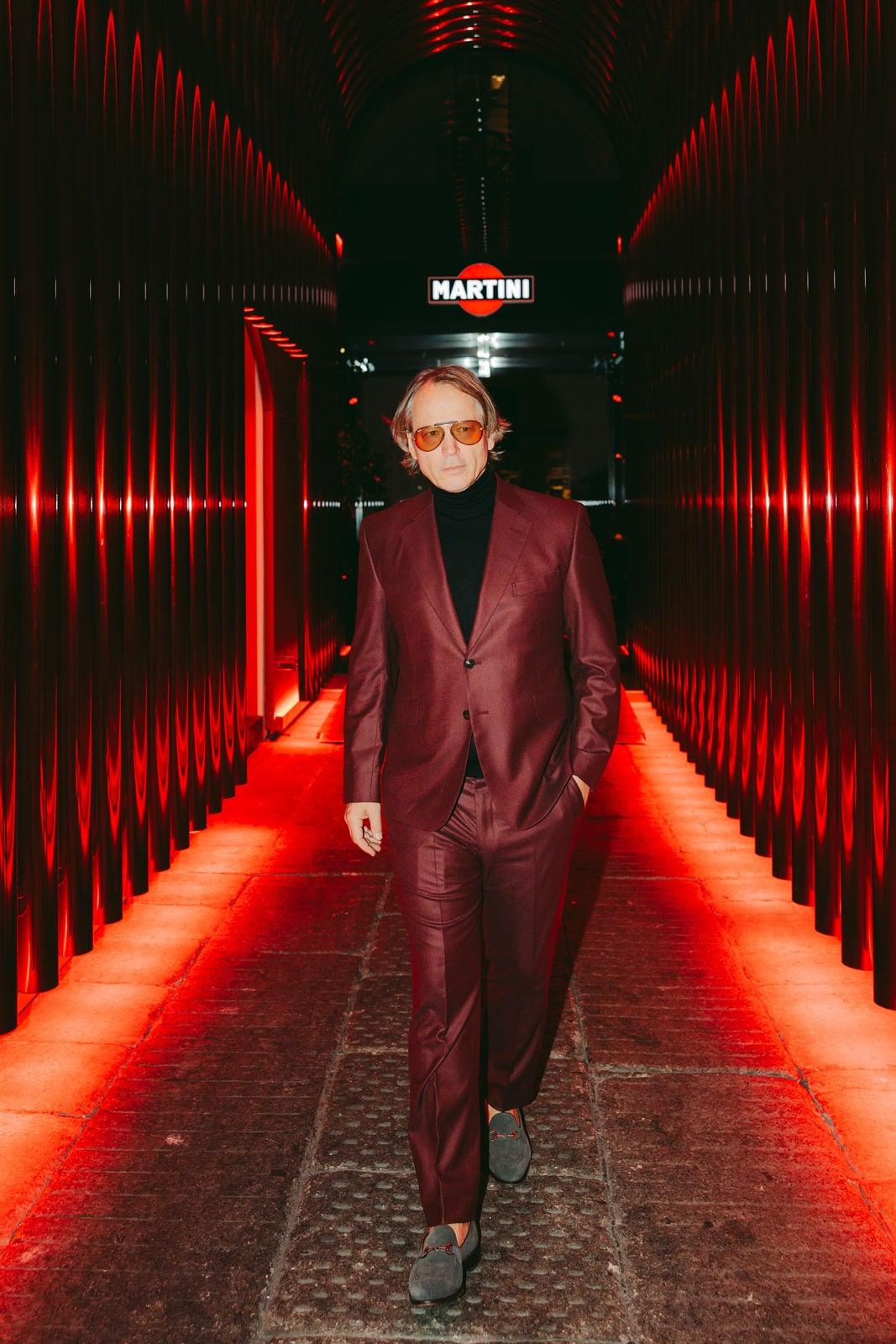
Michel changed into a burgundy suit and we went out walking.
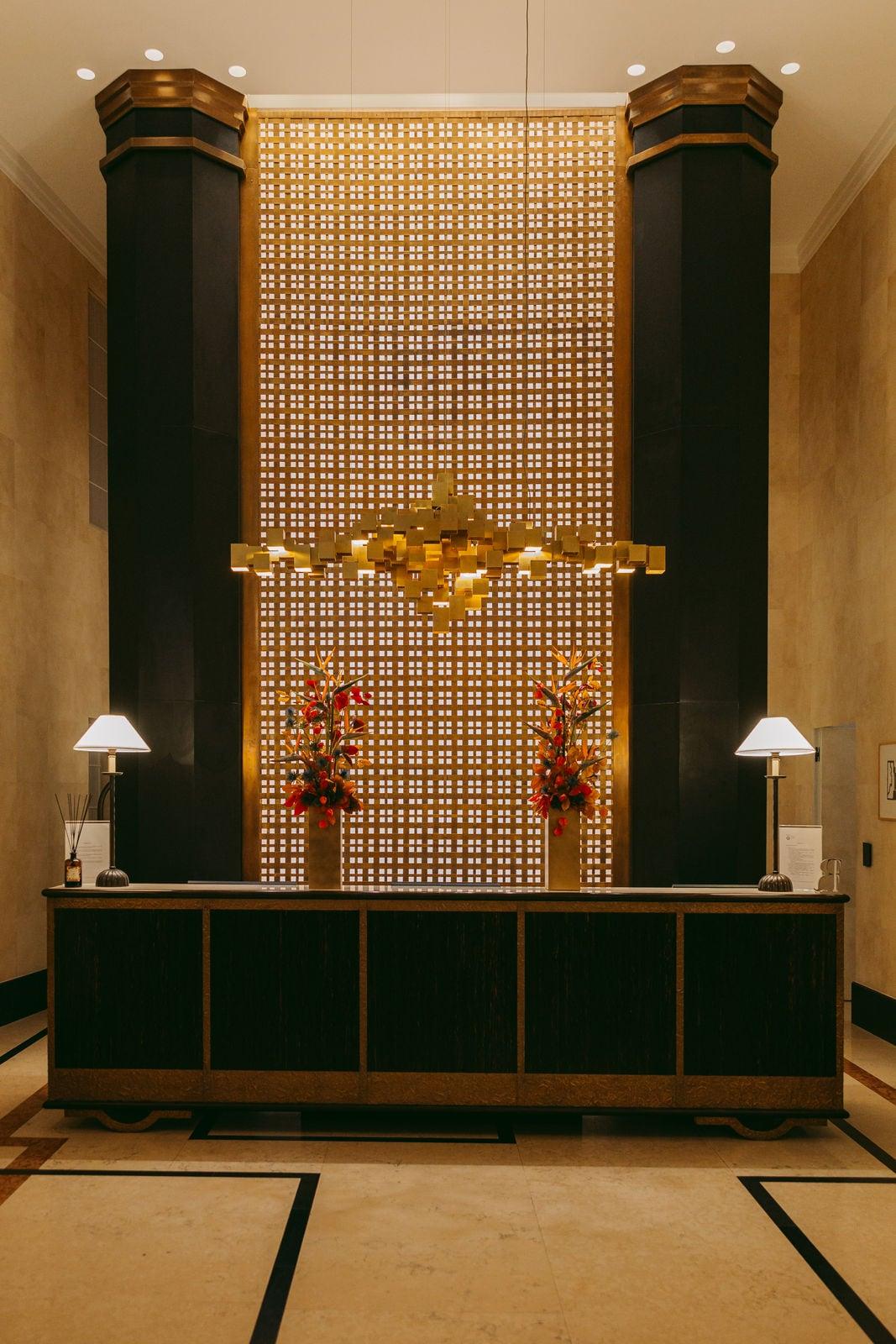
Pl. 19–20 · A welcome, and the lobby at night.


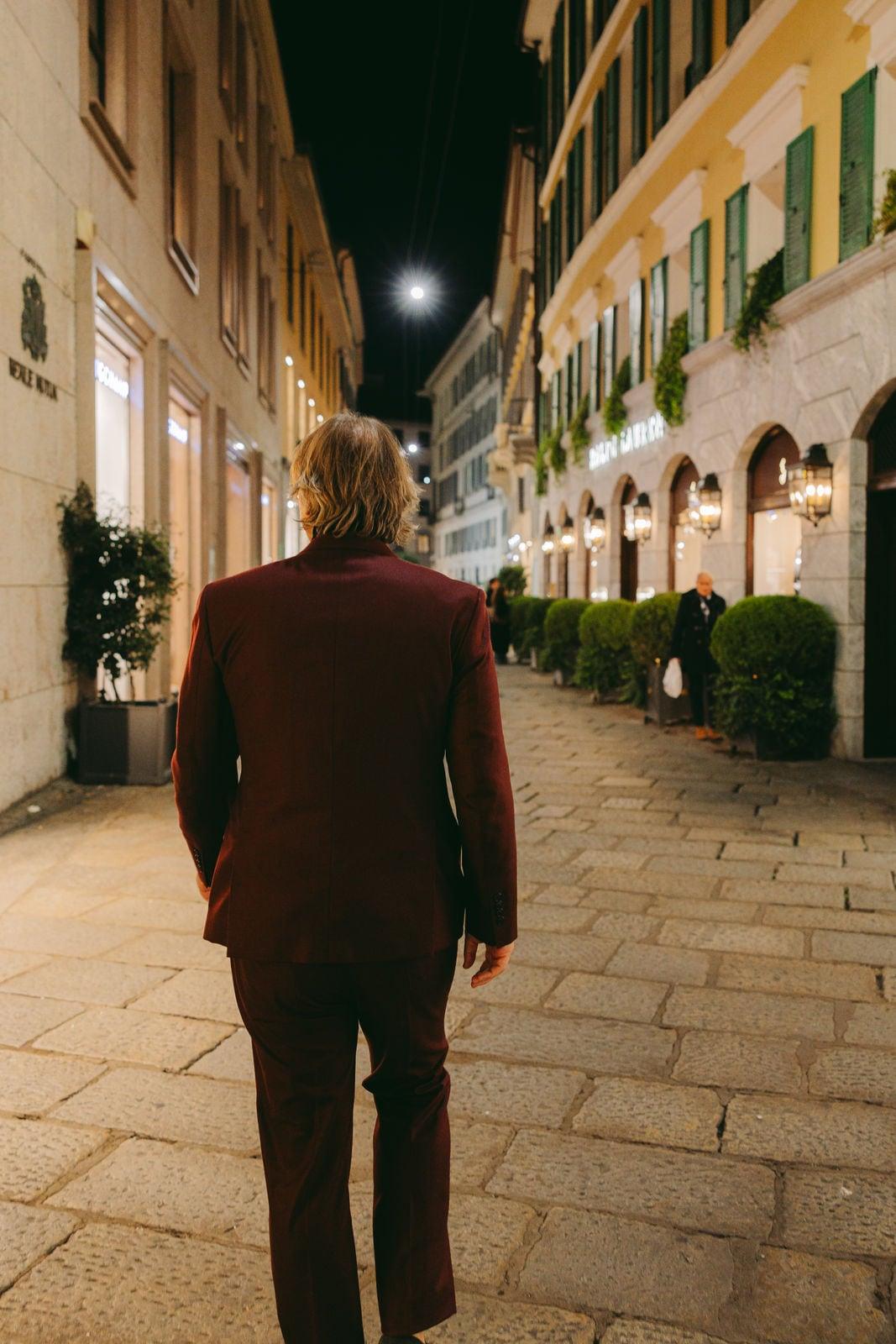
Pl. 21
The streets around the hotel are lined with lanterns and shopfronts that stay lit long after closing. At that hour they belong to people walking somewhere for dinner.
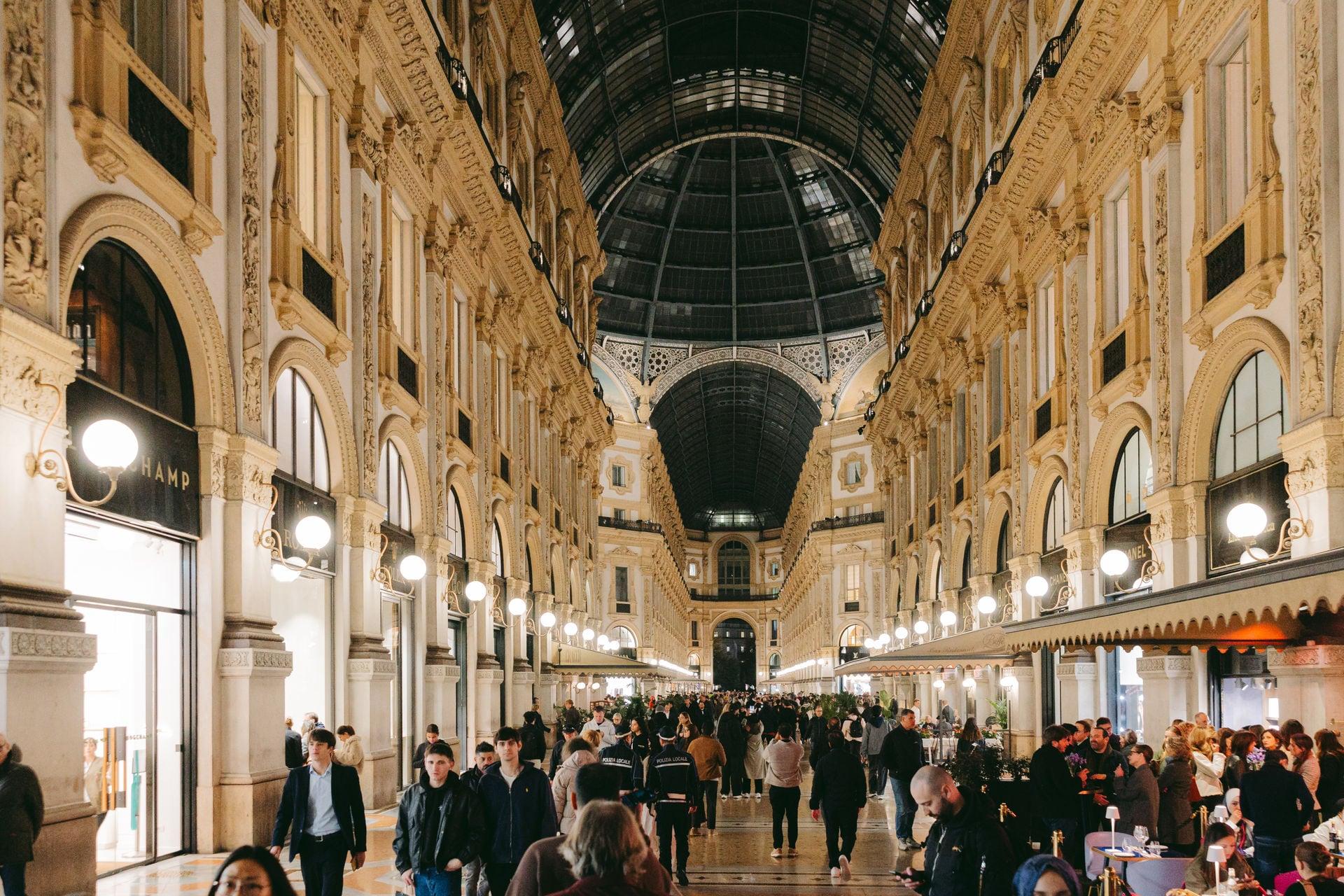
We followed them towards the centre, through a corridor washed entirely in red light, and out under the glass vault of the Galleria.
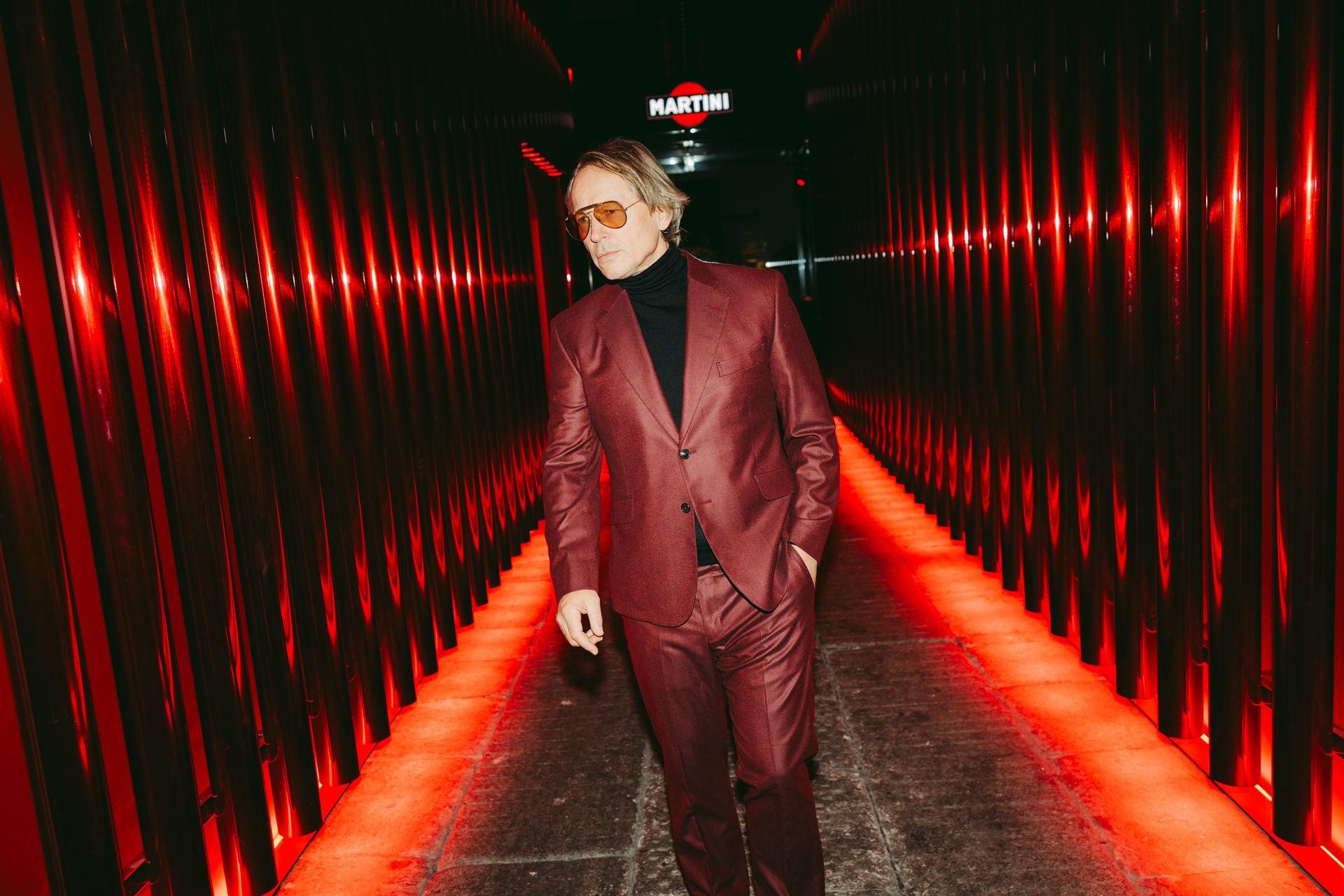
Pl. 22
Pl. 23 · Galleria Vittorio Emanuele II, a weekday evening.
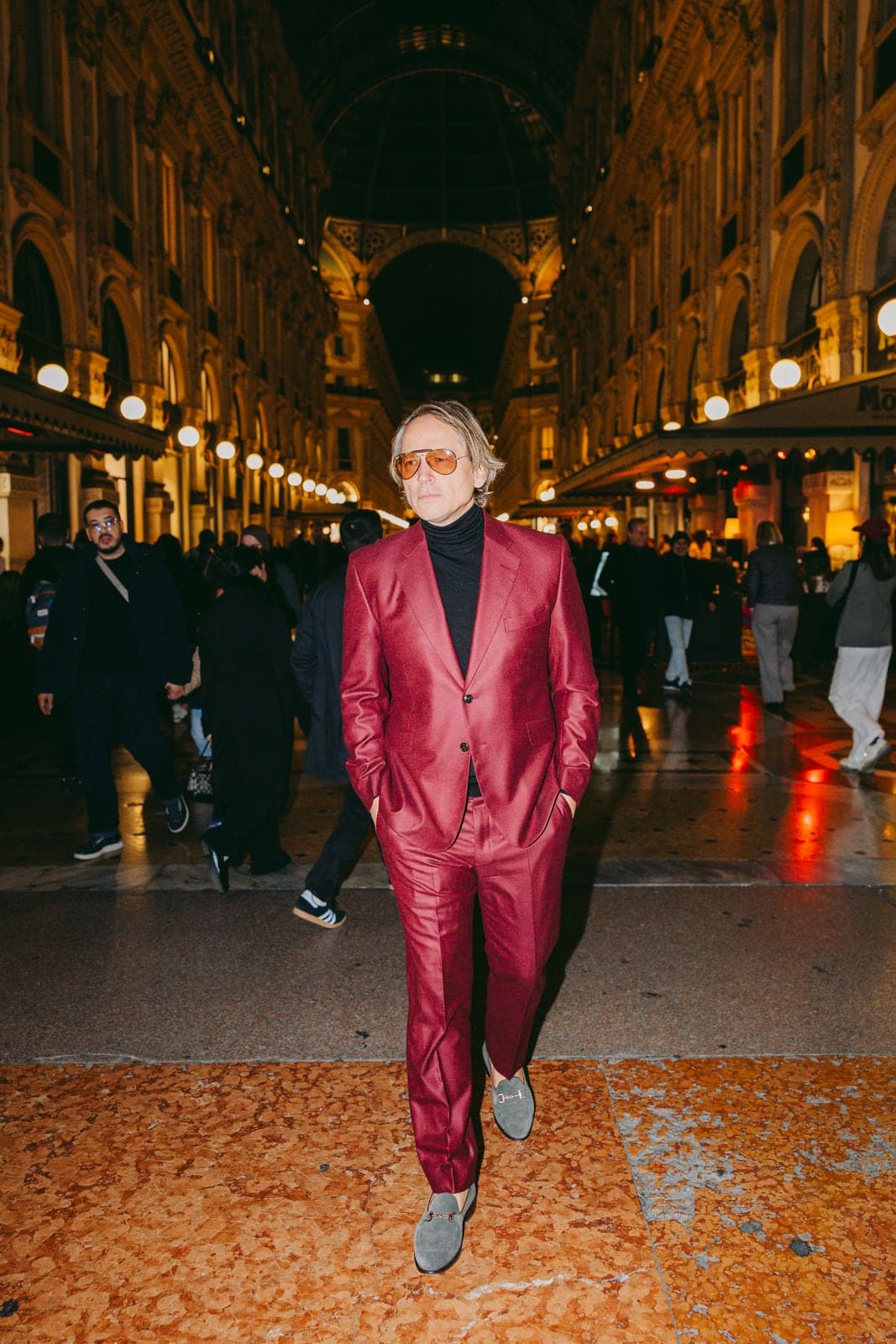
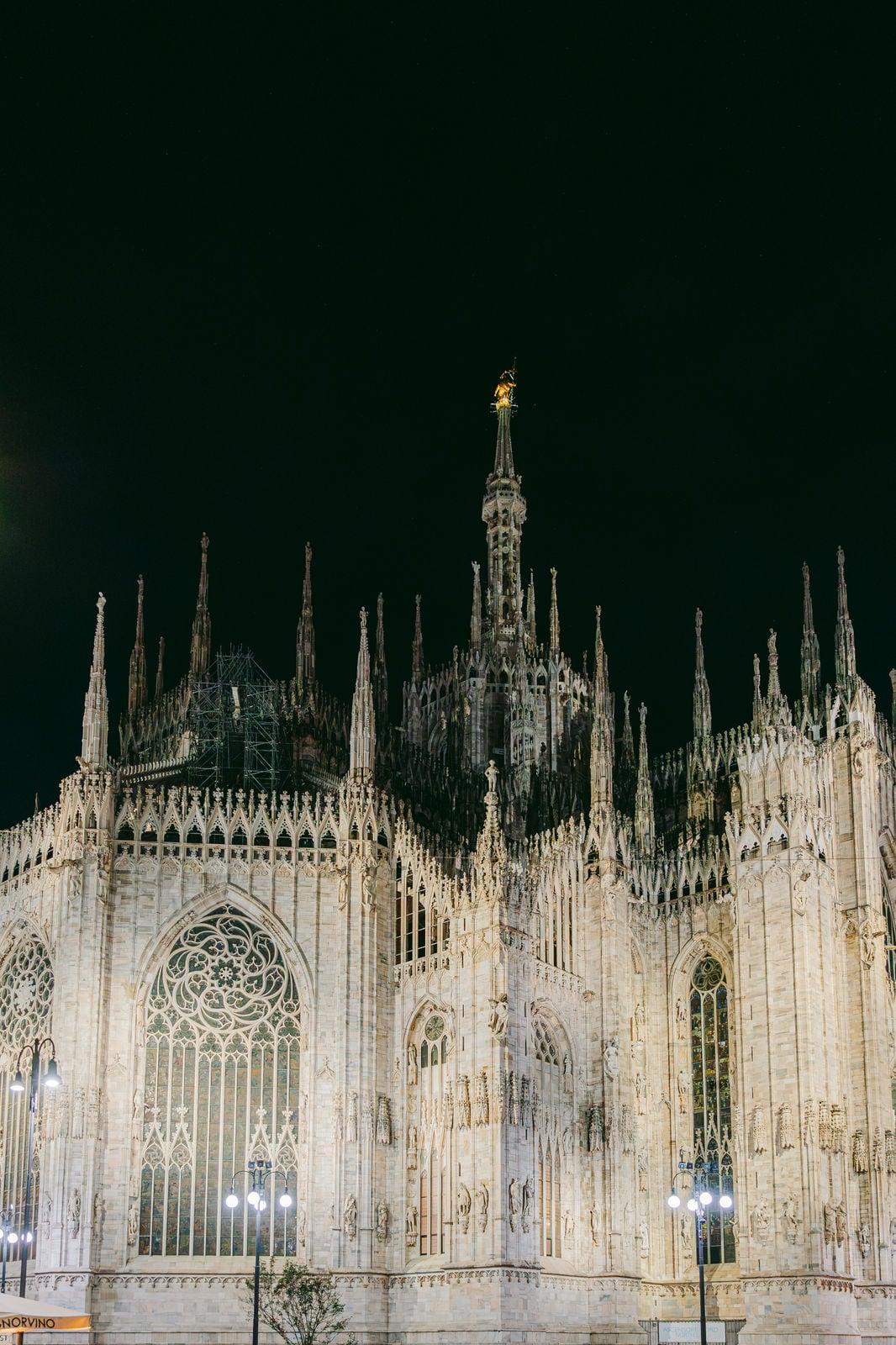
Pl. 24–25 · Through the Galleria and out to the Duomo.
“At that hour the streets belong to people walking somewhere for dinner.”
Dinner was in a room lined with quilted leather that glowed like a lantern. A beef Wellington arrived and was cut at the table. Petits fours came on a silver stand, next to two oranges that seemed to have followed us from the room.
Afterwards we moved to the bar, a long marble counter with small lamps at every seat. Michel ordered an espresso at ten at night, which in Milan is not considered strange.
The last hour
5 plates
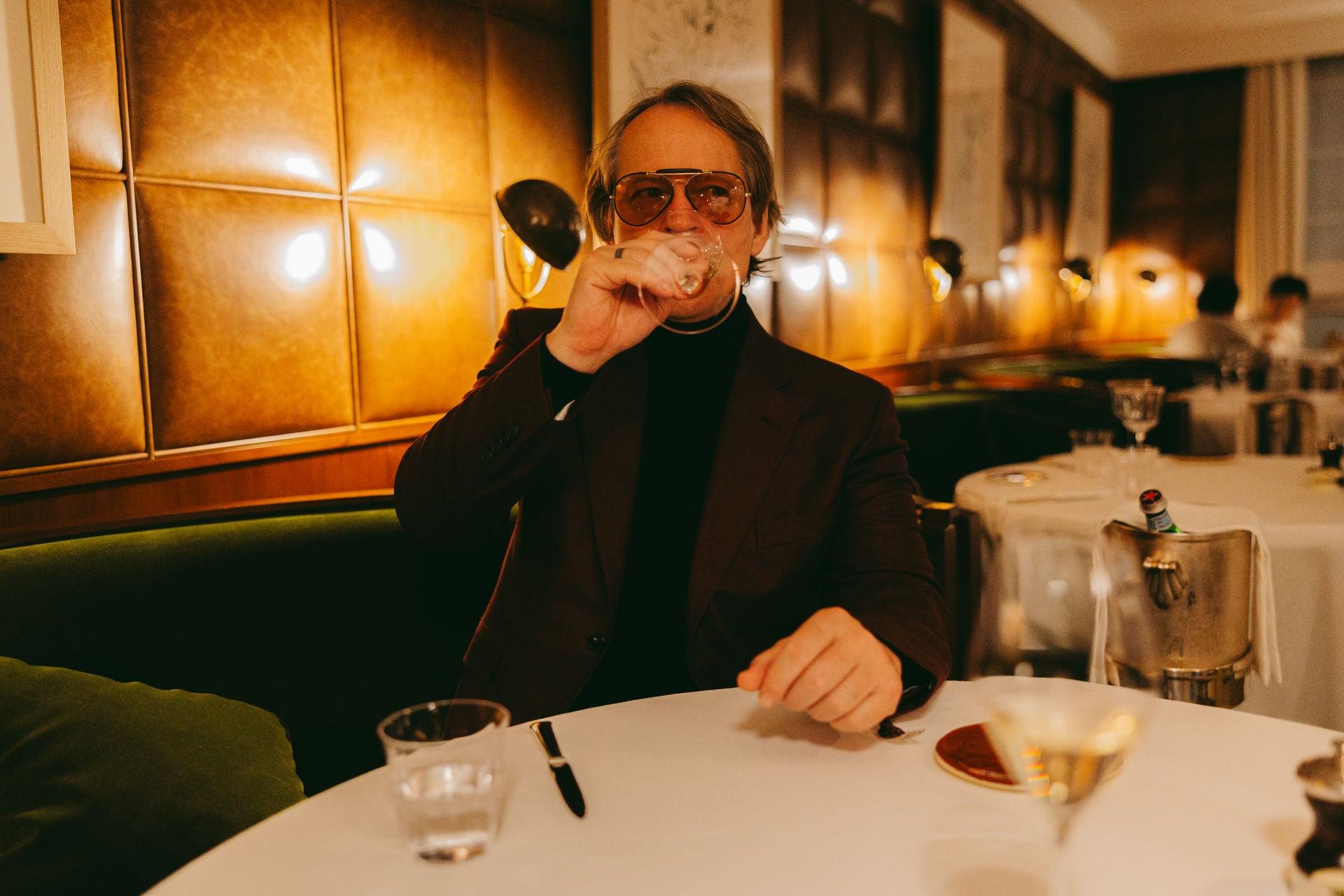
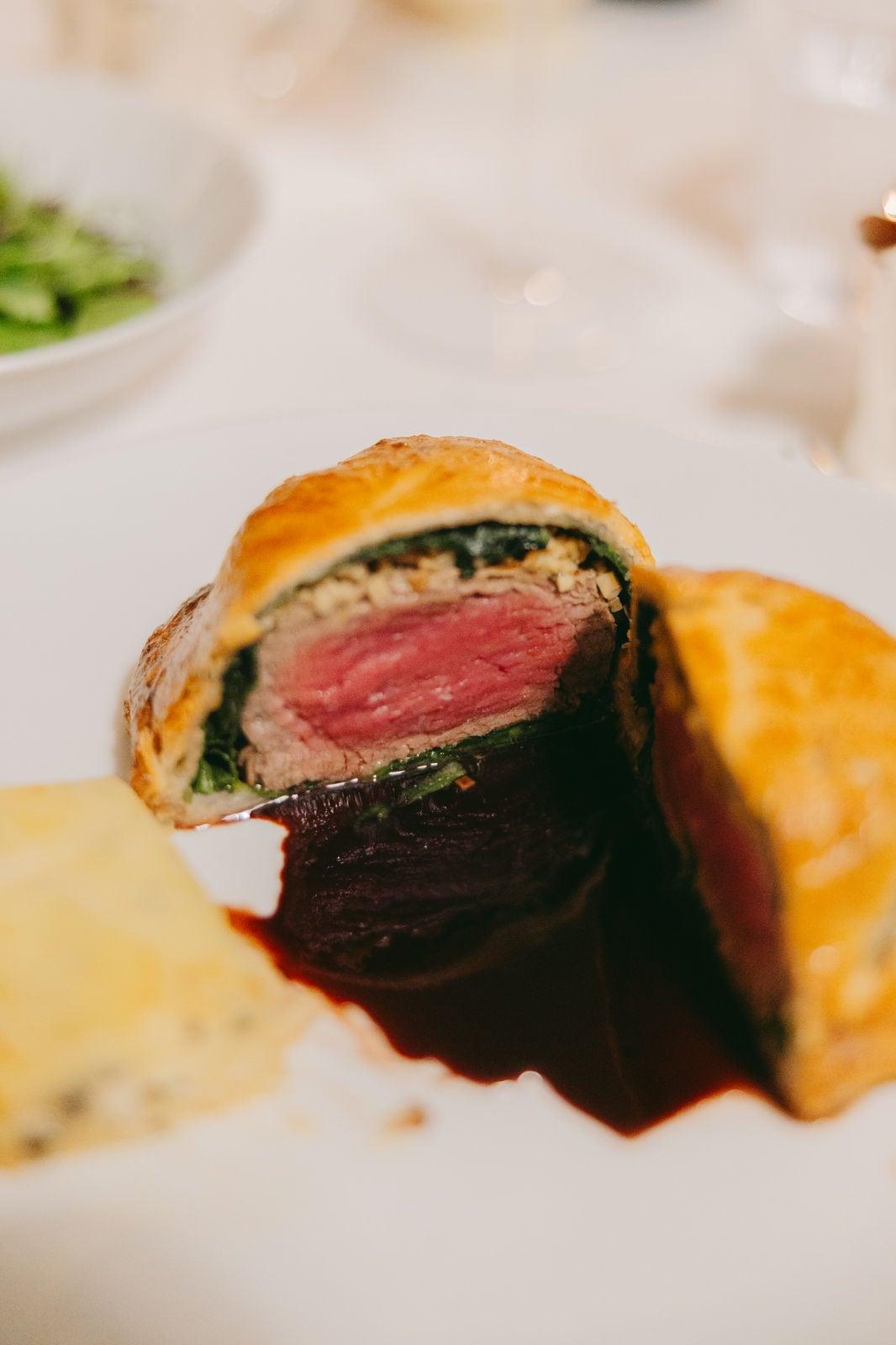
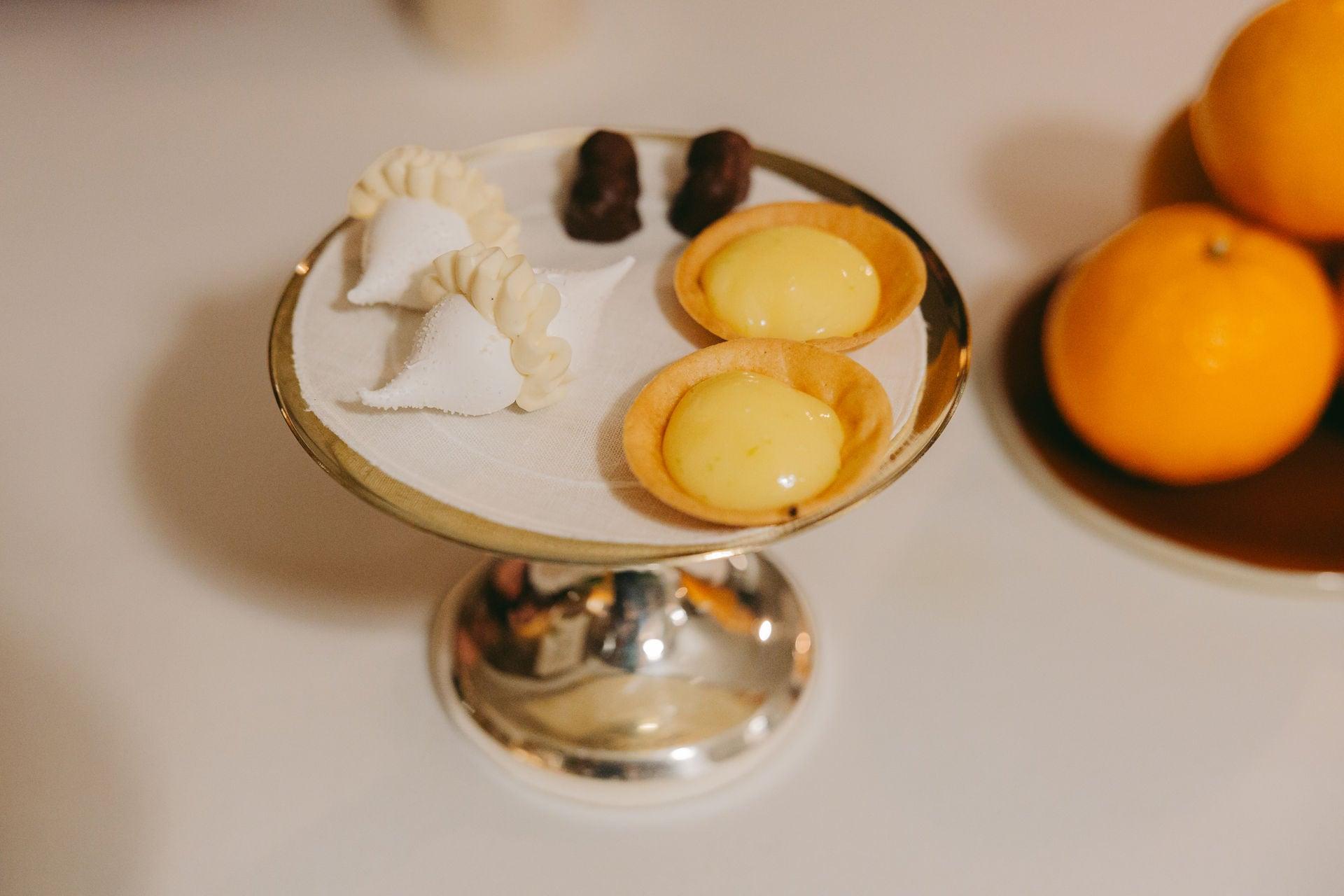
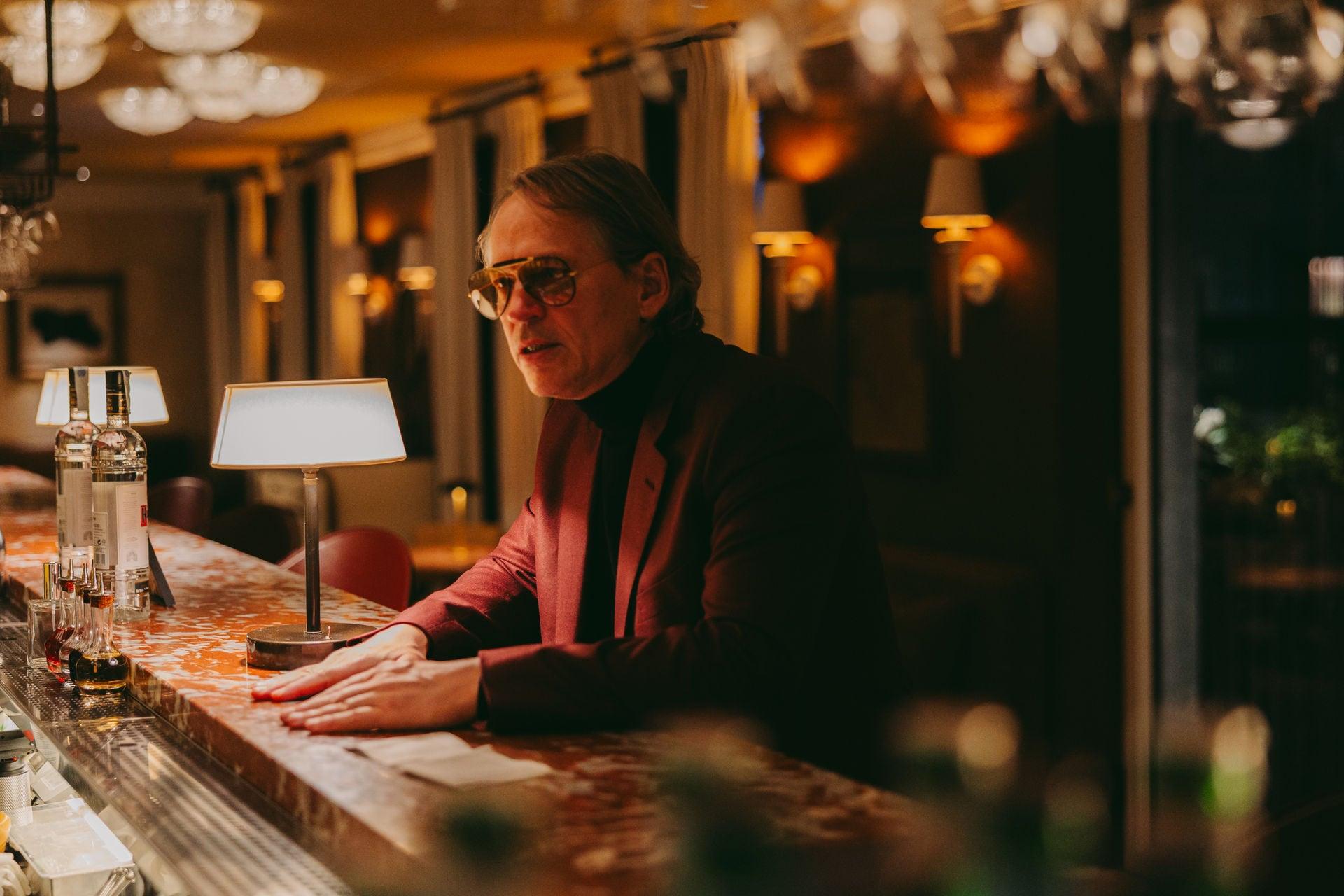
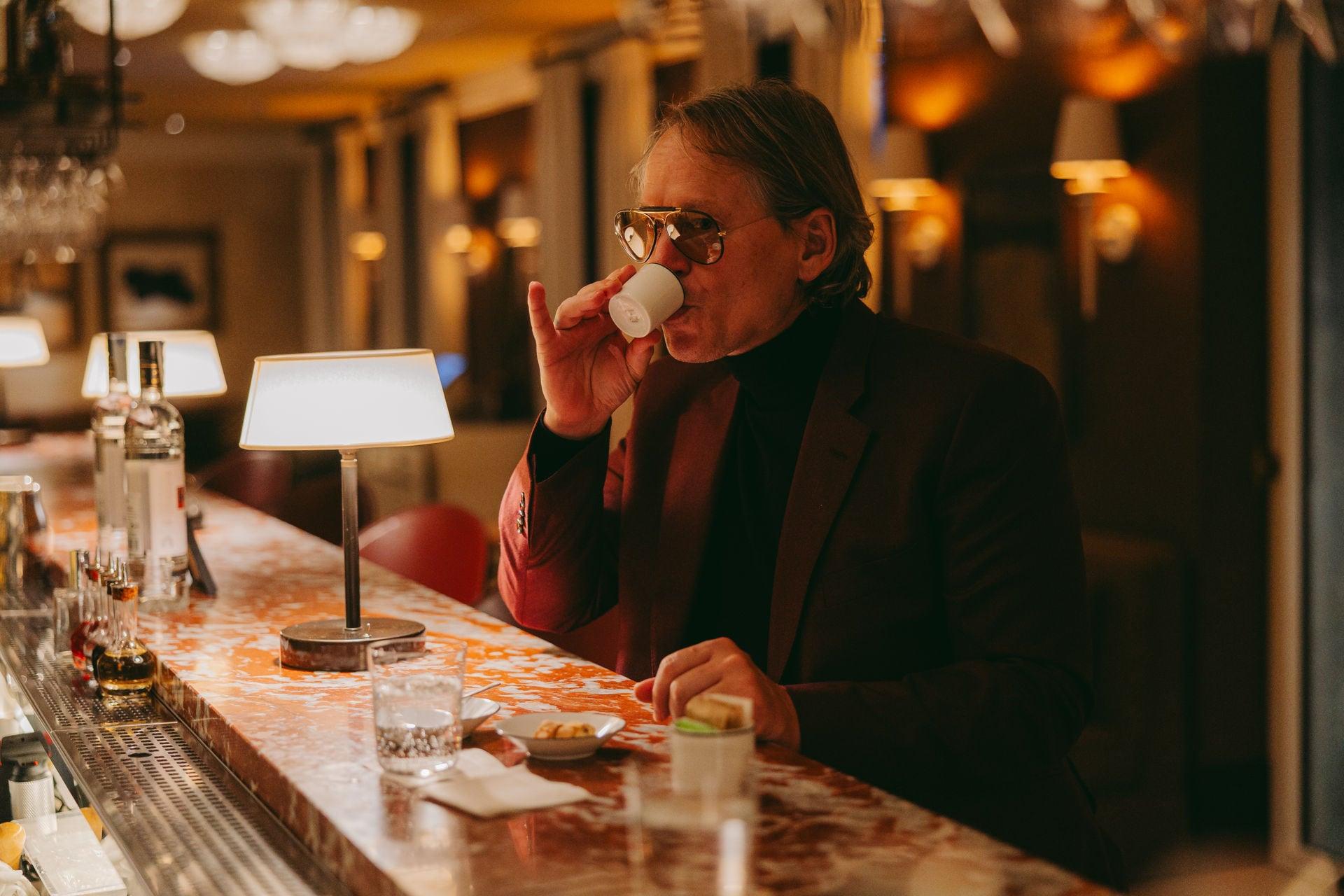
Pl. 26–30 · Dinner to espresso.
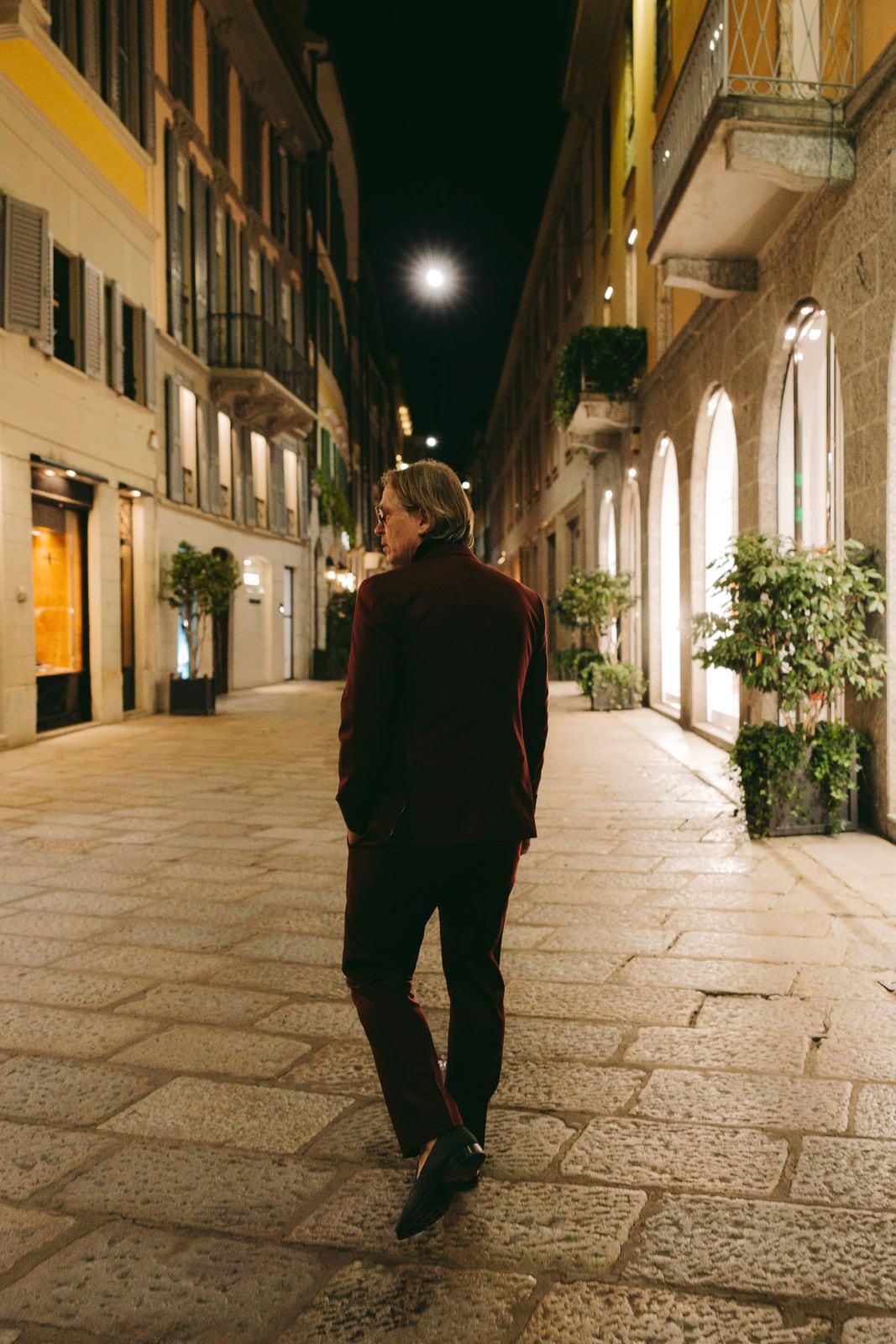
Pl. 31 · Walking back, a full moon over the street.
Tuesday
In daylight Milan was a different city. From the terrace of the suite it was terracotta roofs, green shutters, a crane or two, and the spires of the cathedral standing up above everything else.
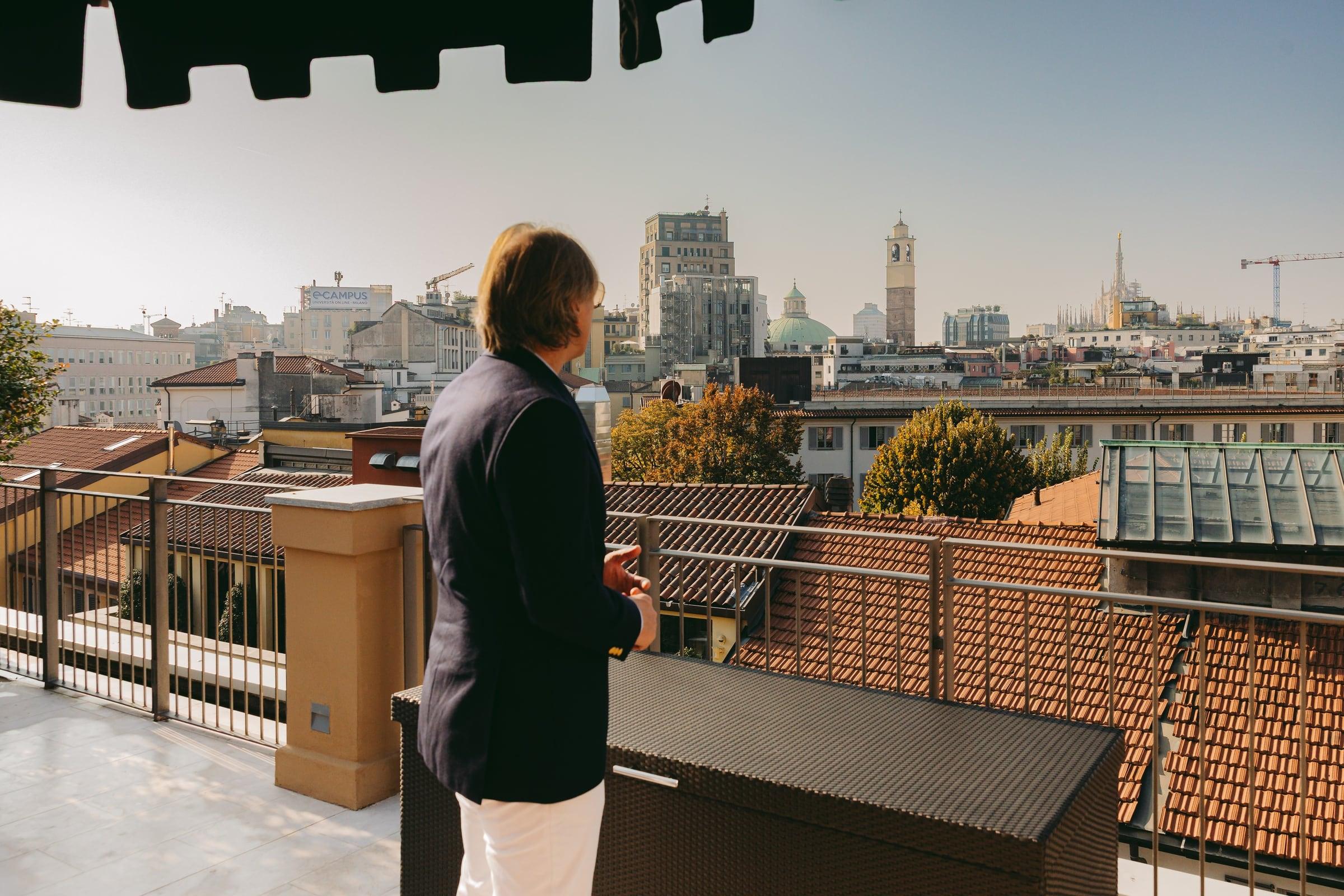
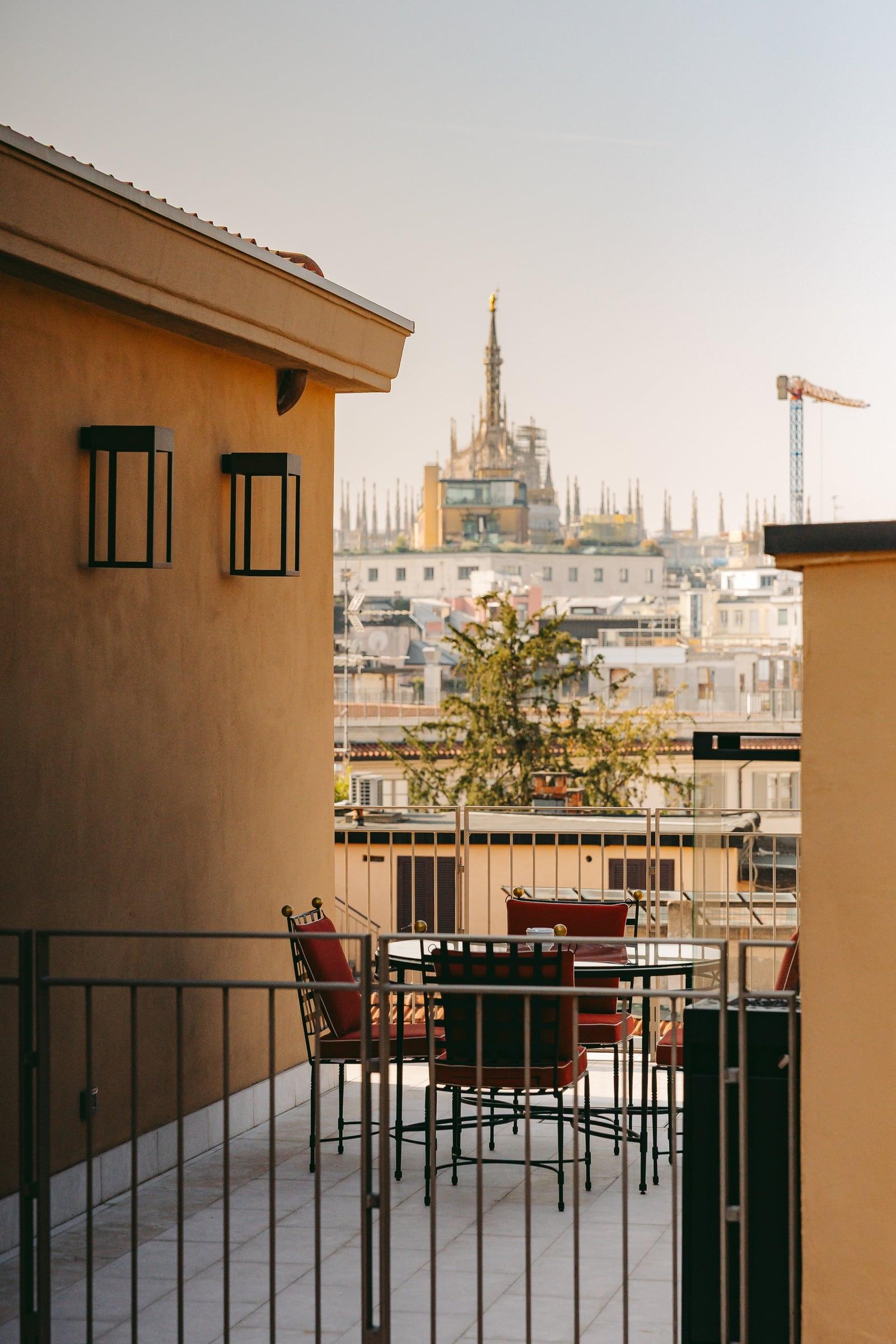
Pl. 32–33 · The terrace of the suite.
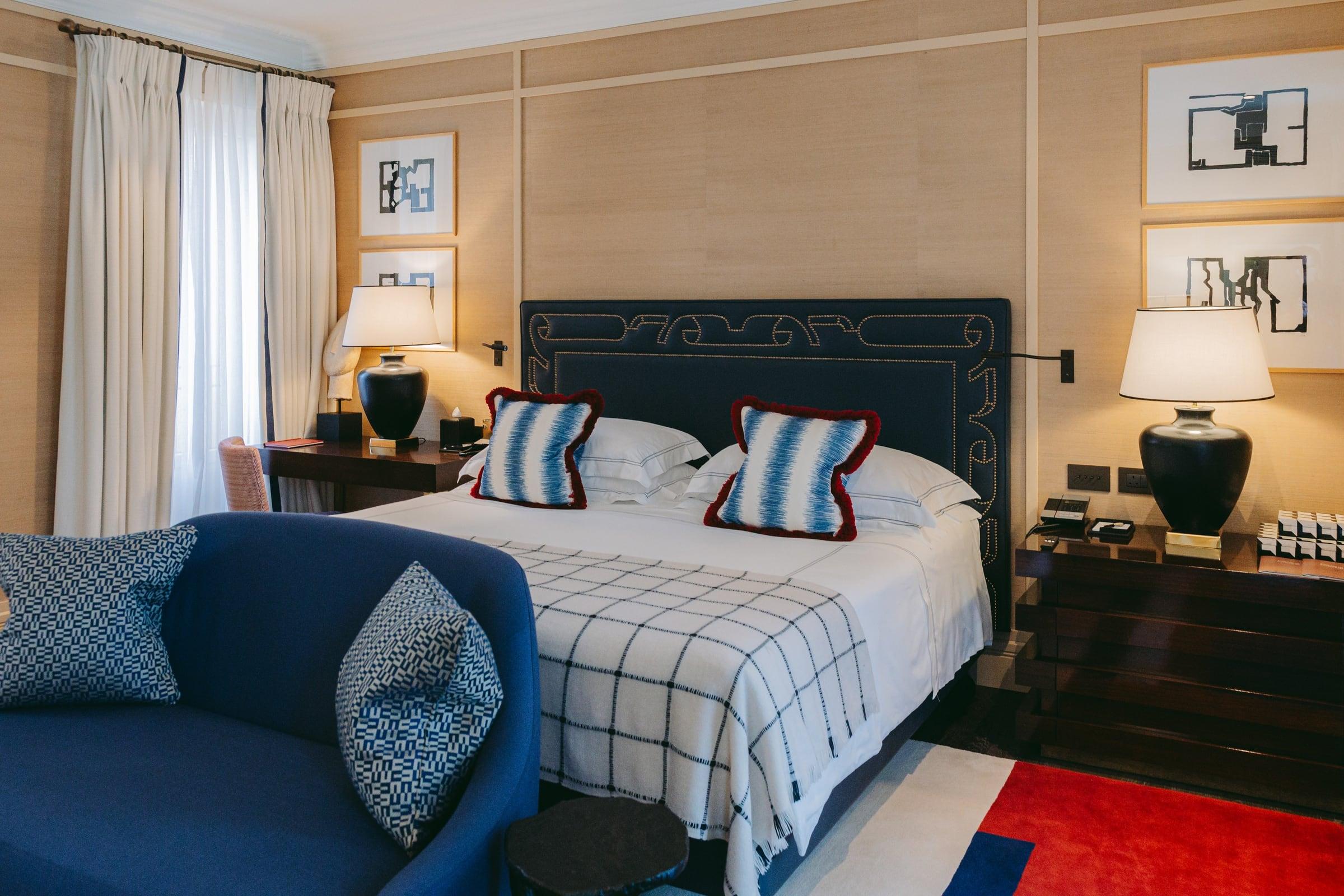
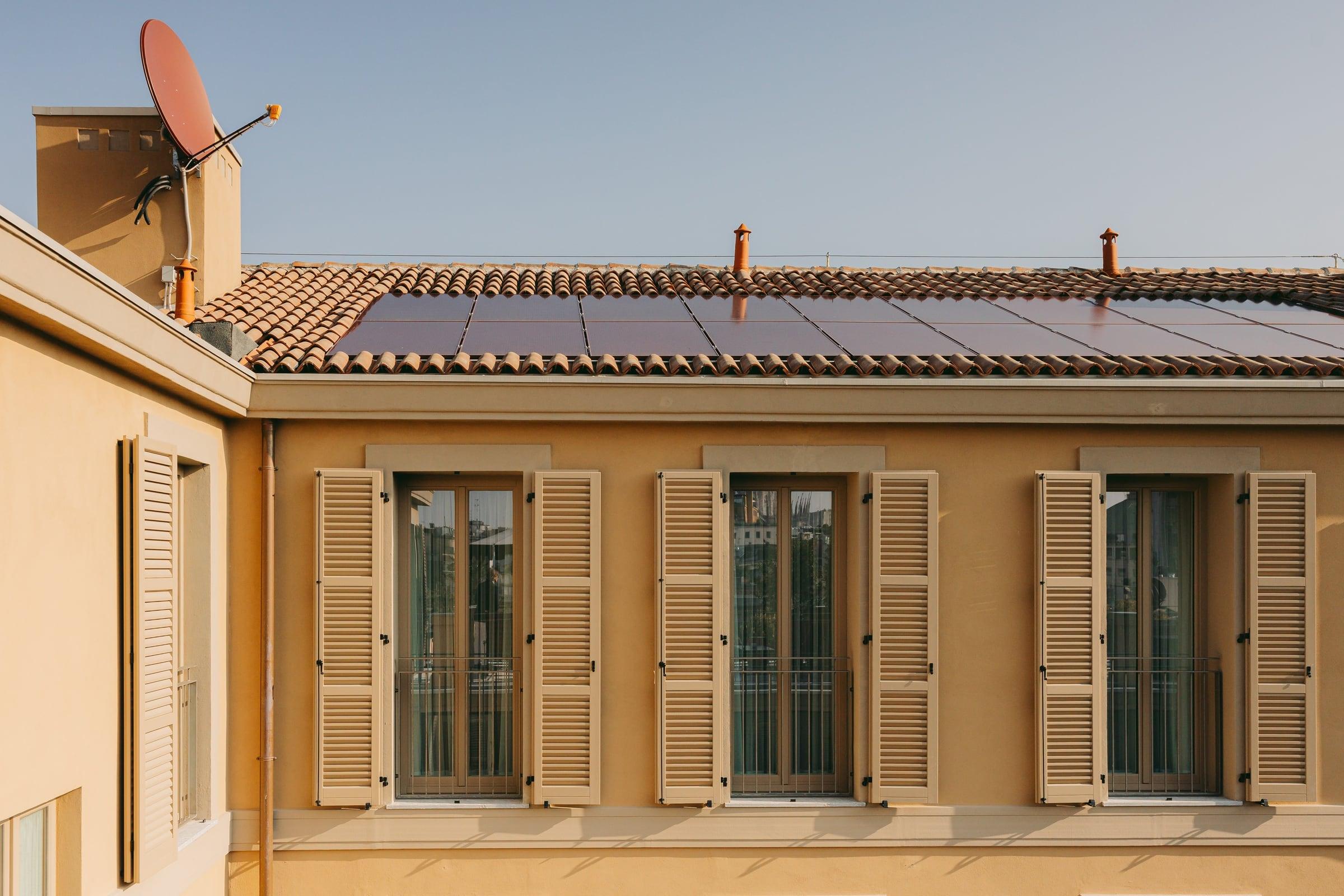
Pl. 34–35 · The room; the roofs outside.
We walked into the centre past a flower stall and through the Galleria again, which by day is a glass street full of light rather than a lantern. Coffee was taken standing at a counter, the way it is done here, in a cup that holds three sips.
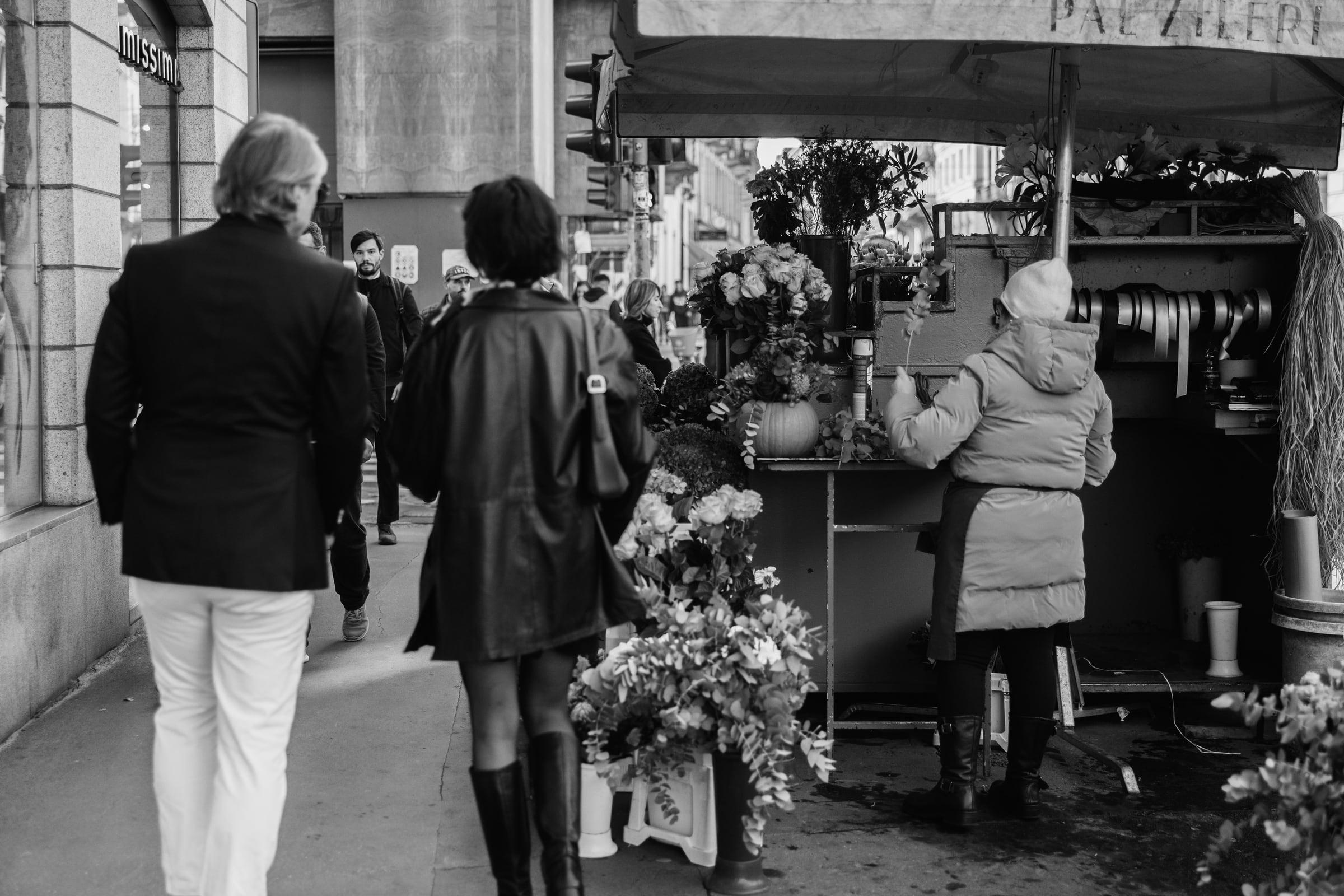
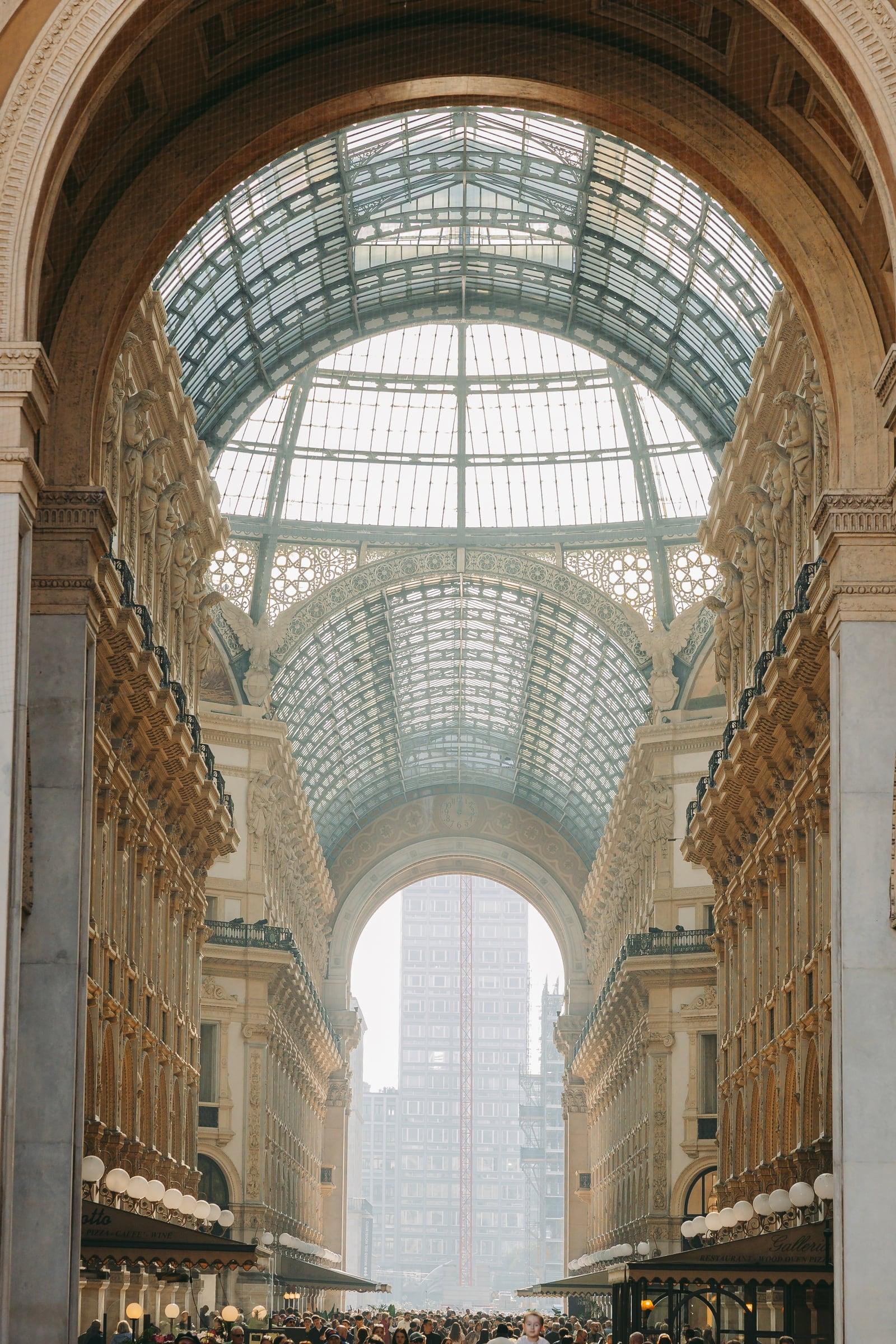
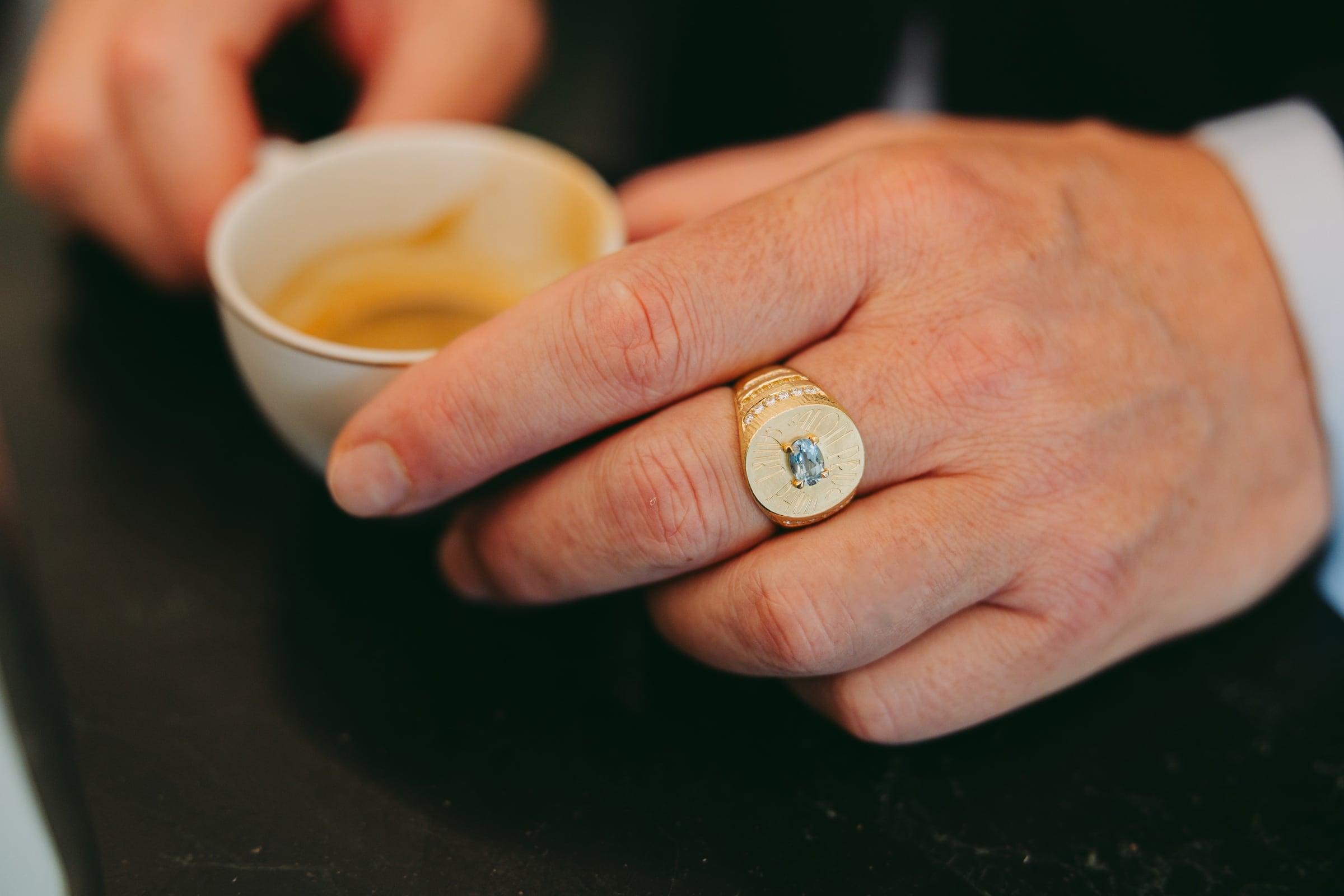
Pl. 36–38 · Late morning: flowers, the Galleria by day, an espresso at the counter.
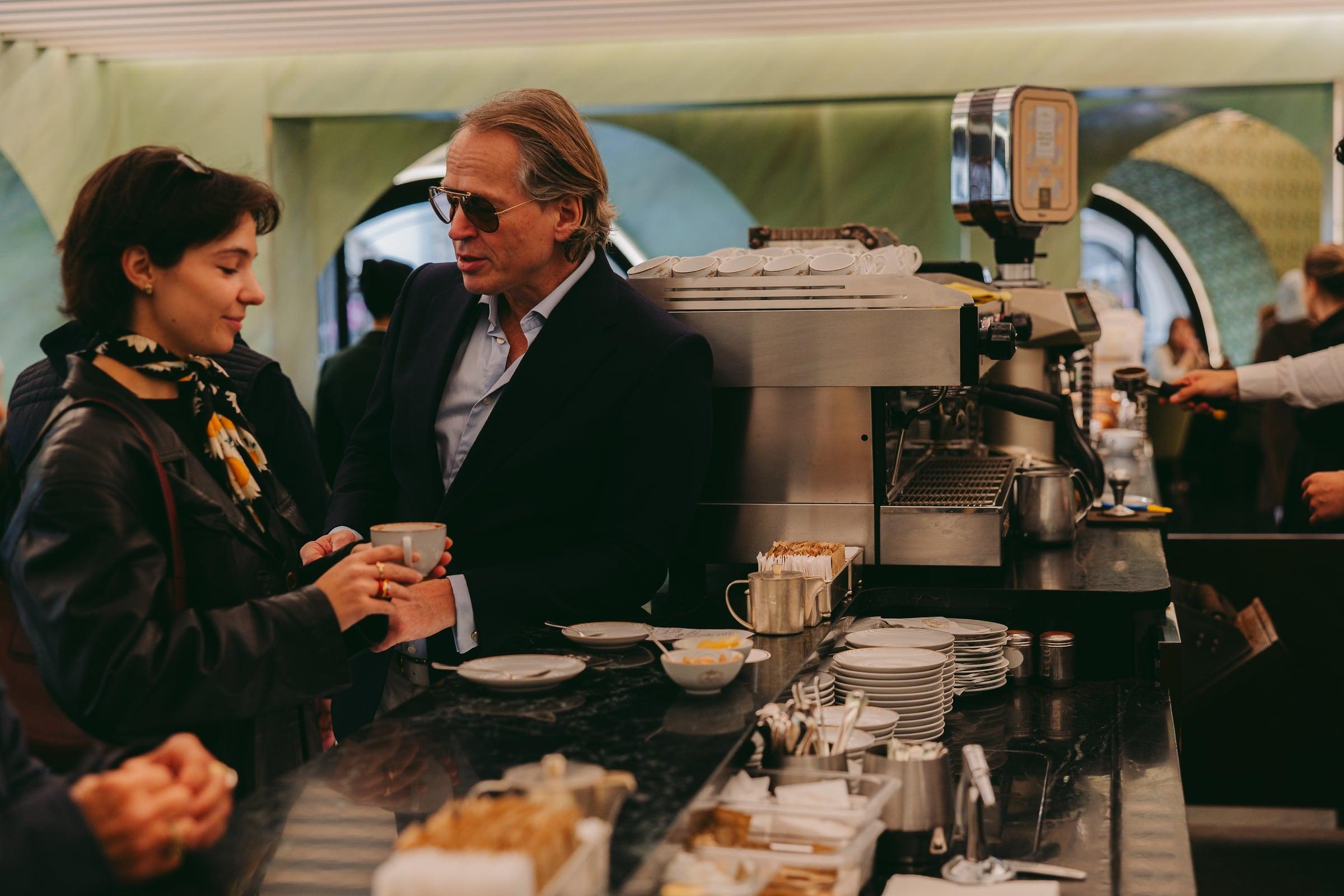
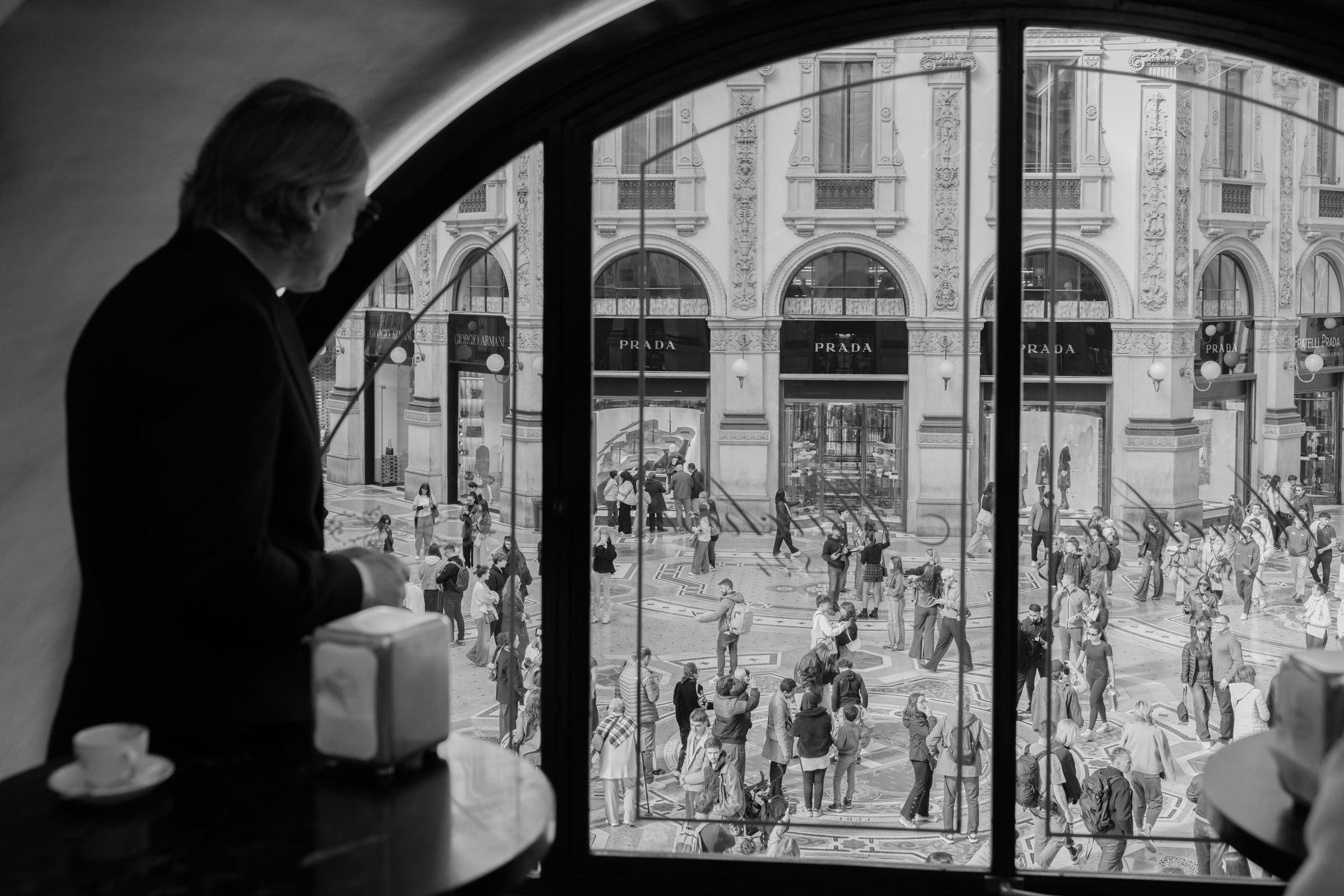
Pl. 39–40 · Coffee at the counter; the square below.
Pl. 41
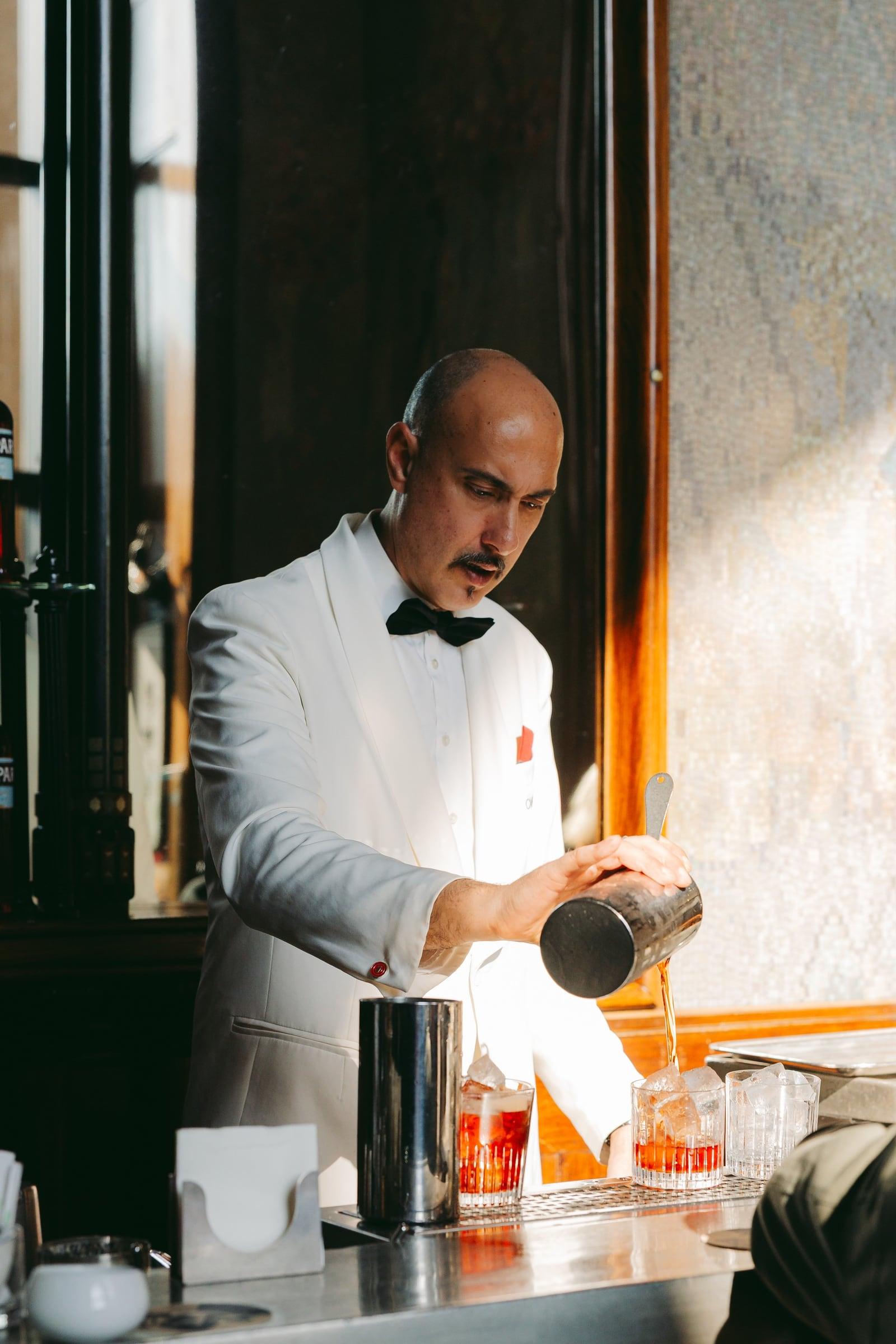
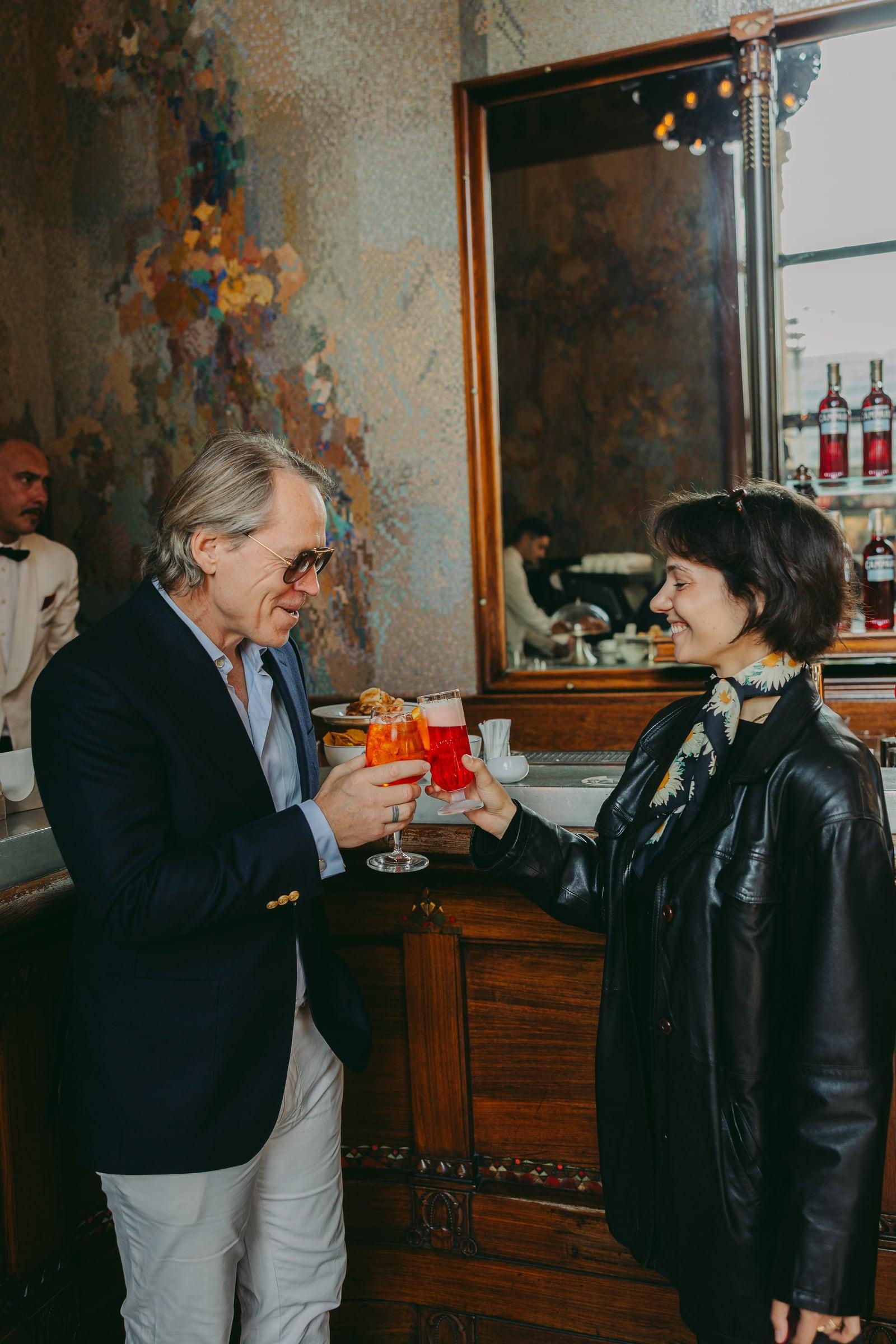
At Camparino, where the Galleria opens onto the cathedral square, a barman in a white jacket was pouring aperitivi at lunchtime. Nobody thought it was early.
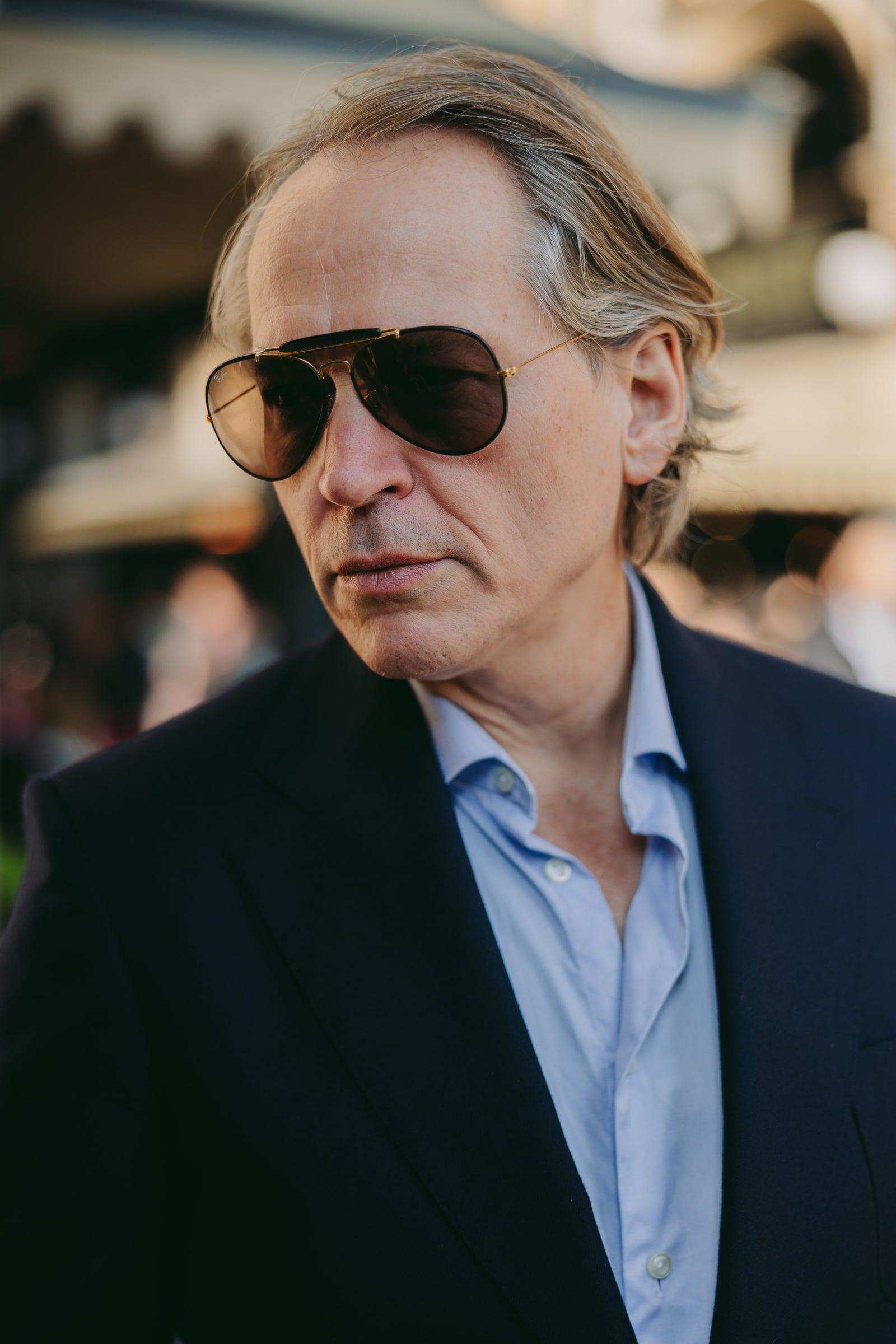
Michel took his orange and bitter in a stemmed glass and raised it with our companion at the counter.
Pl. 42–43
In the afternoon we followed the trams. Milan still runs old ones, wooden and yellow, alongside the new, and in the early afternoon one of them crossed in front of the cathedral just as the light turned its marble the colour of honey.
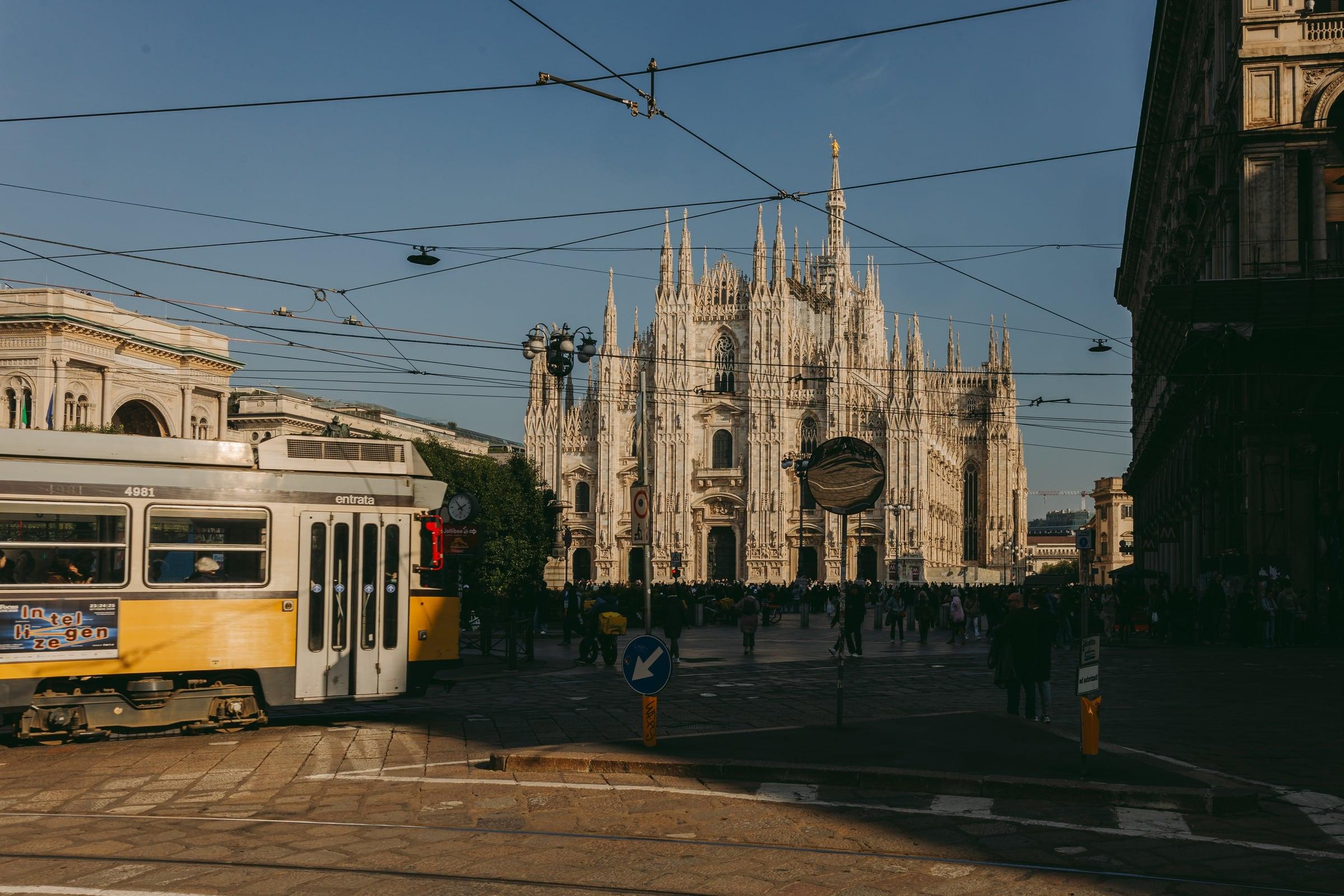
Pl. 44 · Piazza del Duomo.
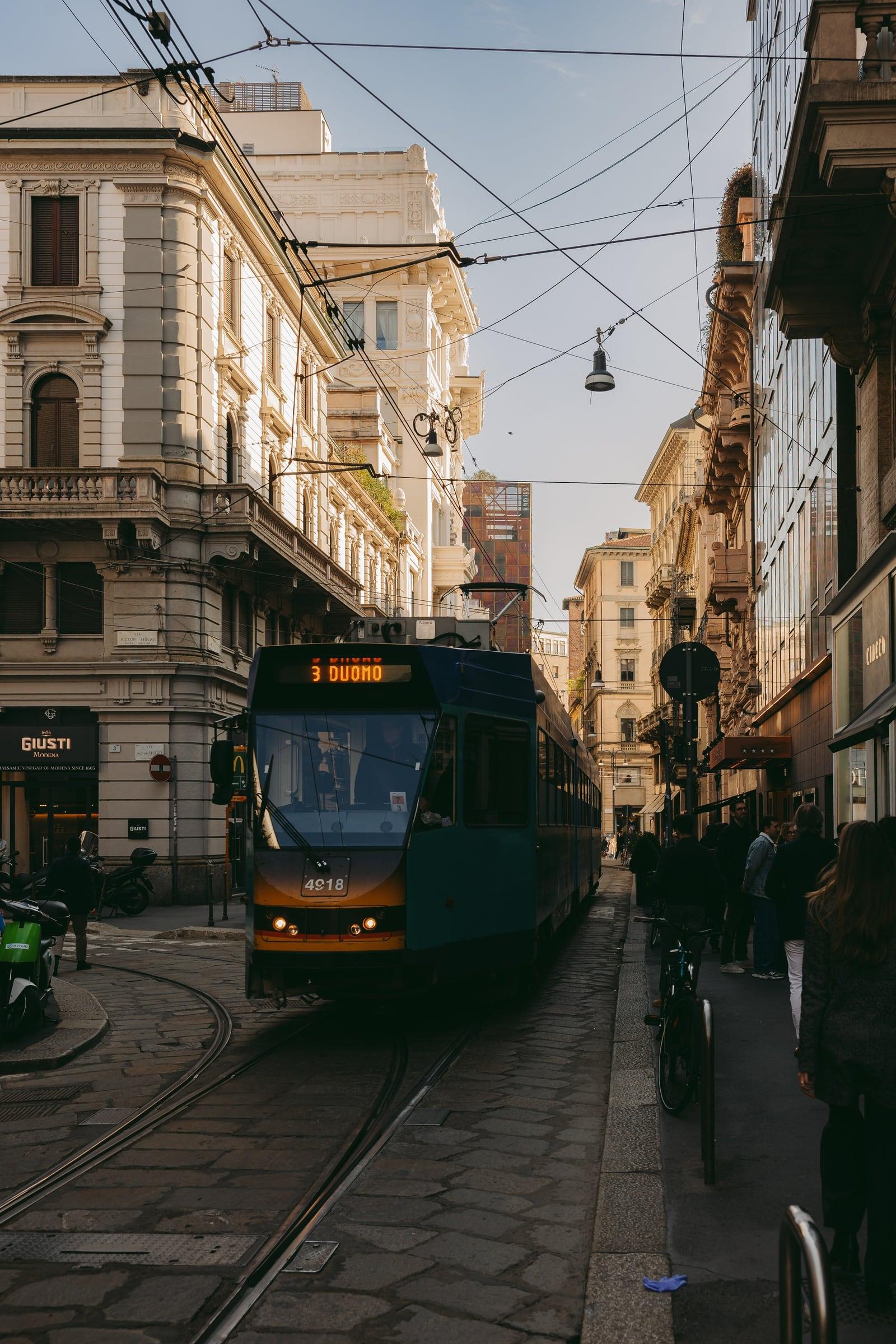
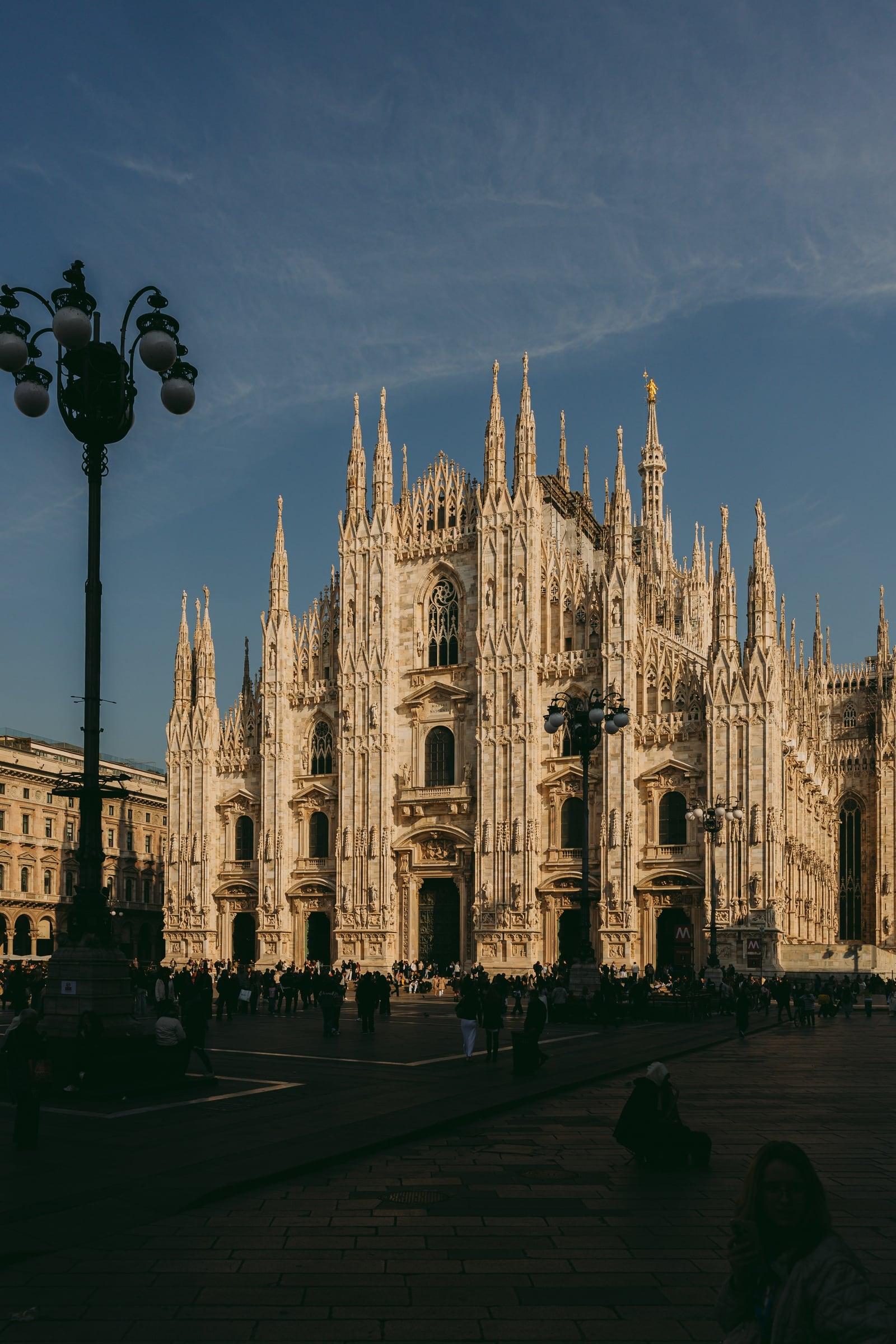
Pl. 45–46 · A tram in a side street; the cathedral in the late sun.
The evening ended at The Decades, the bar of The Carlton, at a red marble counter. Two bartenders in white jackets worked through it without hurrying, and one of the drinks arrived over a single clear block of ice with a pattern pressed into it.
The Decades
6 plates
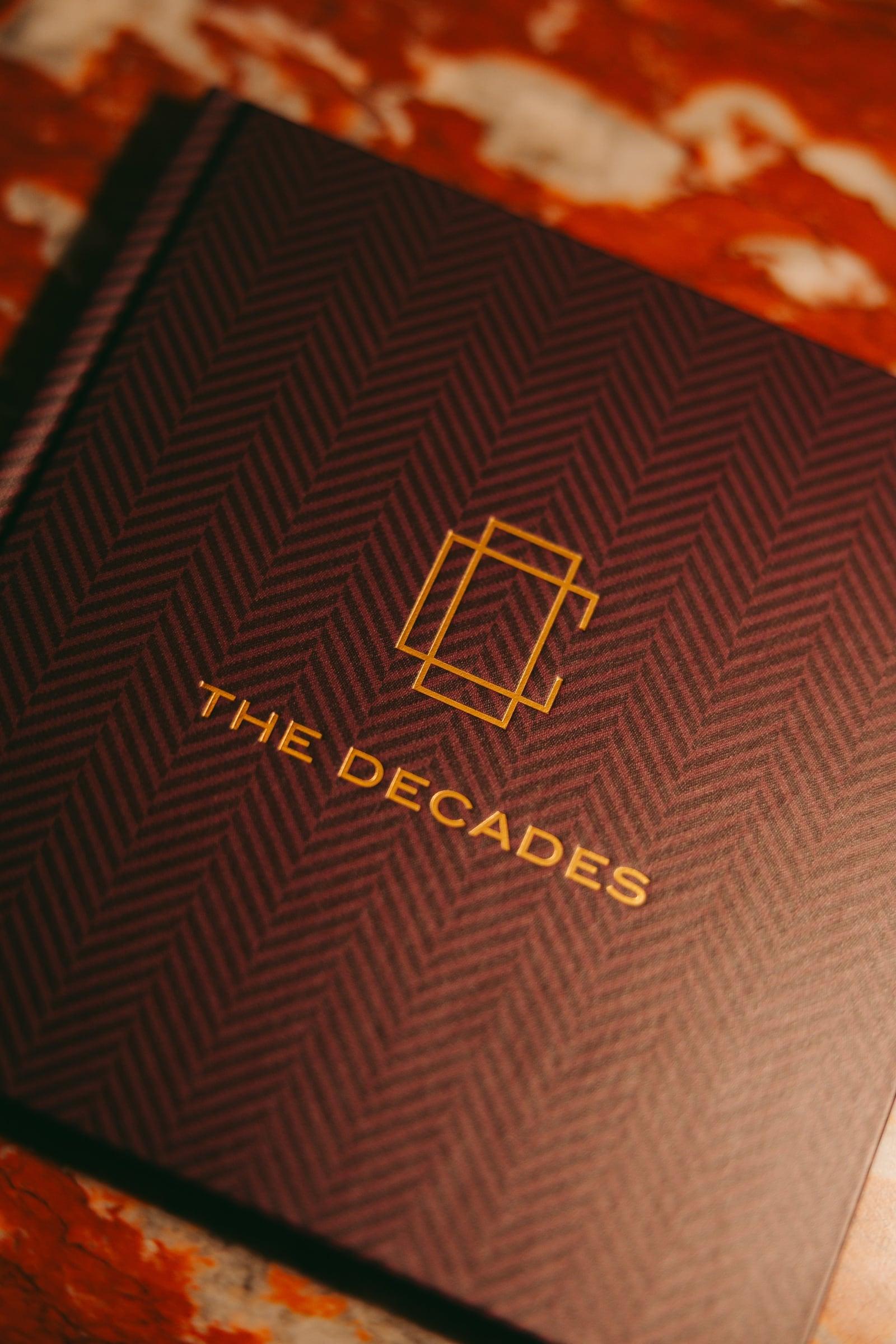
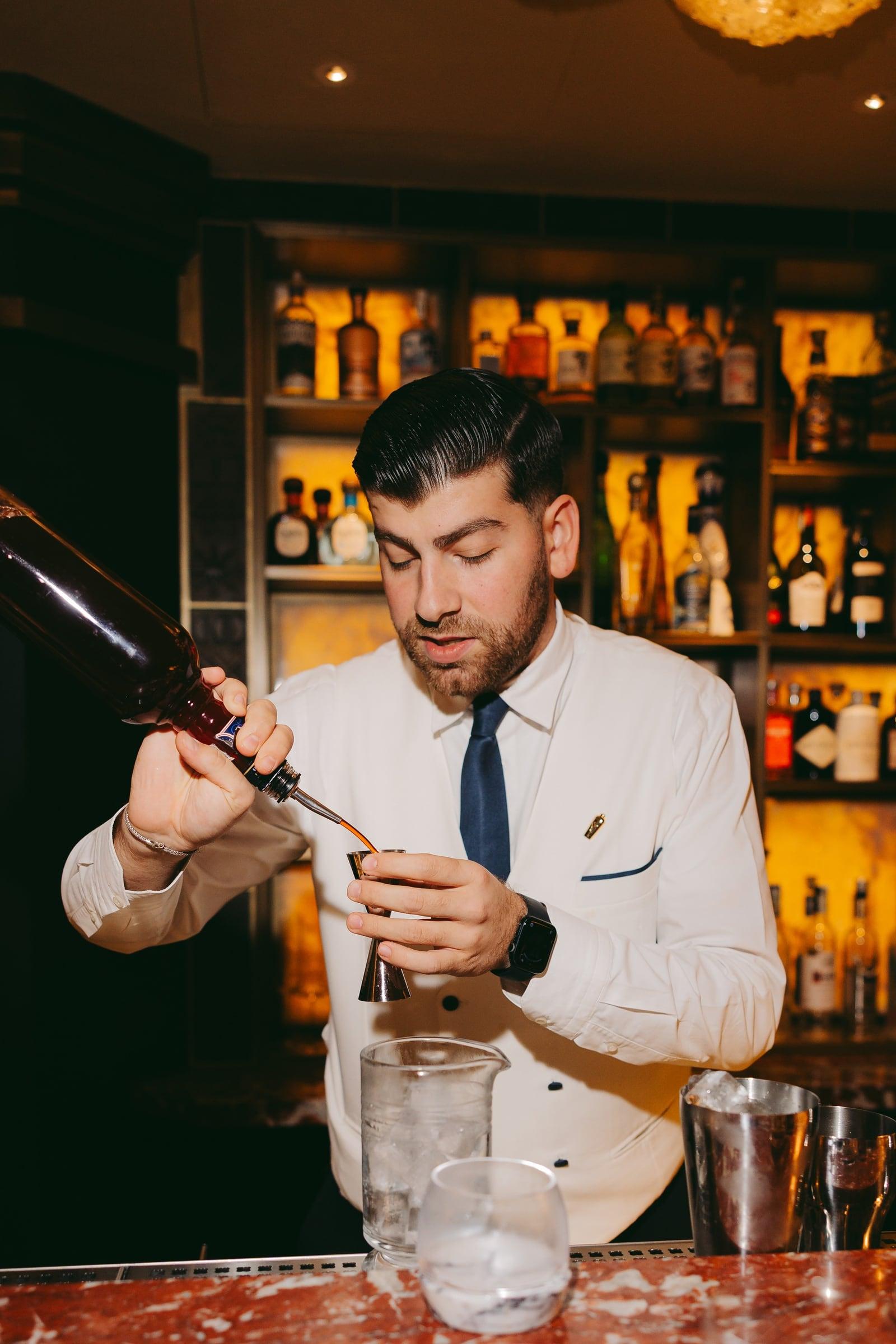
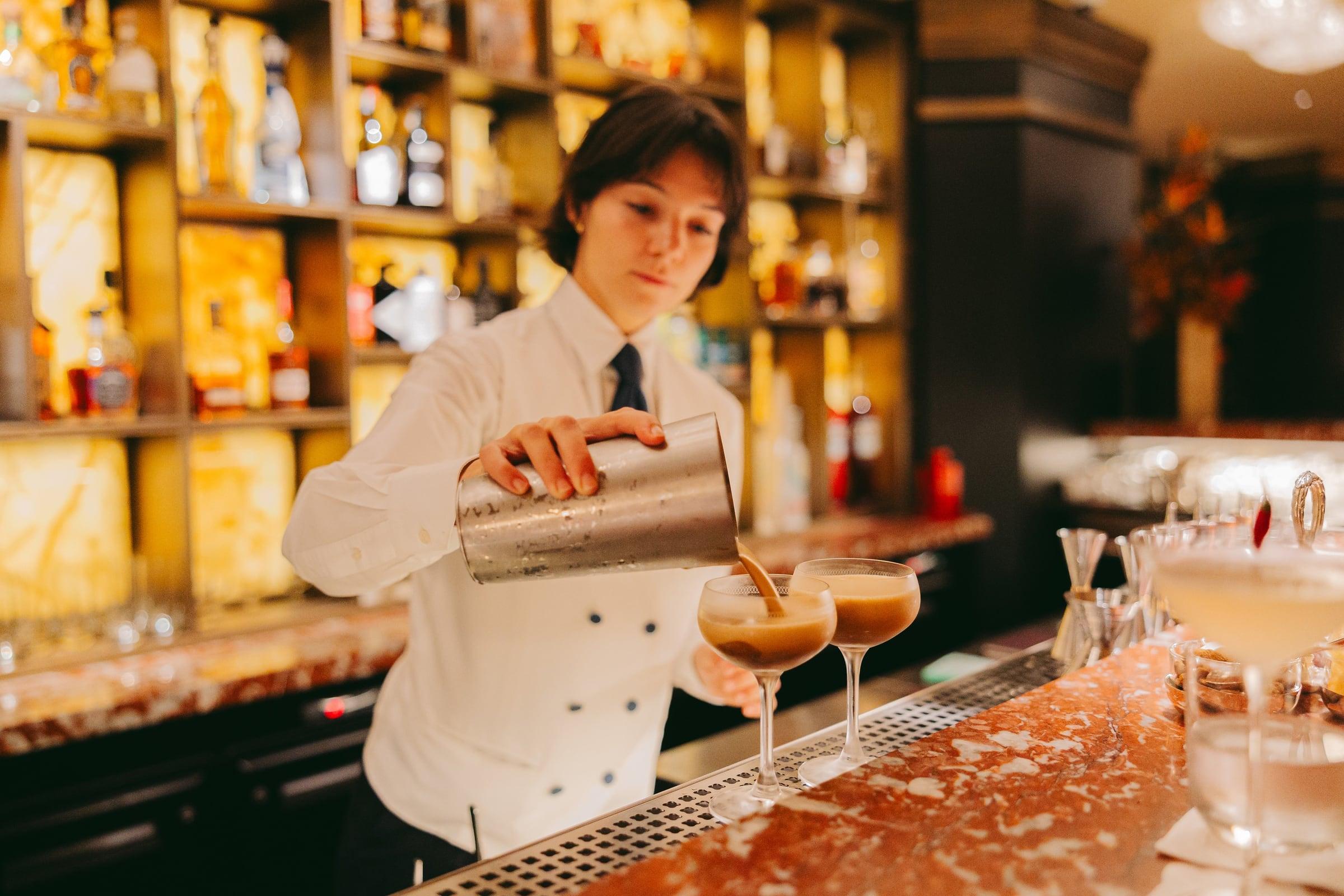
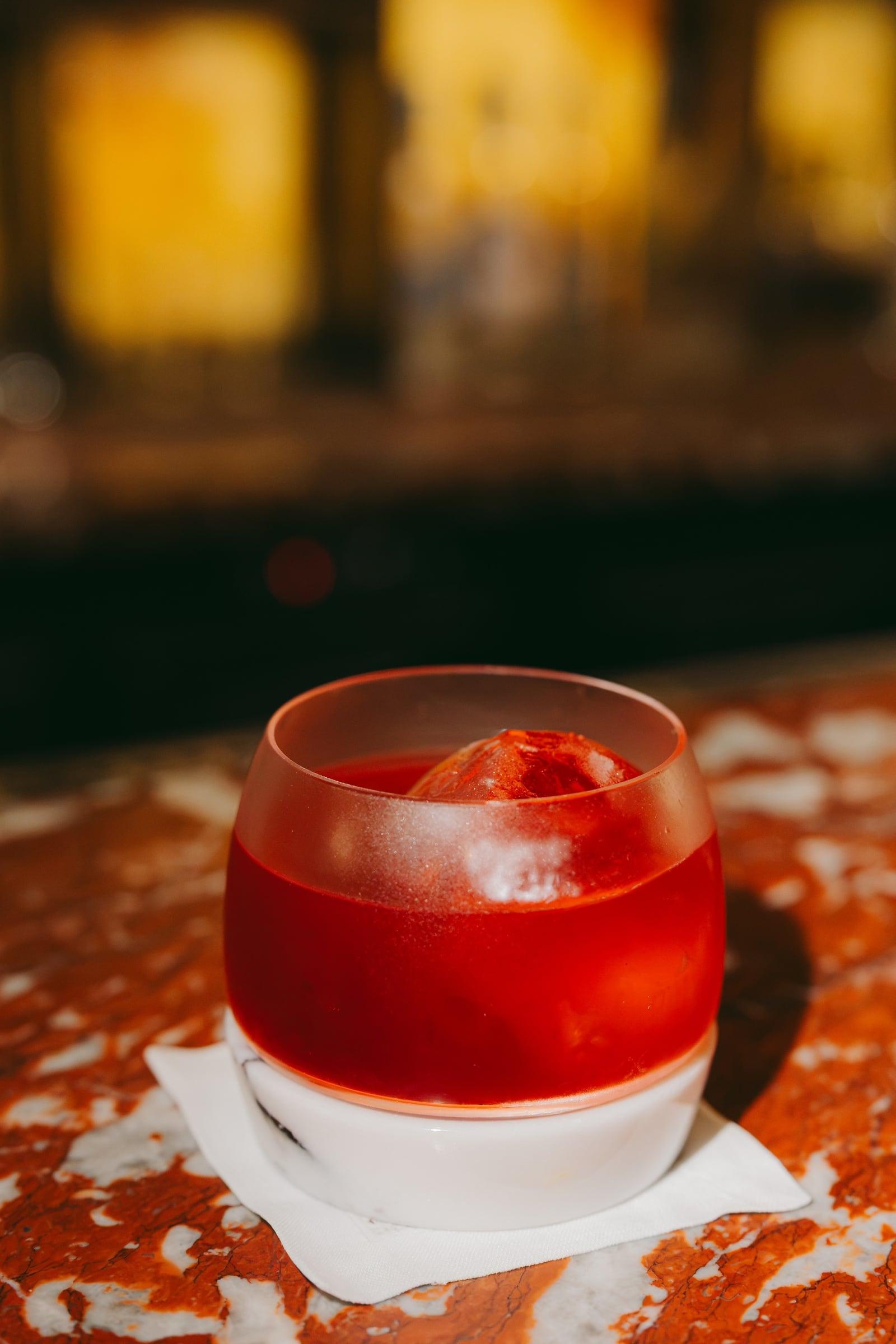
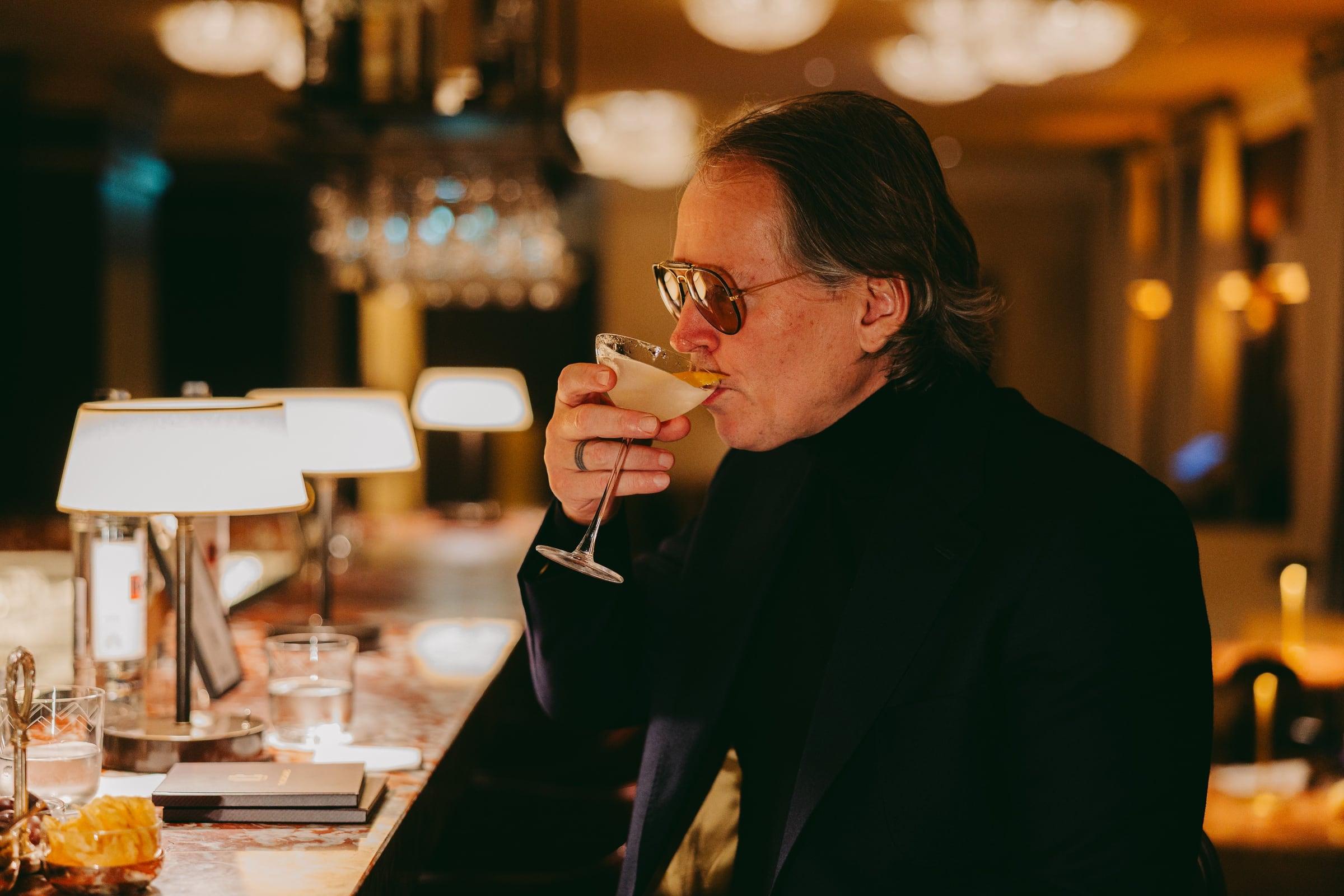
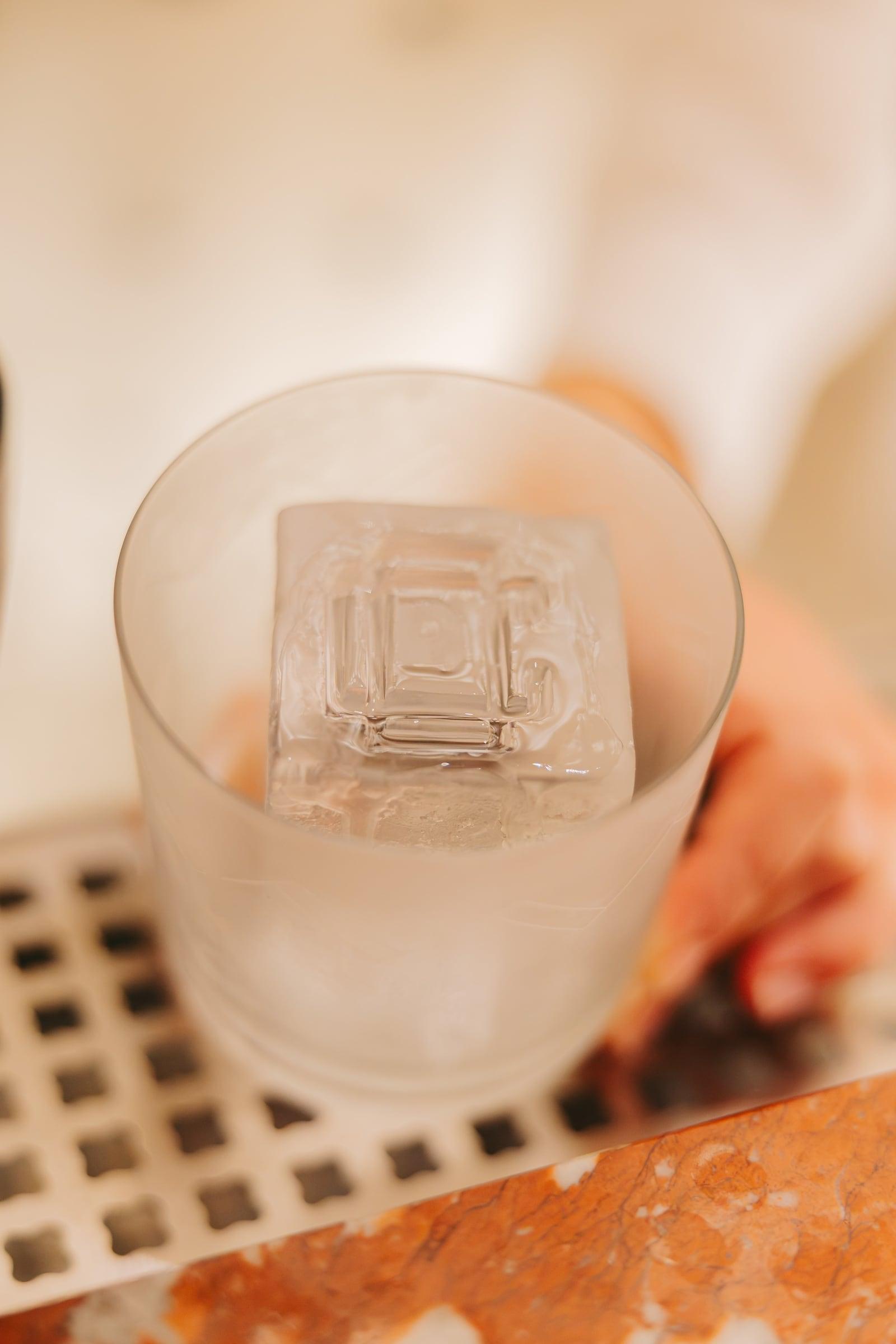
Pl. 47–52 · The Decades at The Carlton: the menu, the work, the drinks.
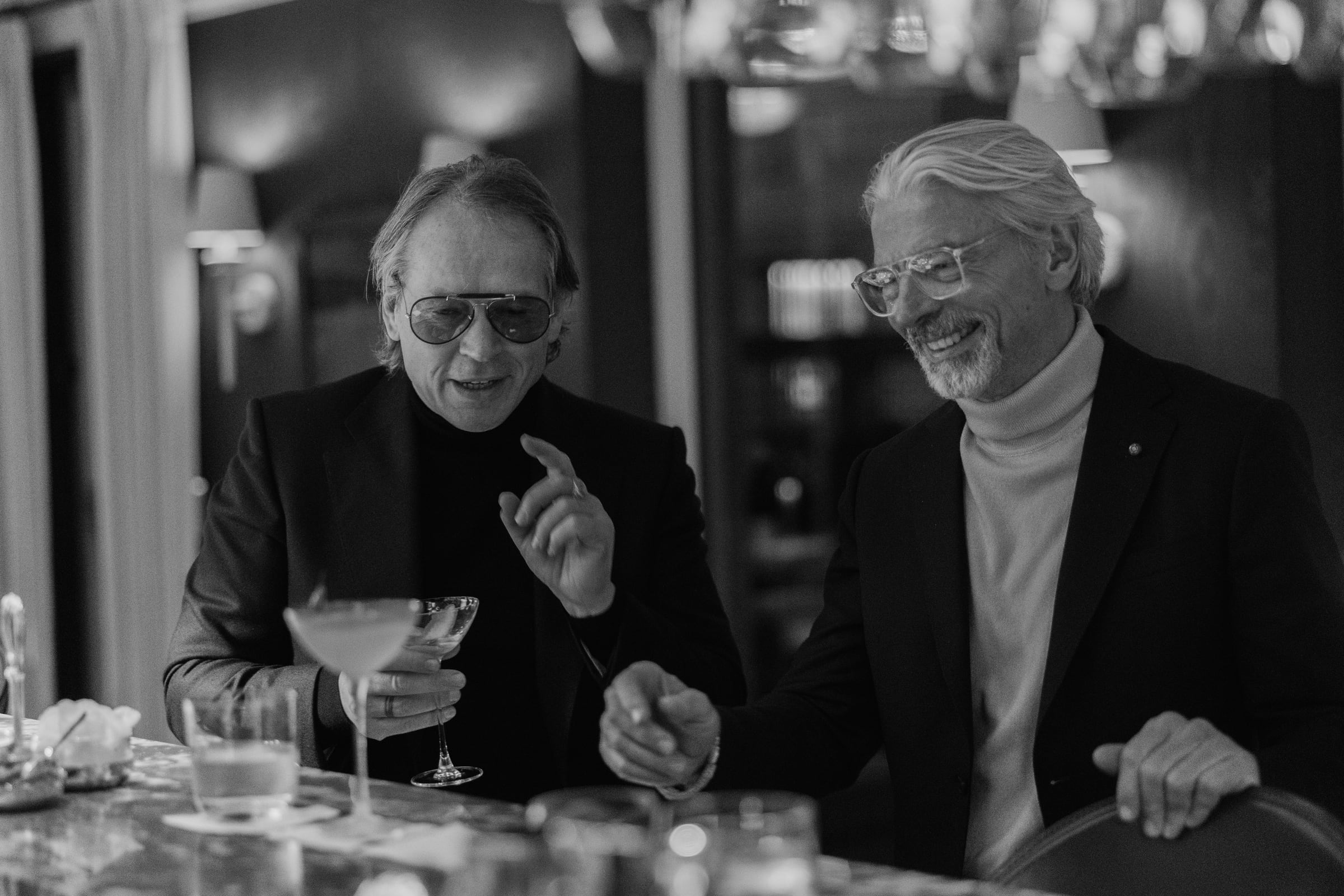
Pl. 53 · Company at the bar.
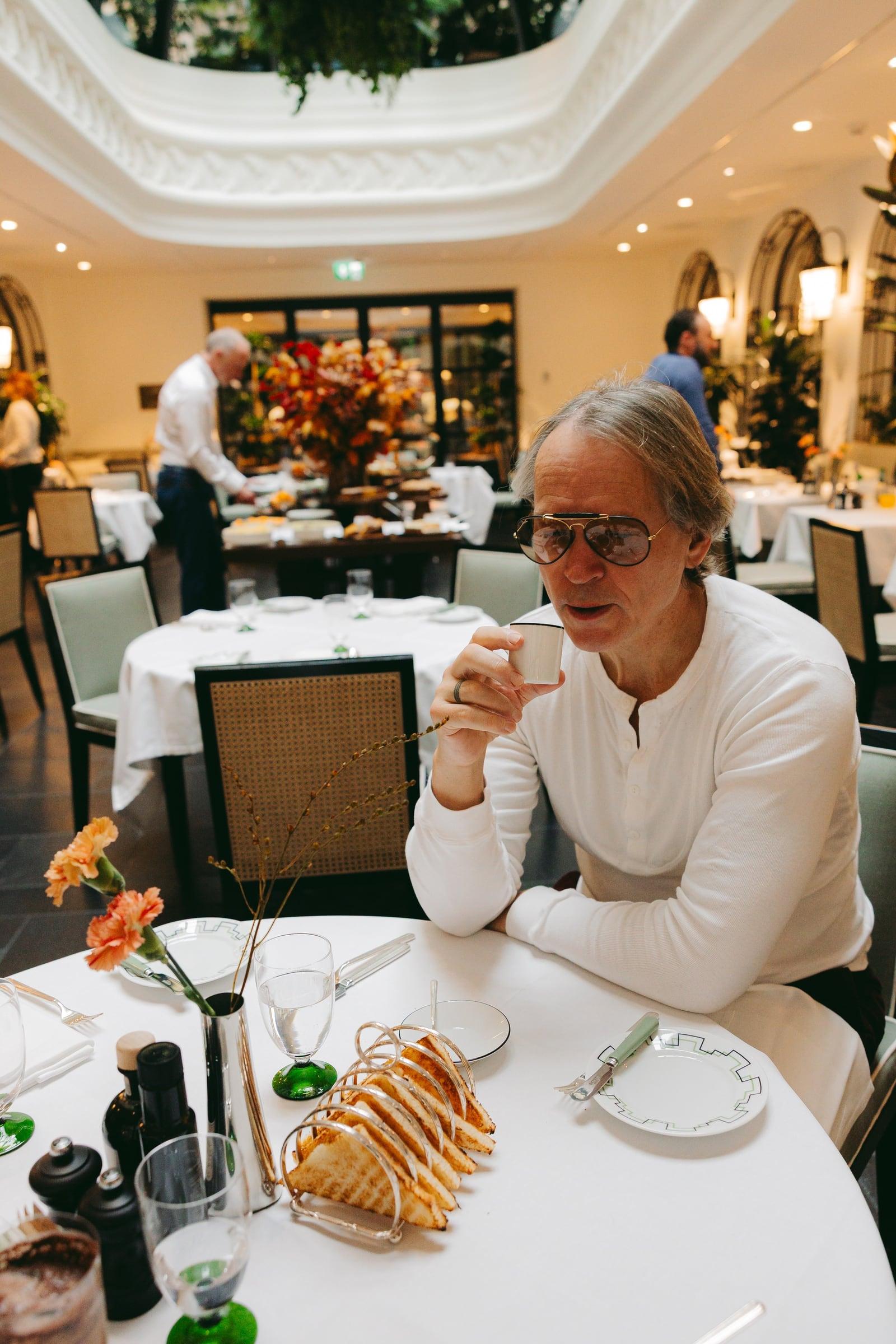
Pl. 54 · Breakfast under the glass dome on Wednesday, before the train south.
Chapter III
28 – 30 October
Chapter 03: Rome
Hotel de Russie
Rome, Lazio
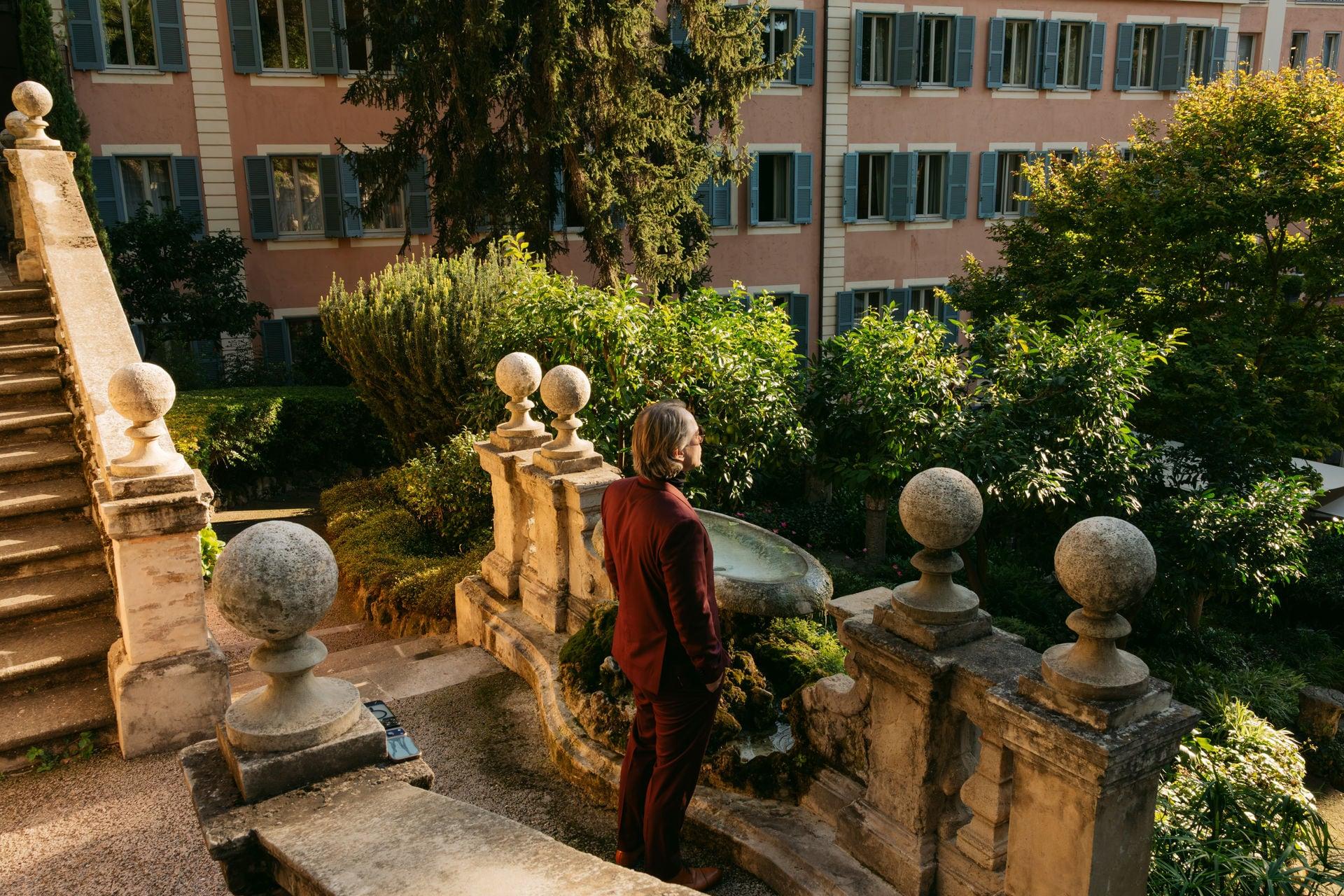
Hotel de Russie sits between Piazza del Popolo and the Spanish Steps, and it is built around a garden that climbs the slope behind it in terraces of stone, palms and statues. We checked in in the afternoon. The first thing the window showed us was the courtyard: pink and ochre walls, green shutters and a field of white umbrellas.
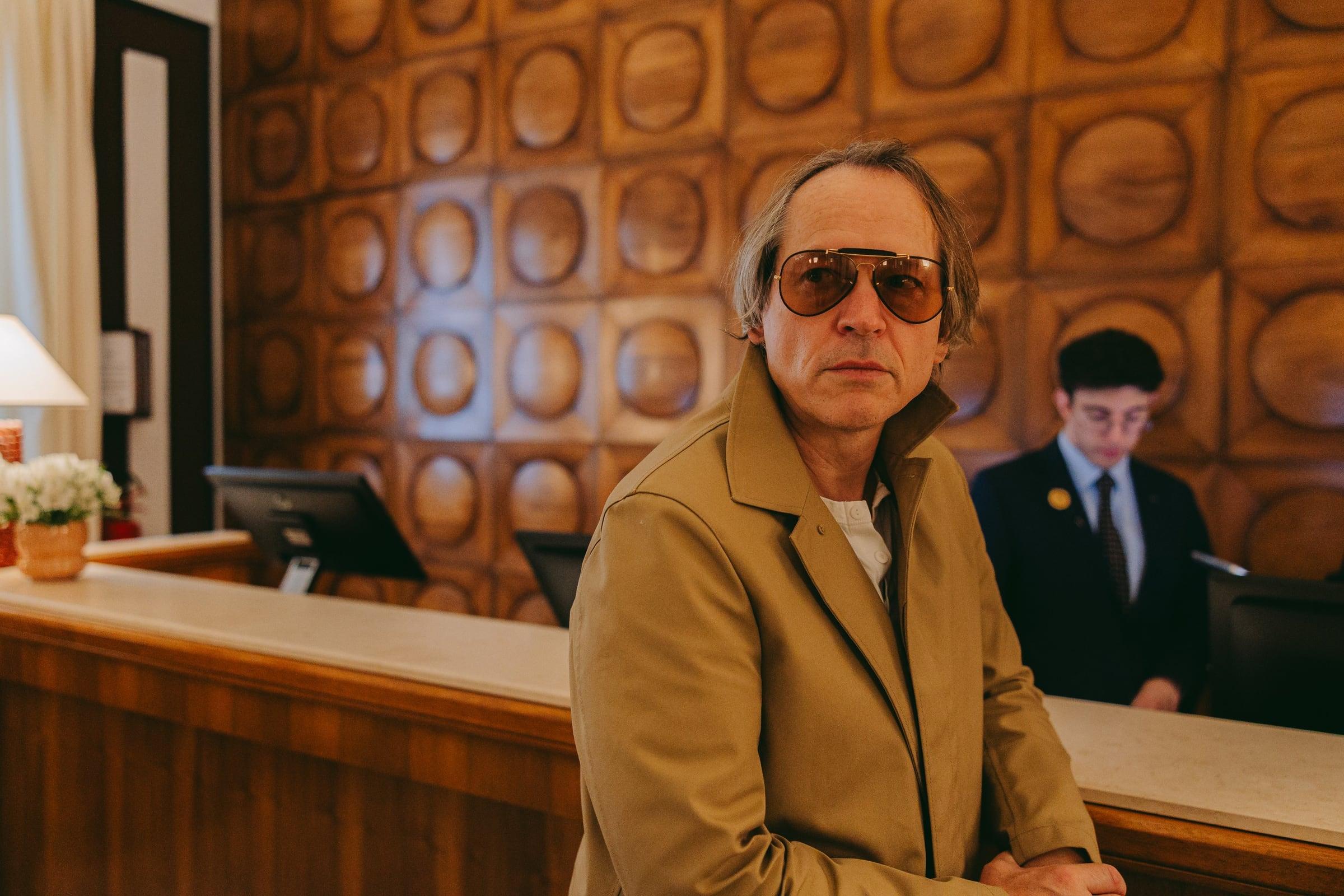
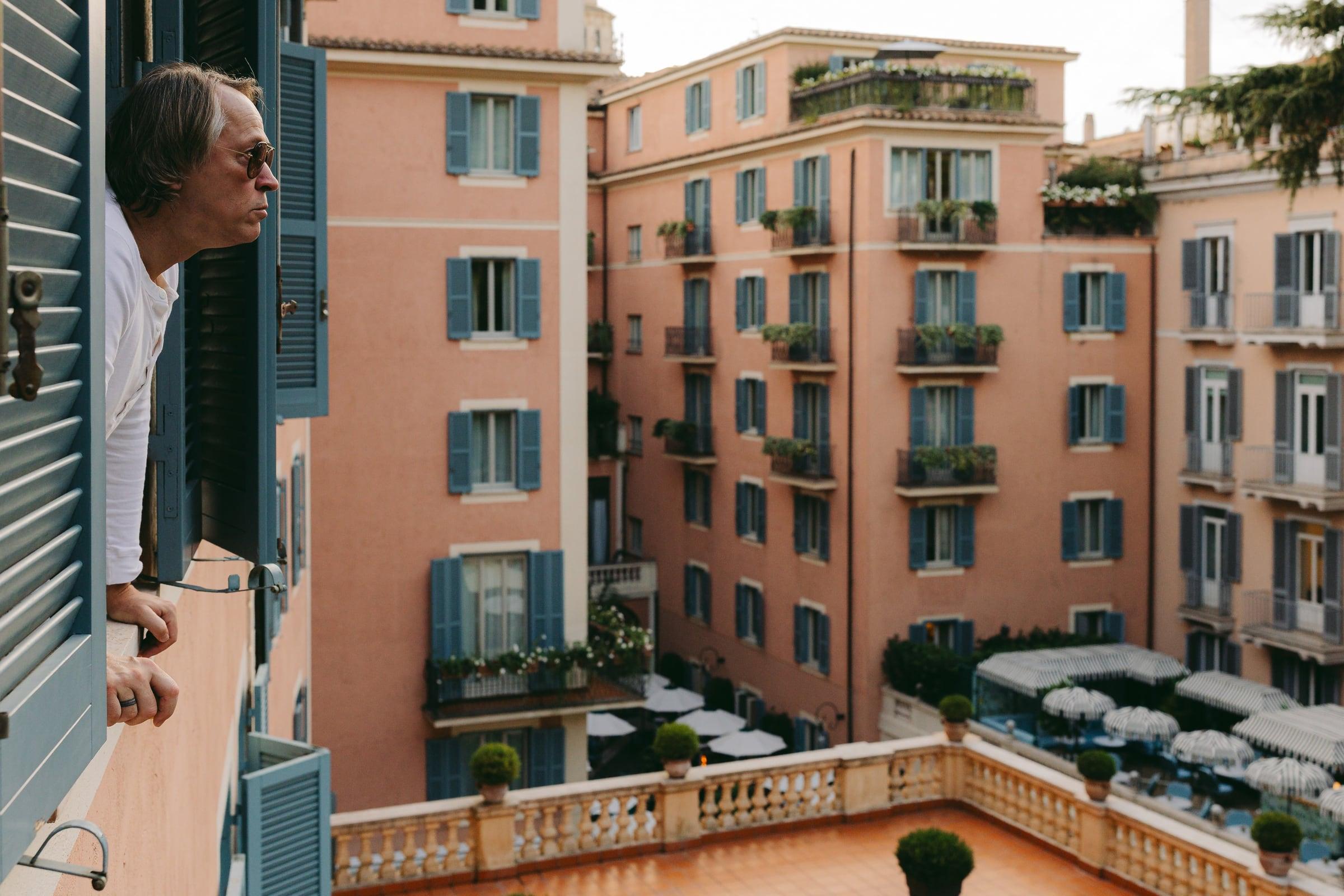
Pl. 55–56 · Check-in, and the first look at the courtyard.
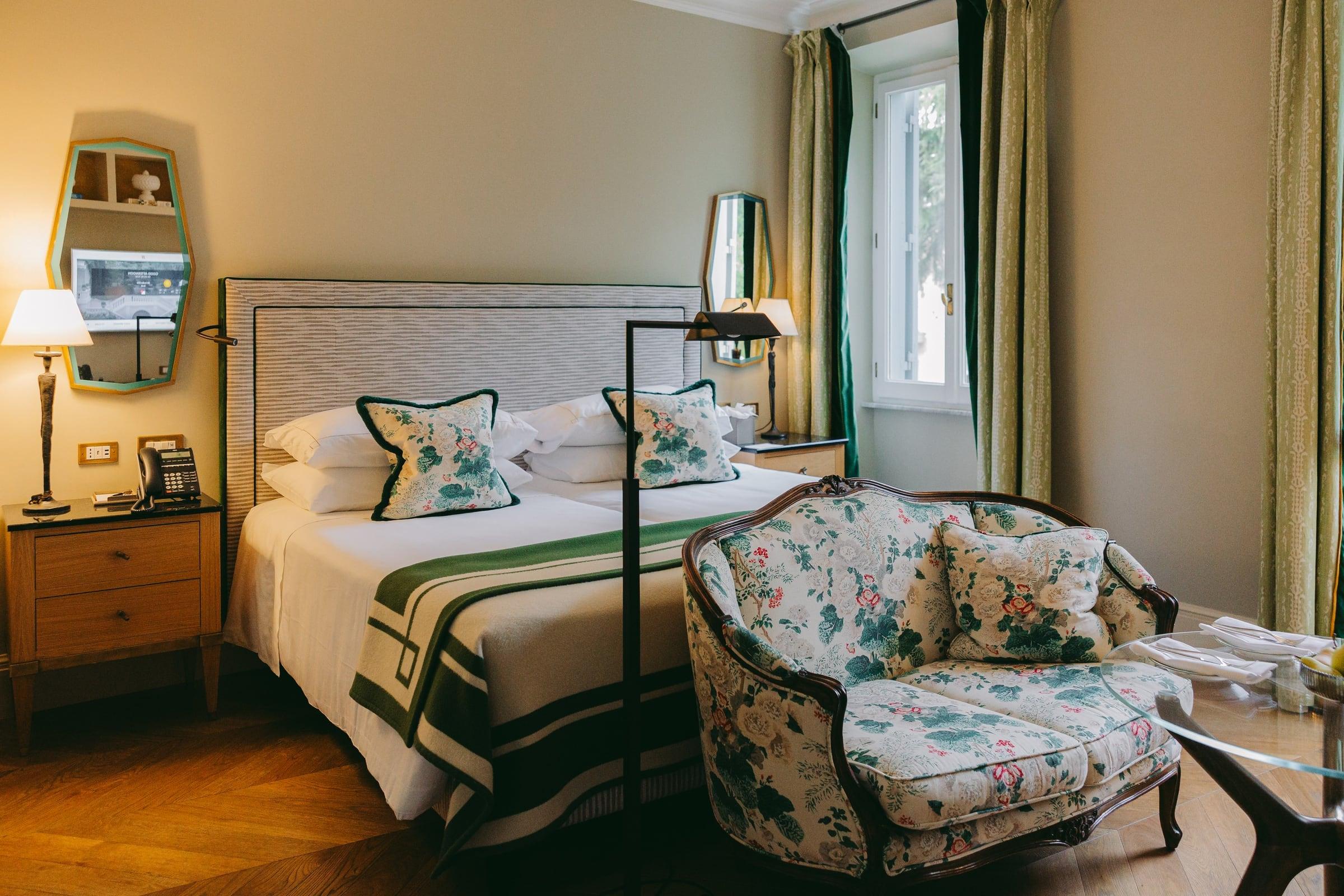
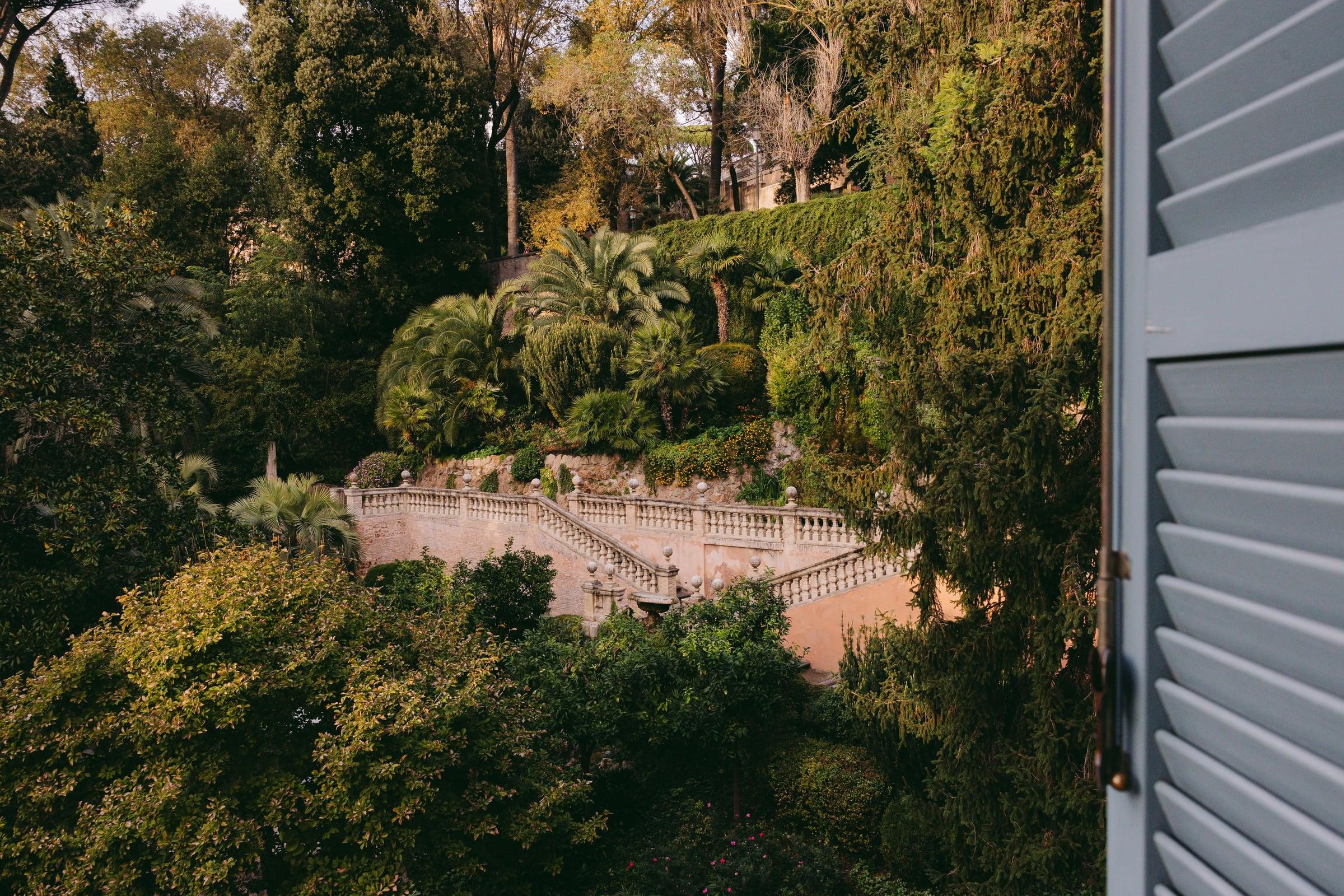
Pl. 57–58 · The room; the garden from the other window.
By dusk the lanterns on the garden stairs were lit. We went out for a short walk before dinner, past the entrance and into streets where the cobbles shone under the lamps.
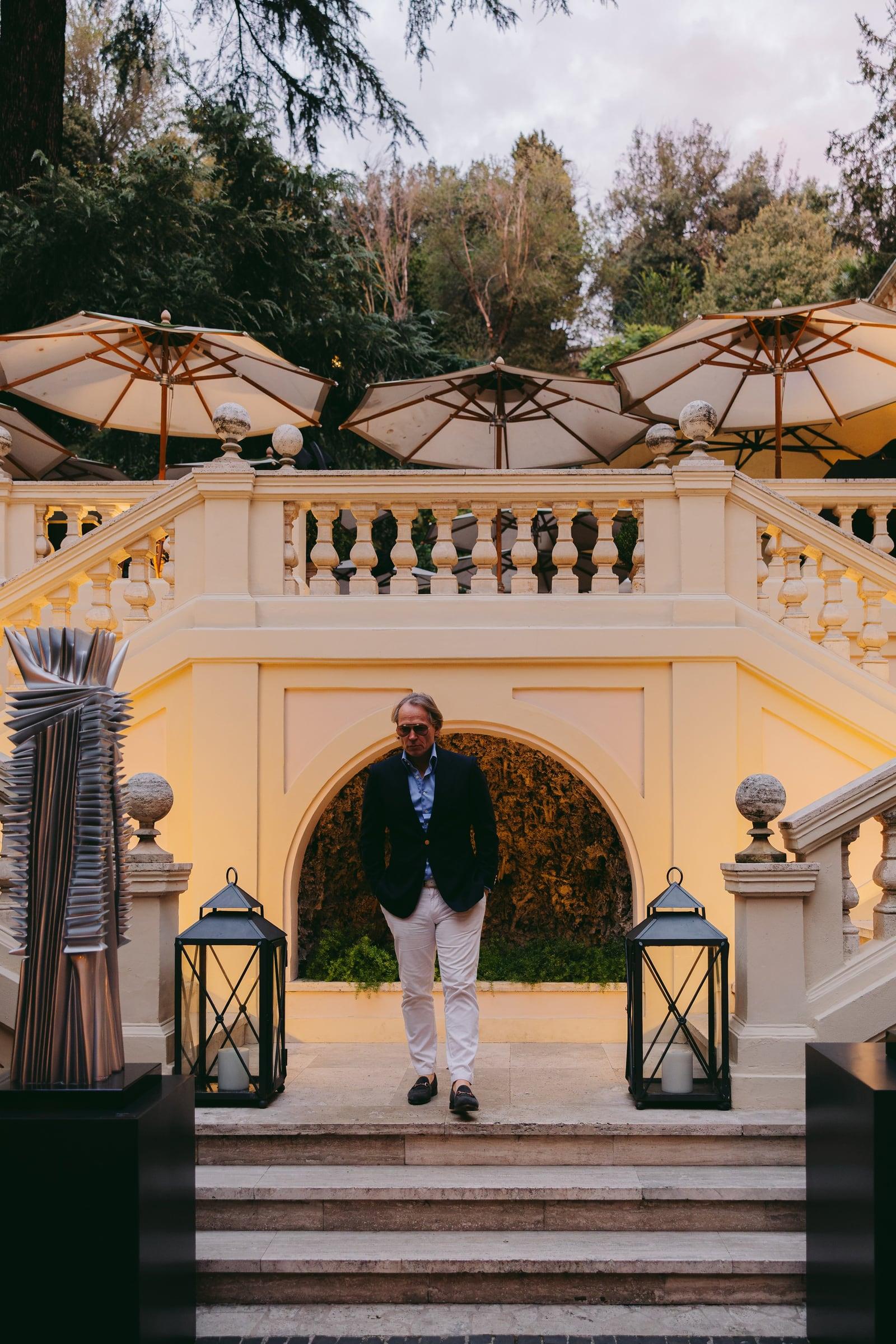
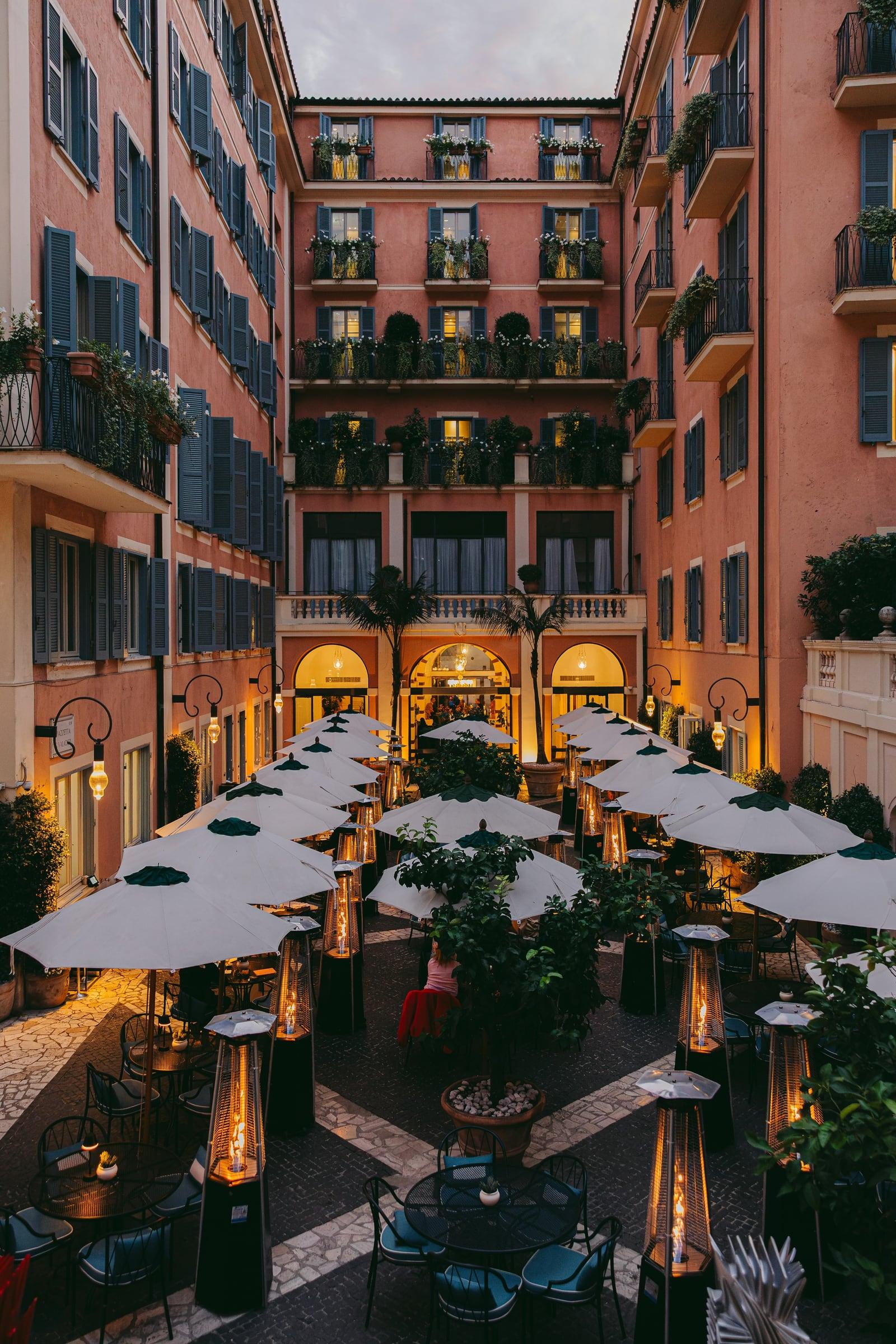
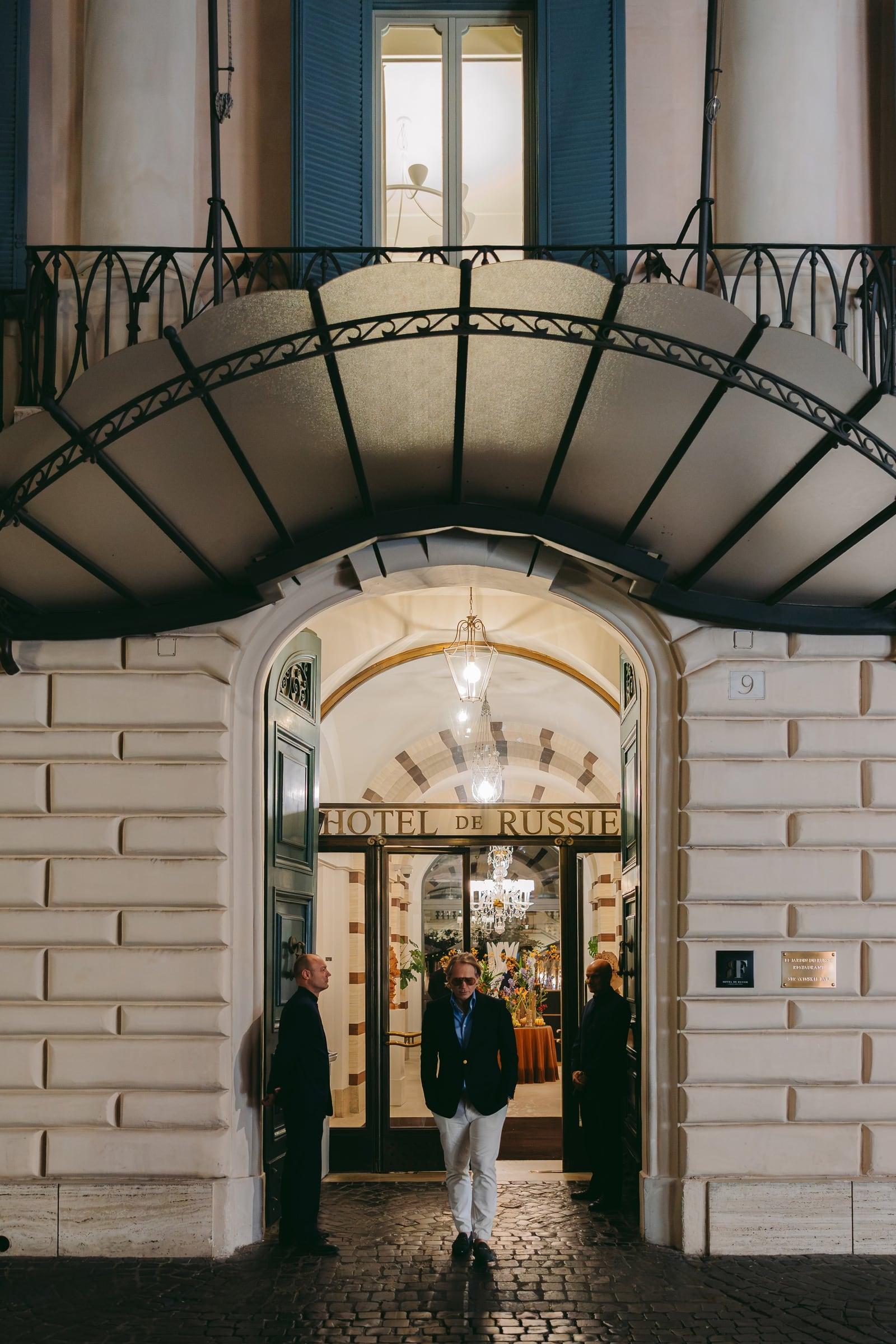
Pl. 59–61 · The garden stairs, the courtyard, the entrance.
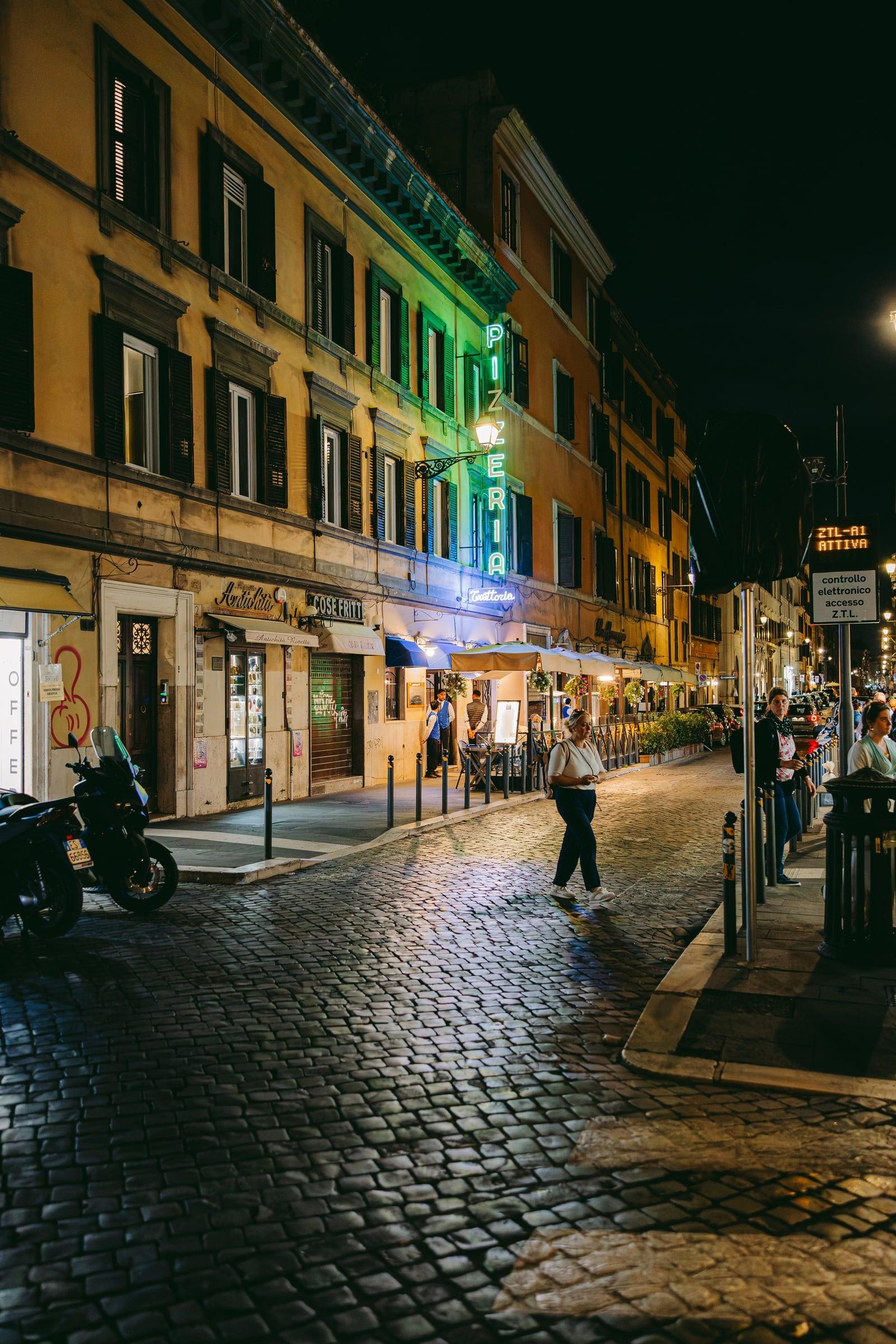
Pl. 62
Dinner was in the garden. The dining room inside was painted with landscapes and lit by a chandelier; outside, the tables stood under the trees. A waiter poured the wine and stayed long enough to laugh at something Michel said. A cat inspected the table and decided against us.
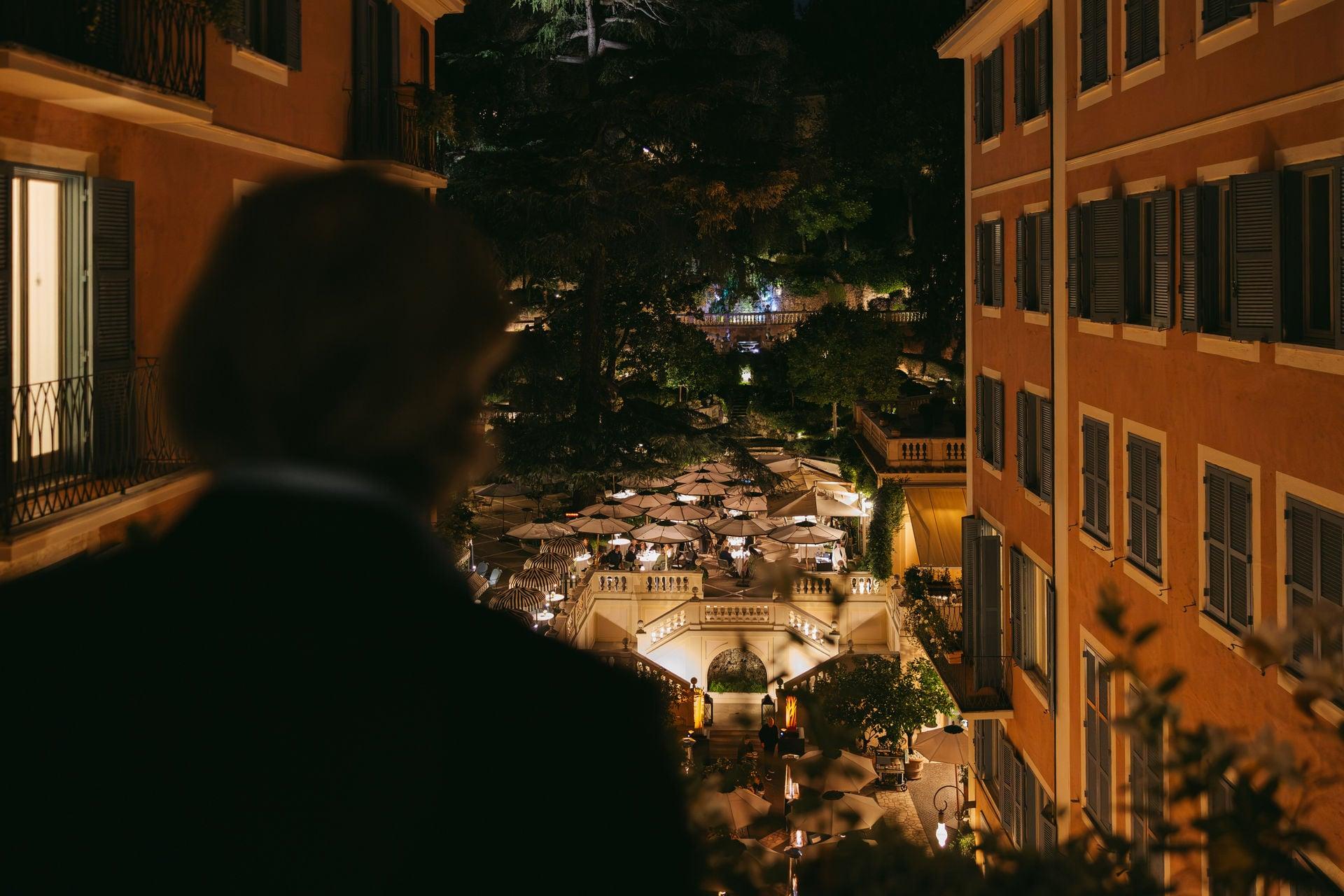
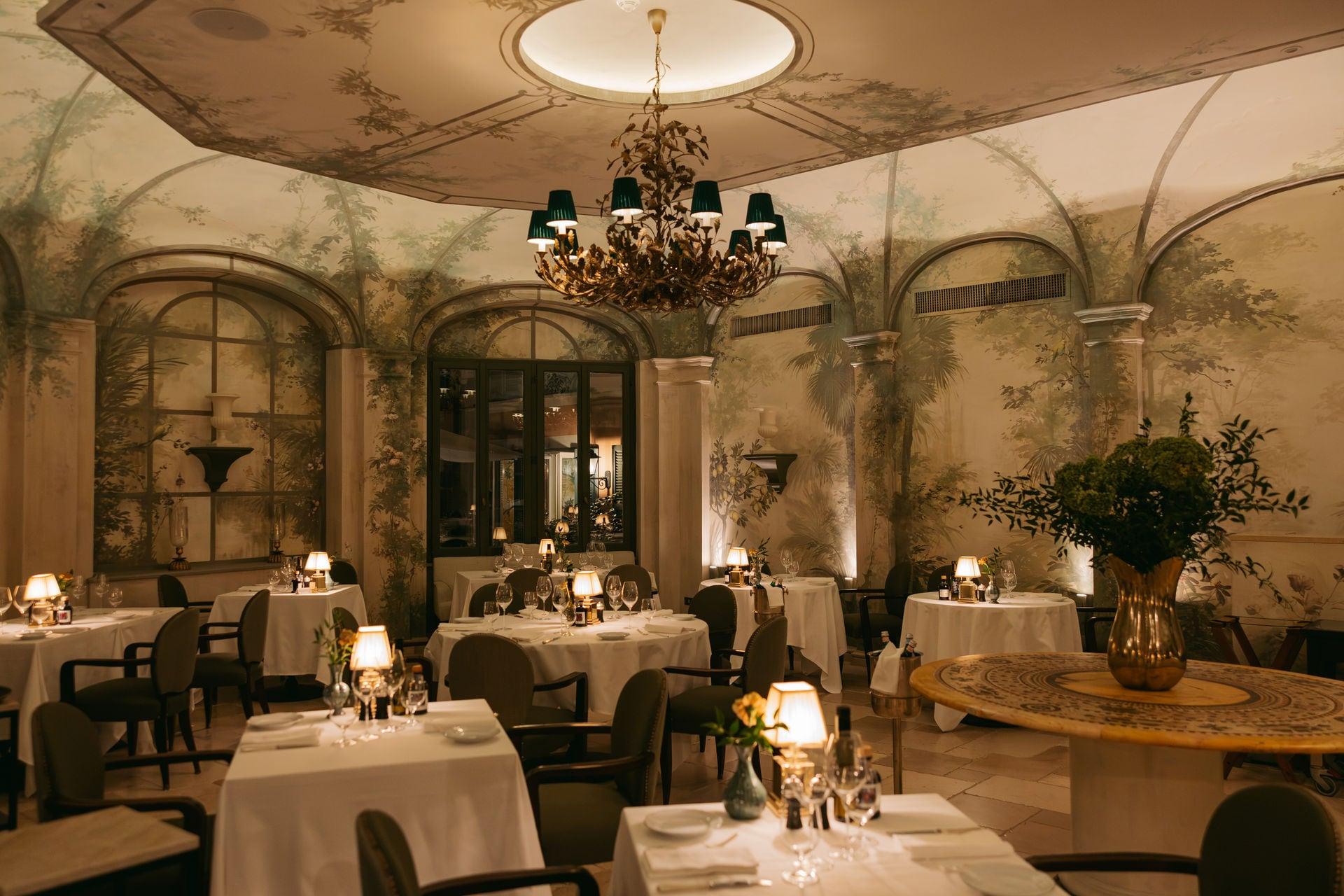
Pl. 63–64 · The garden at night; the dining room.
Dinner in the garden
4 plates
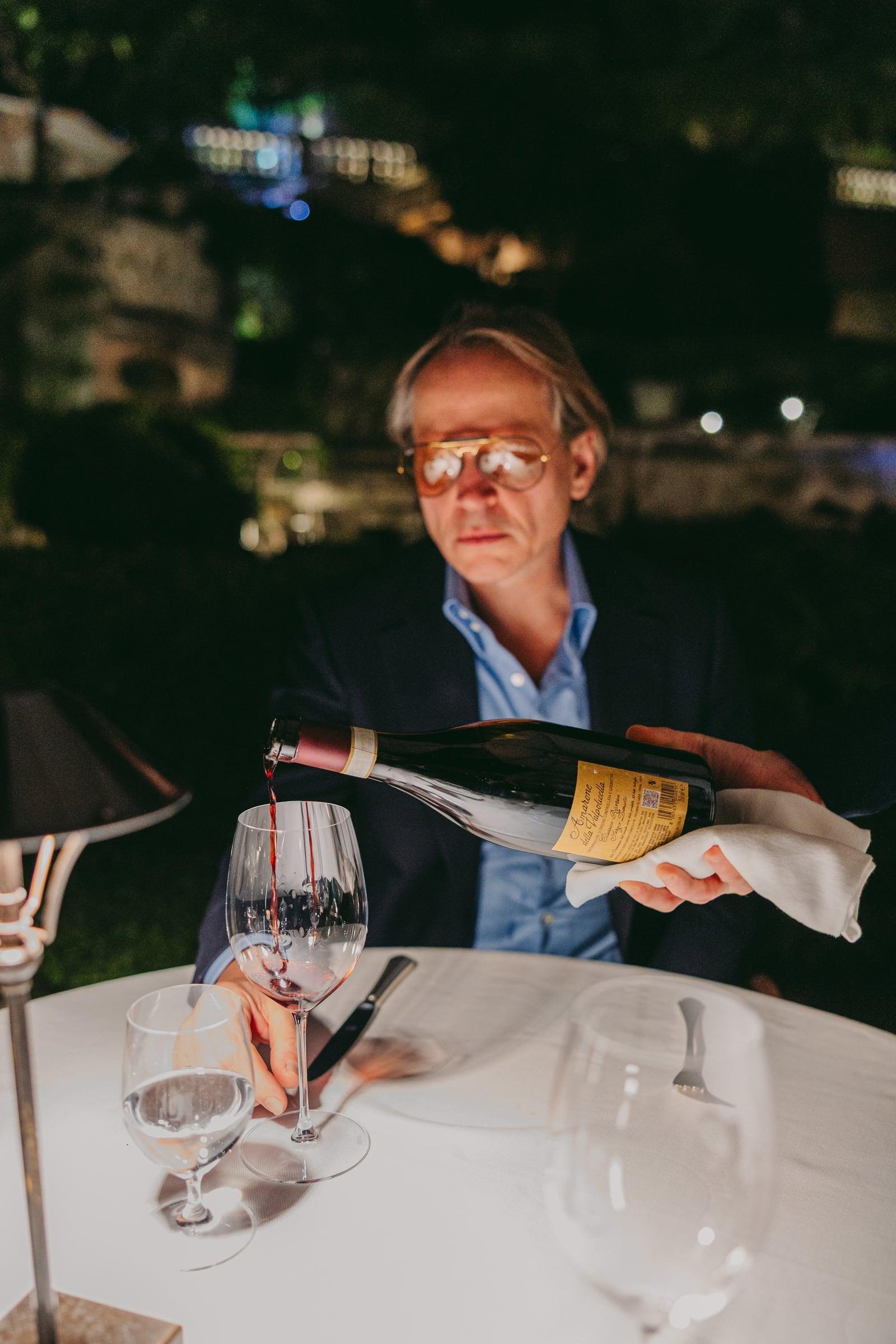
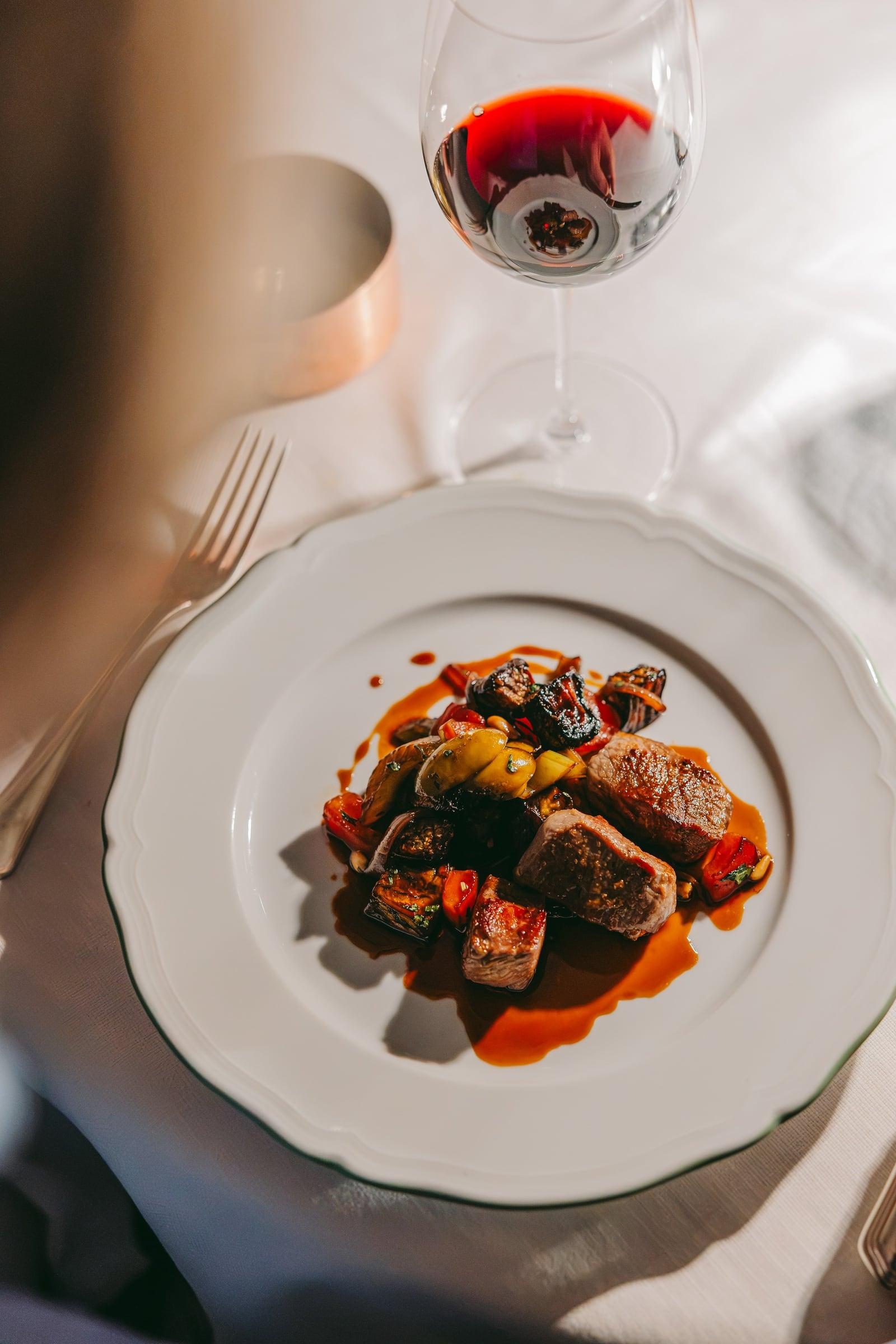
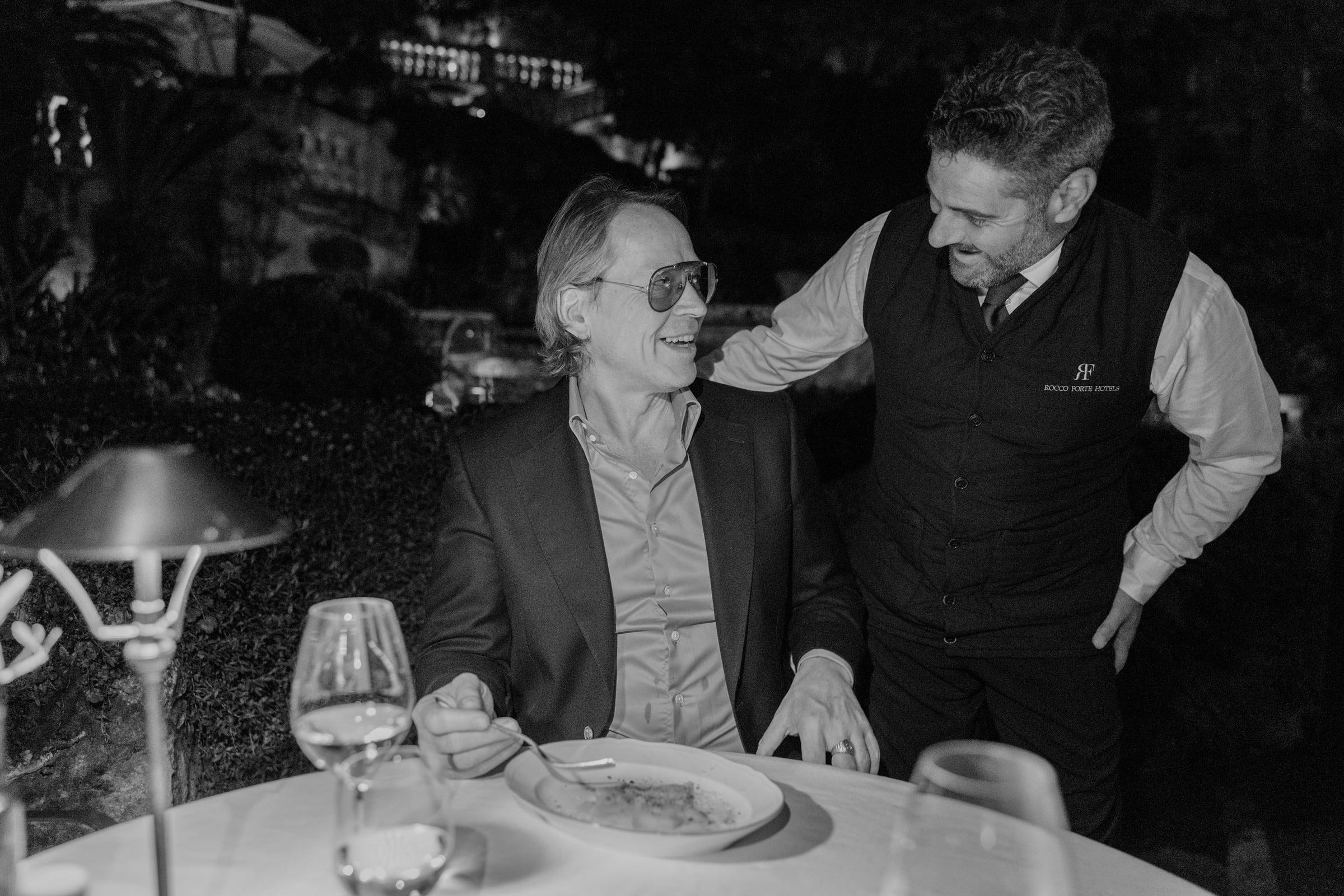
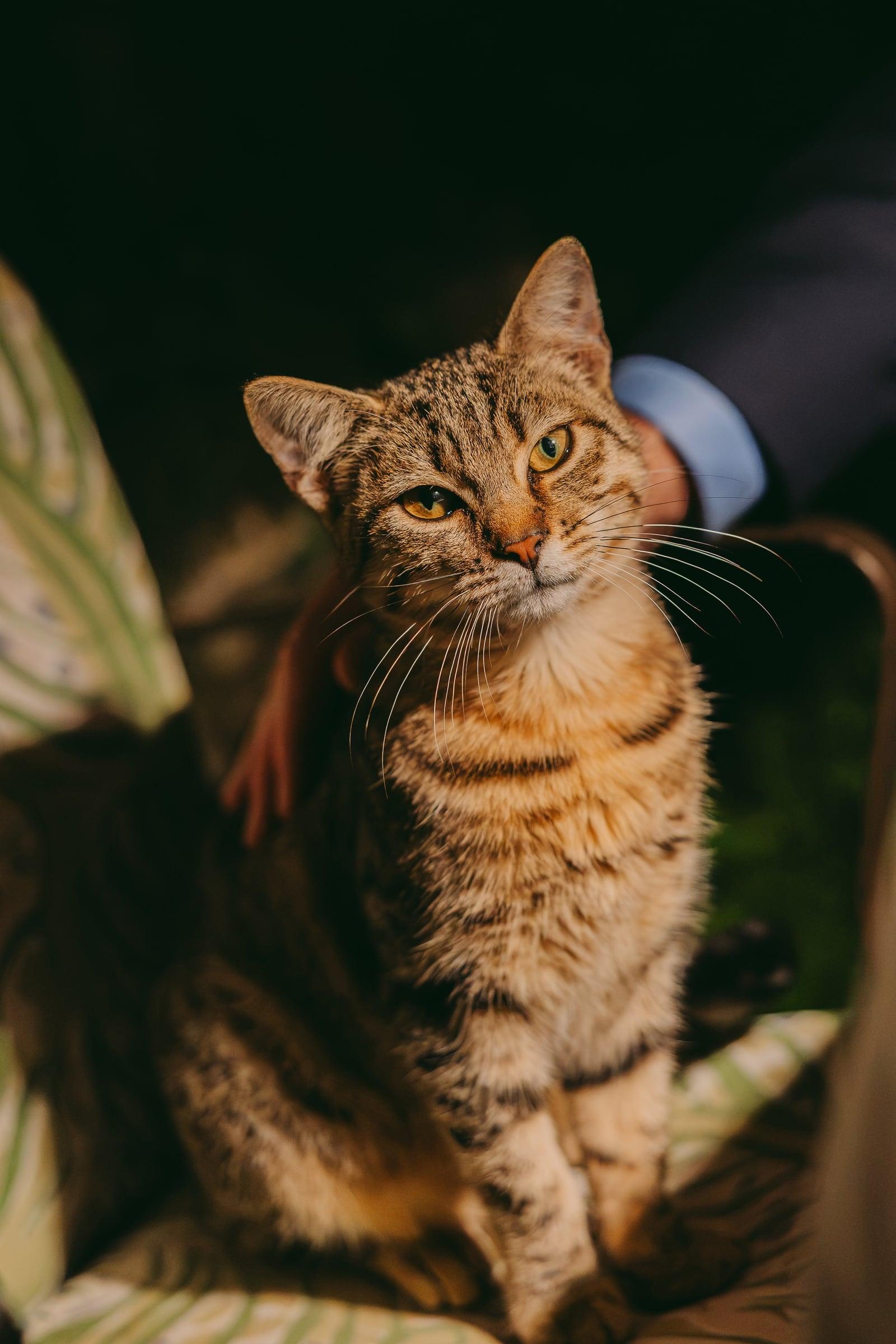
Pl. 65–68 · Wednesday evening.
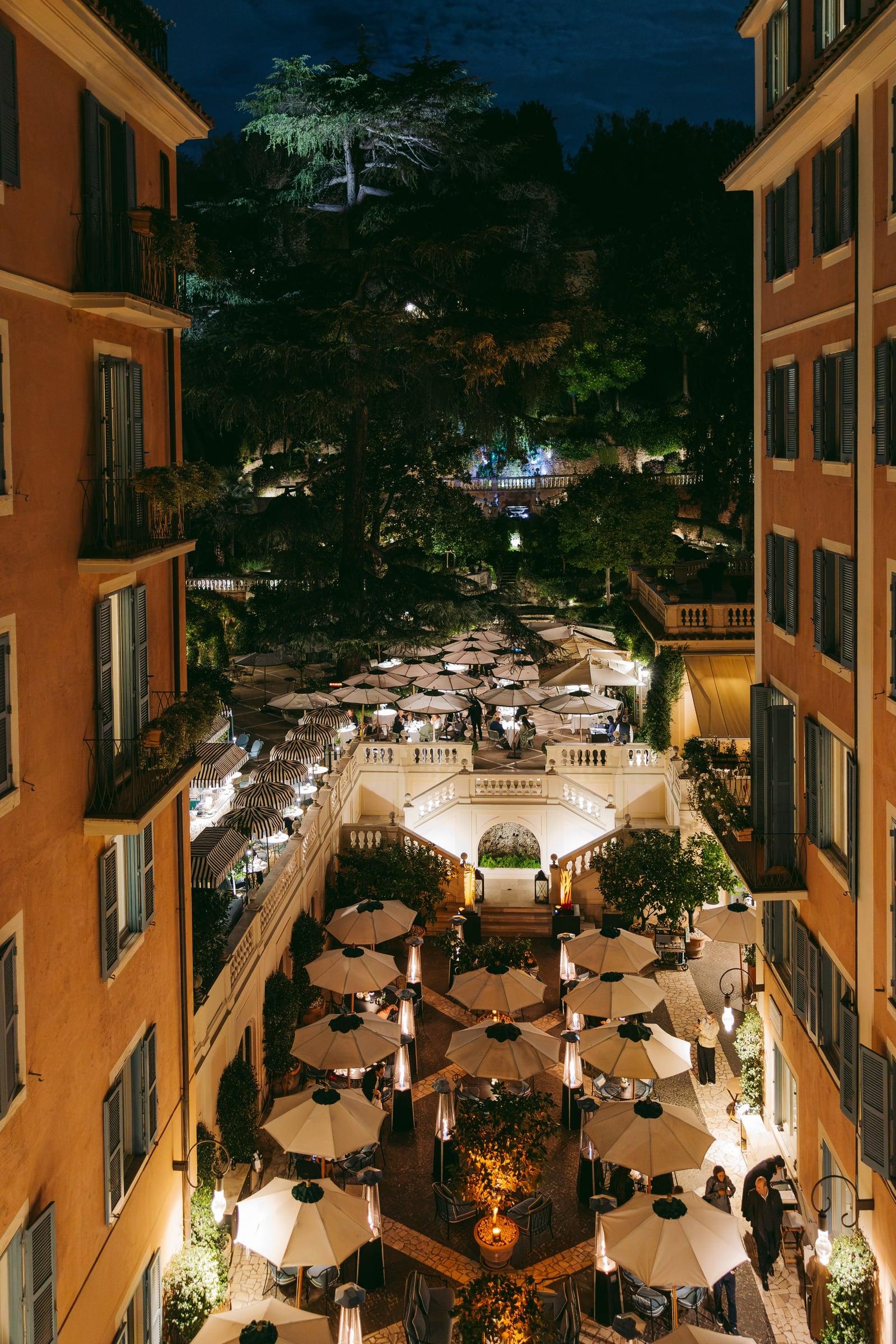
Pl. 69 · The courtyard from the window, later that night.
Thursday
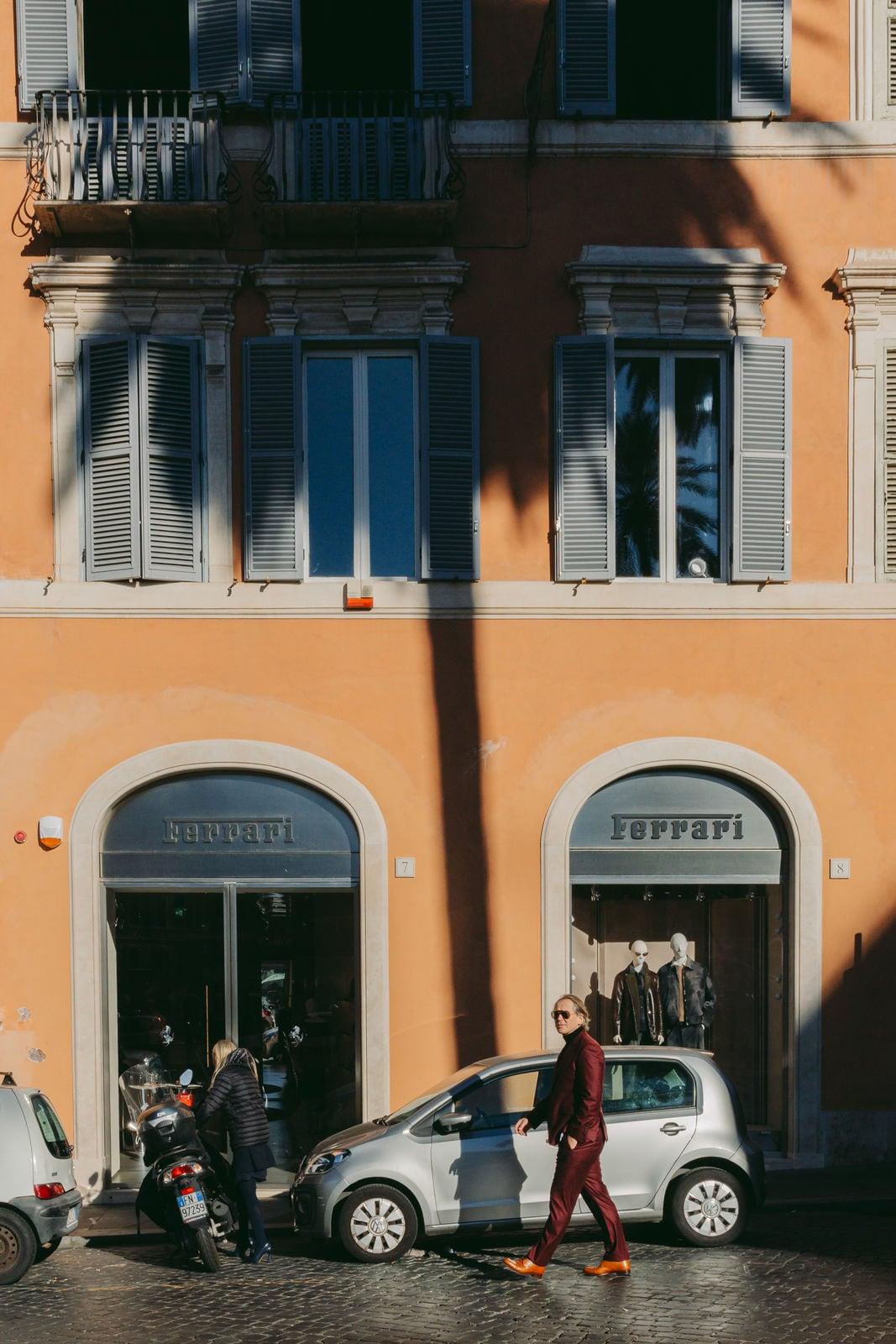
Early the next morning the Spanish Steps were almost empty, which happens for about an hour a day. From the top, the dome of St Peter's stood over the roofs in clean light. Then we walked: a palm throwing its shadow across an orange wall, a side street hung with ivy, the obelisk in Piazza del Popolo against a sky that was nearly navy.
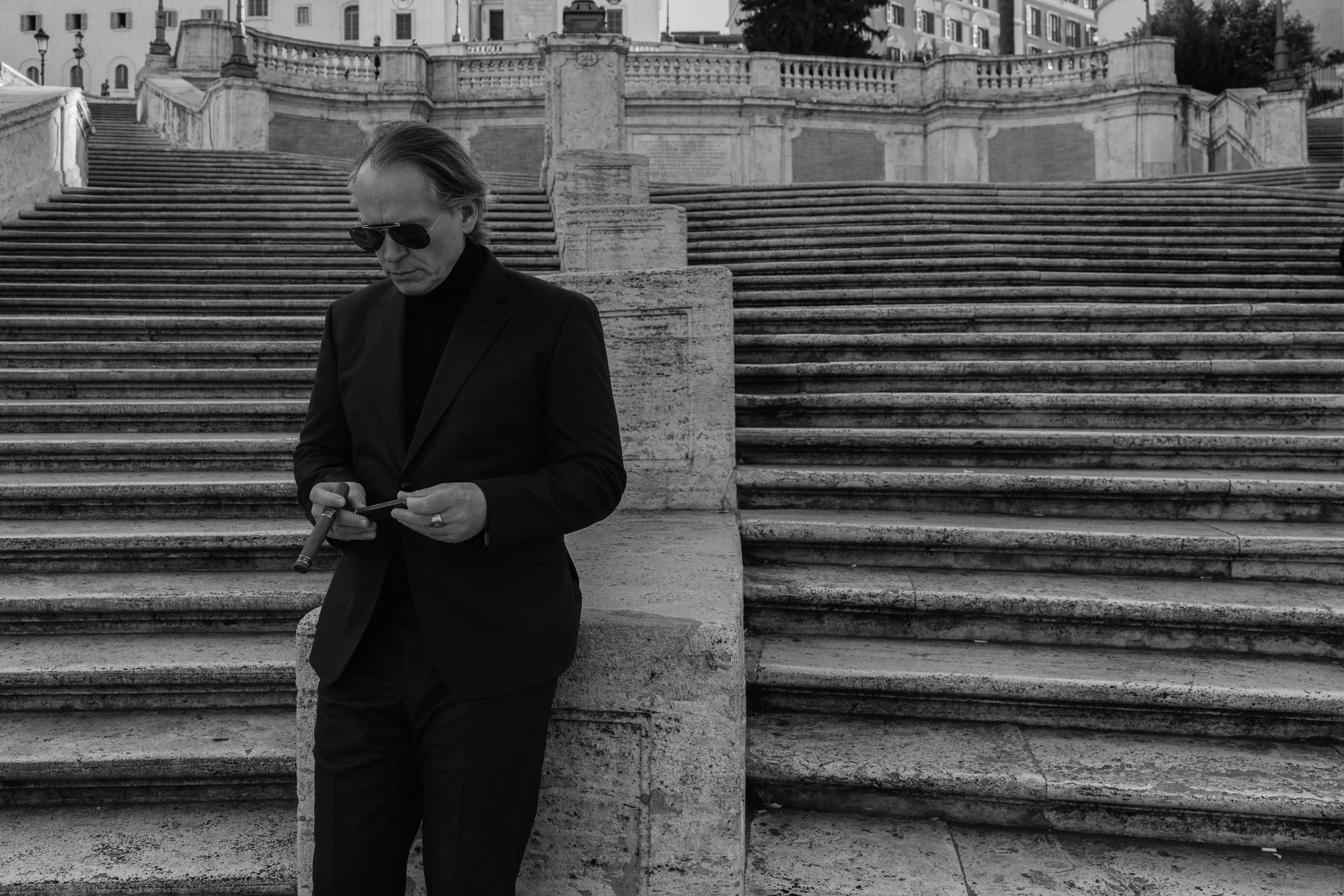
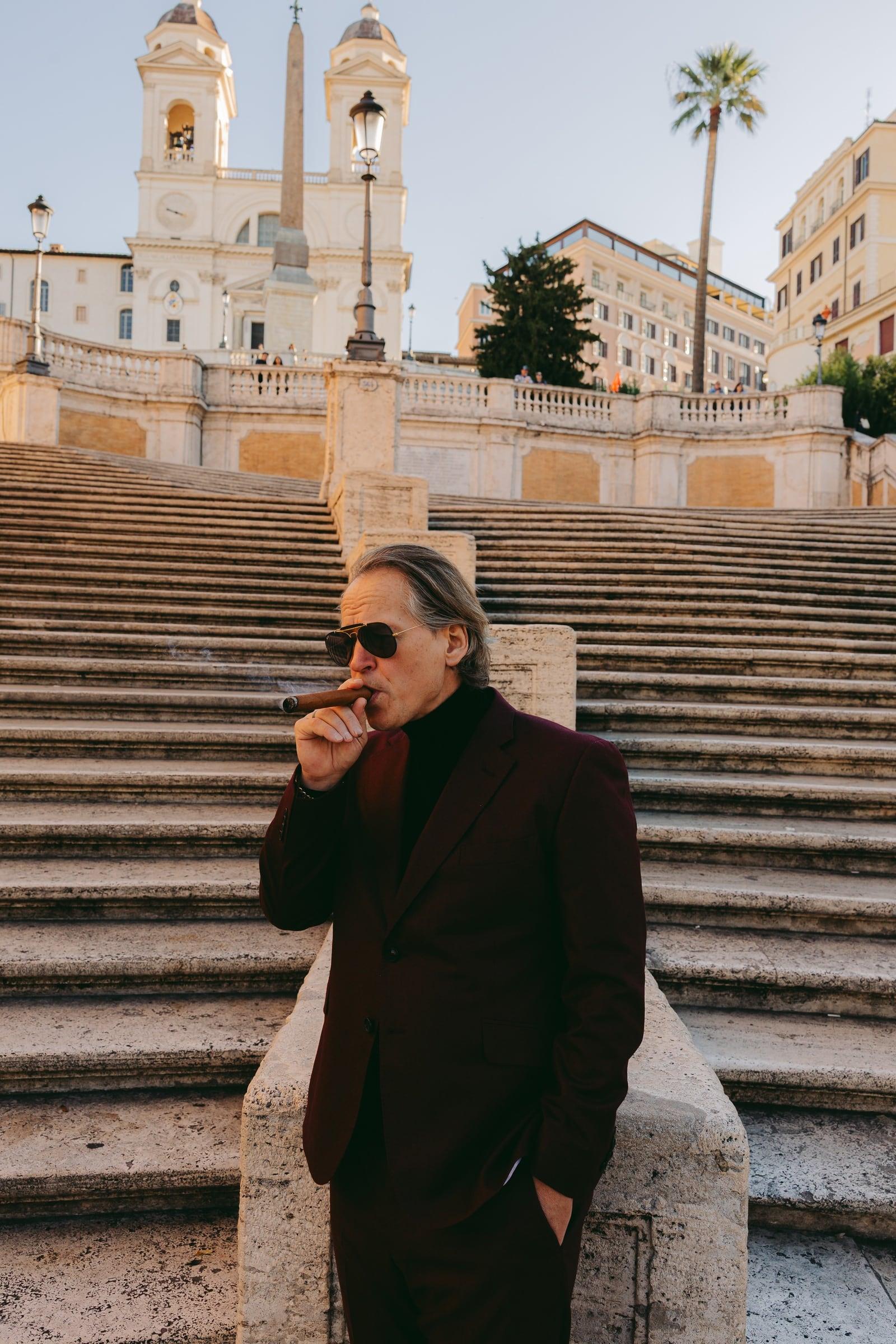
Pl. 70–71 · The Spanish Steps, early.
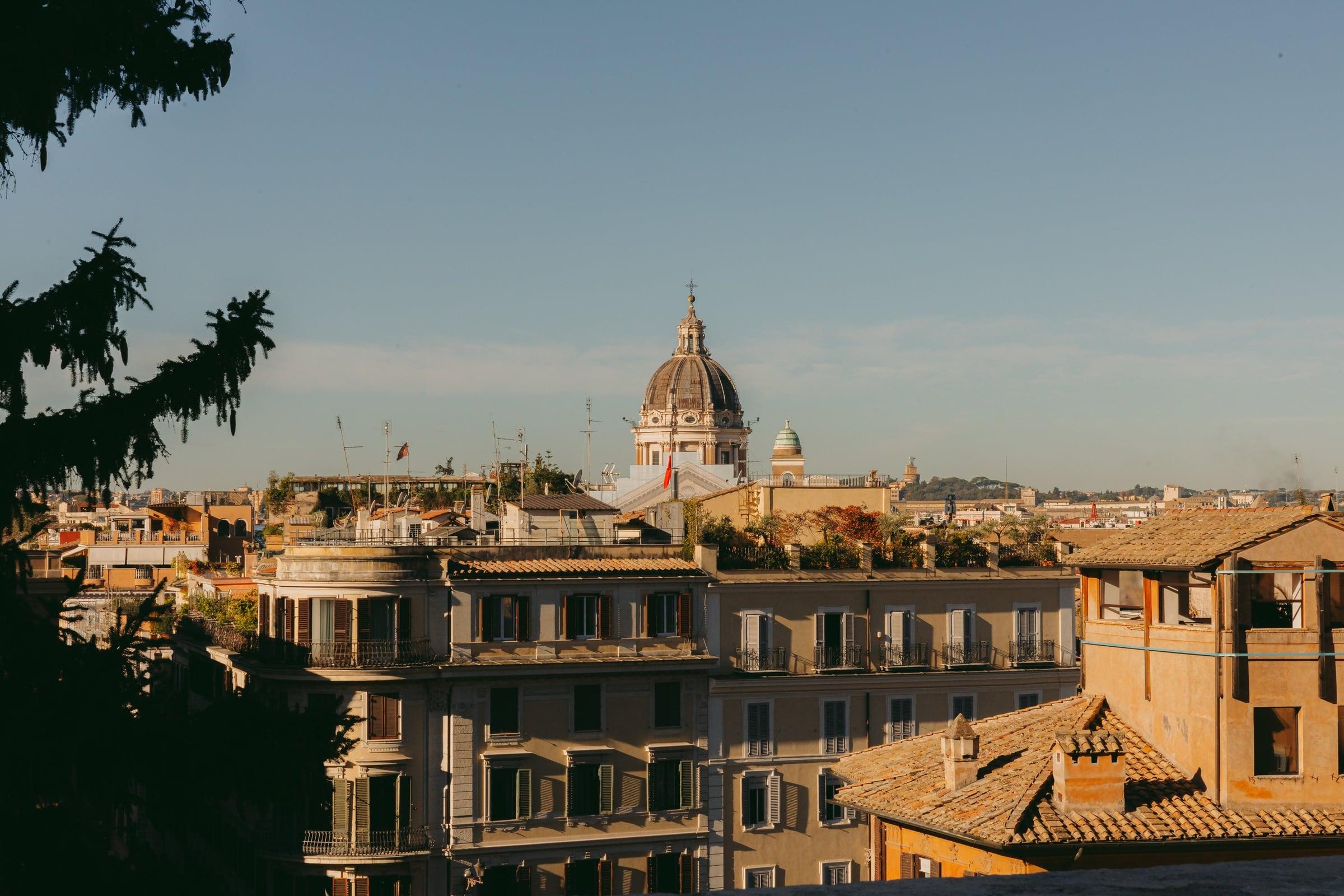
Pl. 72 · St Peter's from above the Steps.
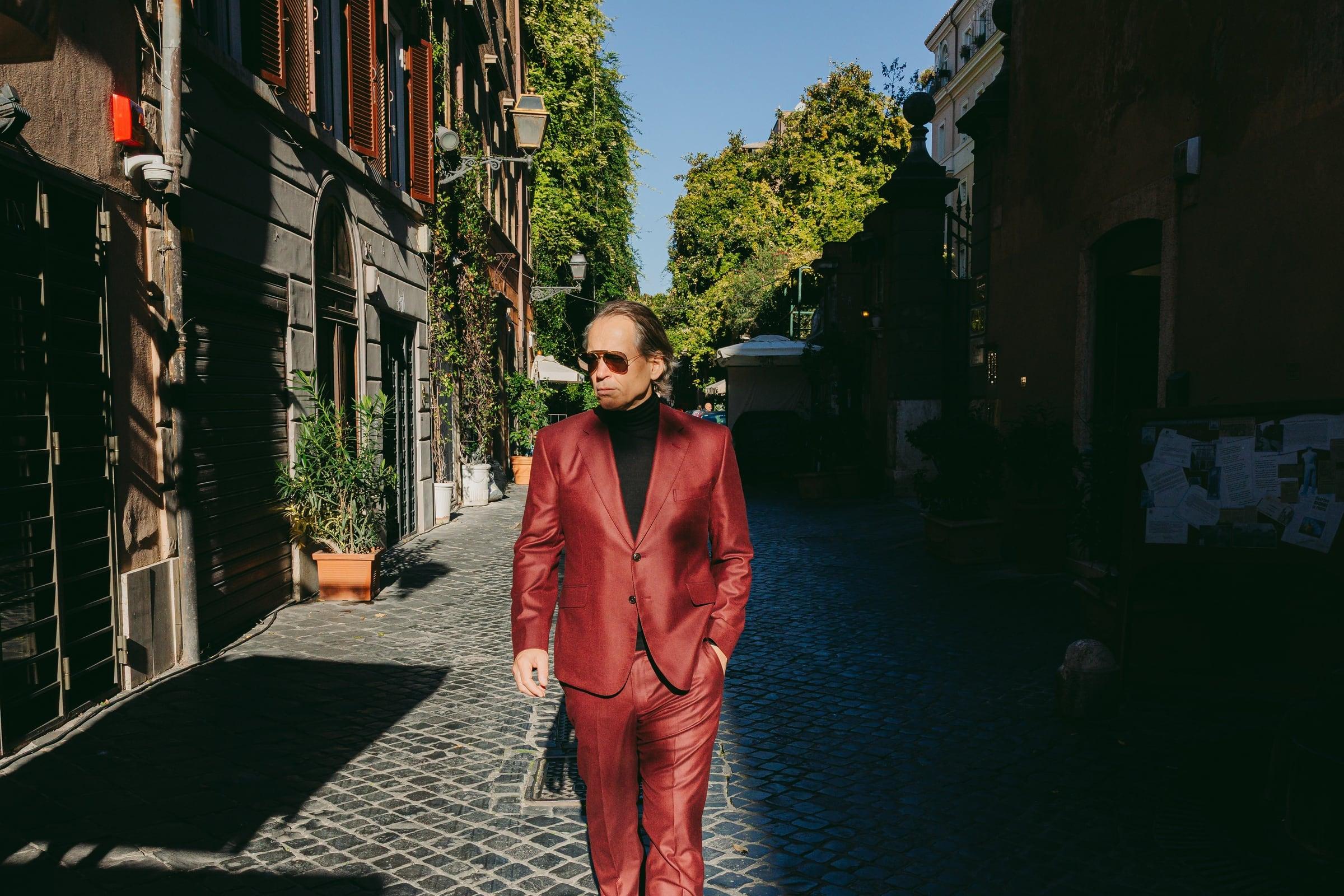
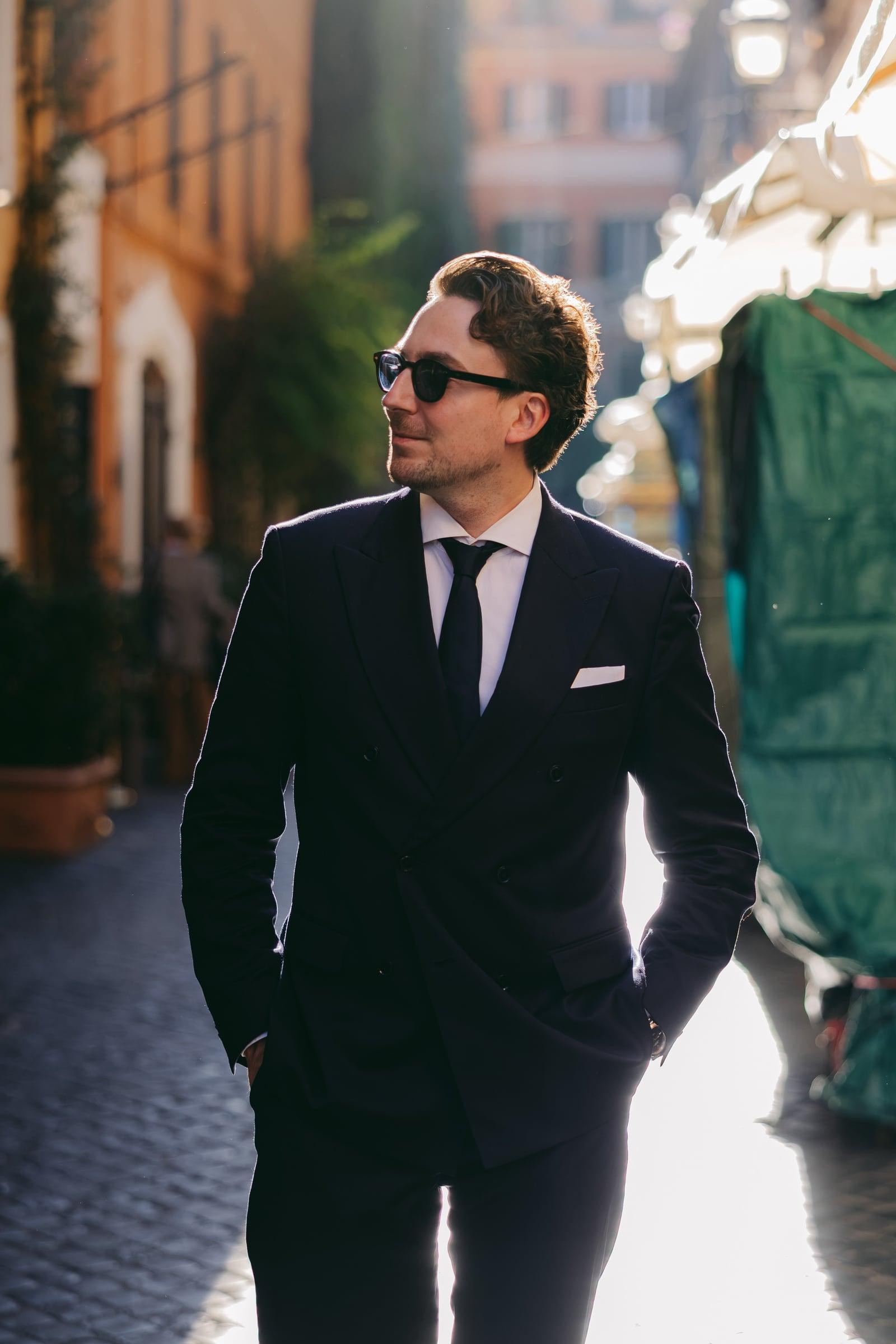
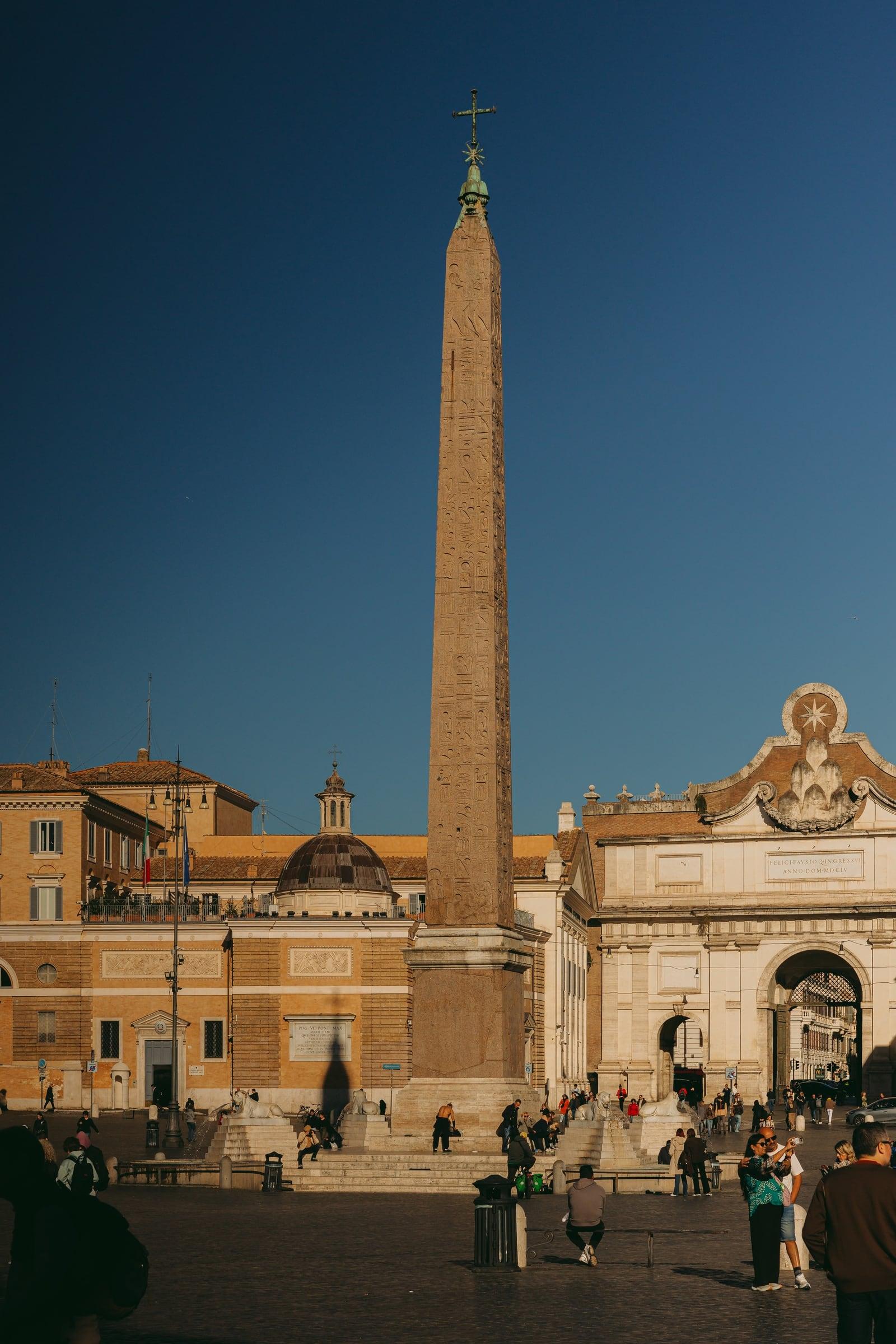
Pl. 73–75 · A Roman morning: Michel, then Marcel, in the same street; the obelisk in Piazza del Popolo.
Pl. 76
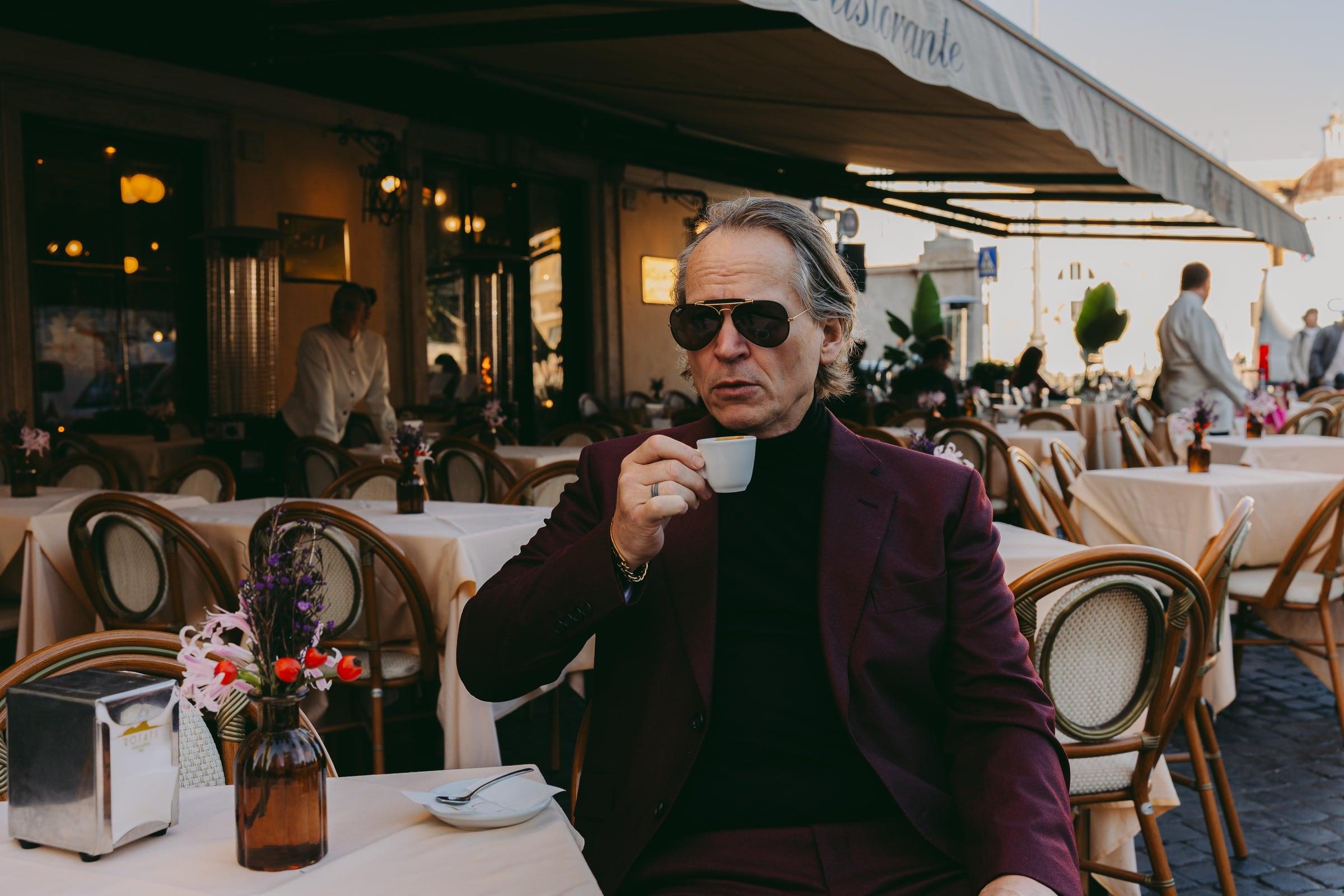
Coffee was at a café with wicker chairs and an awning, the first table on the street. Michel drank it the Roman way, quickly, and then sat for another quarter of an hour anyway.
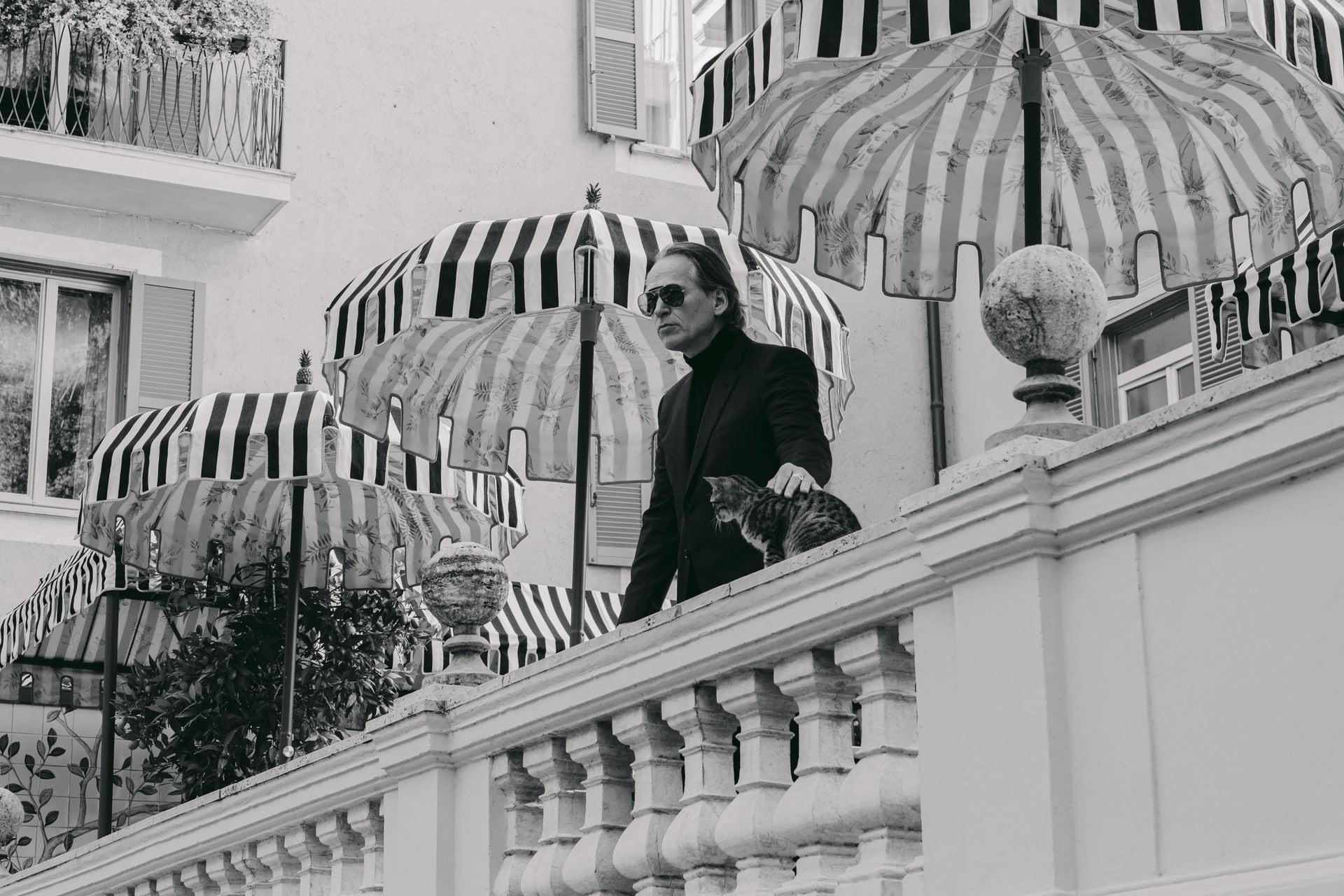
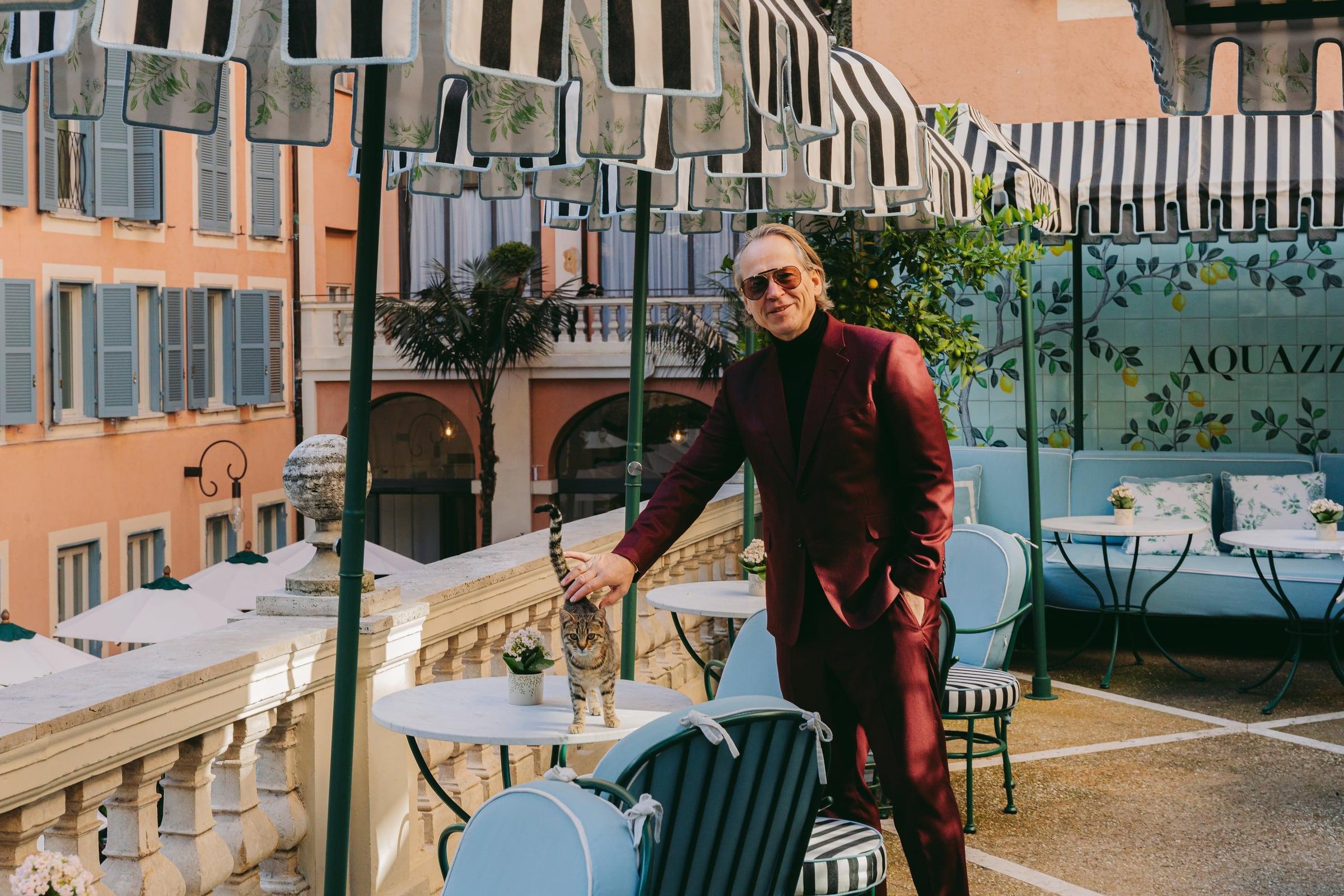
Pl. 77–79 · Back at the hotel, the terraces.
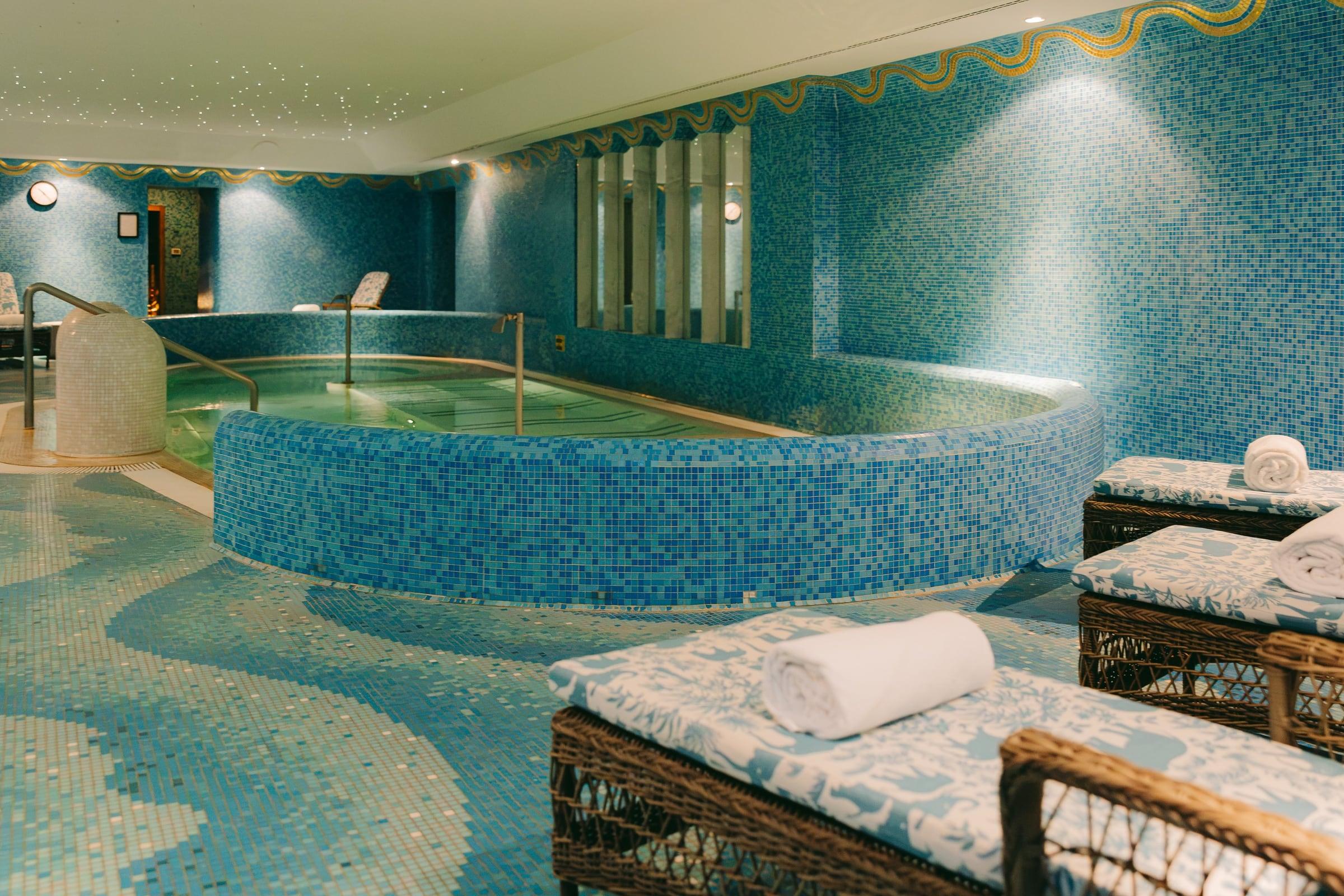
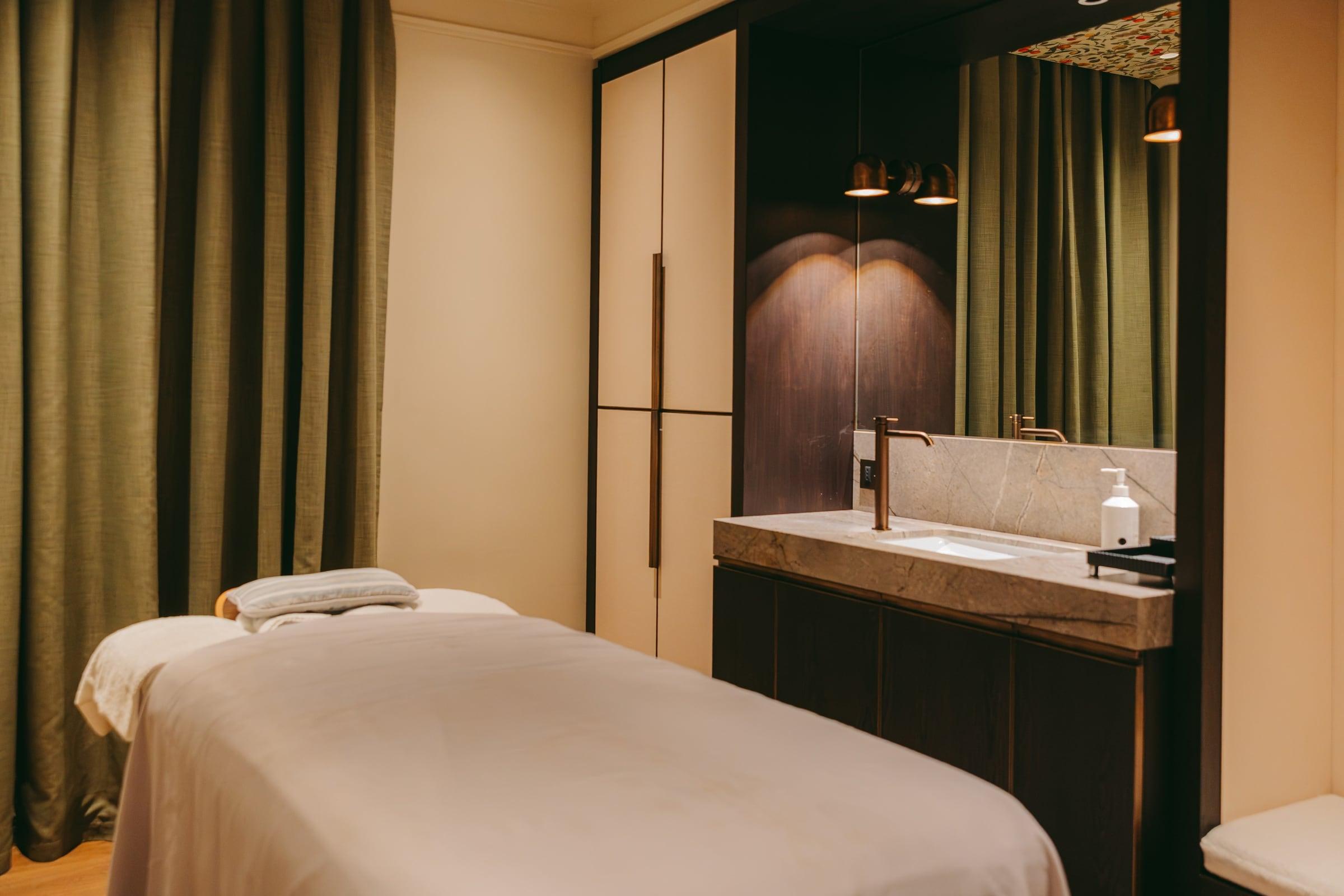
Pl. 80–81 · The hotel spa.
Late in the morning we crossed to Palazzo Bonaparte, where Kandinsky was hanging in dark rooms lit only on the paintings. Four days earlier we had seen him on blue walls in Munich. The colours had not changed; the city around them had.
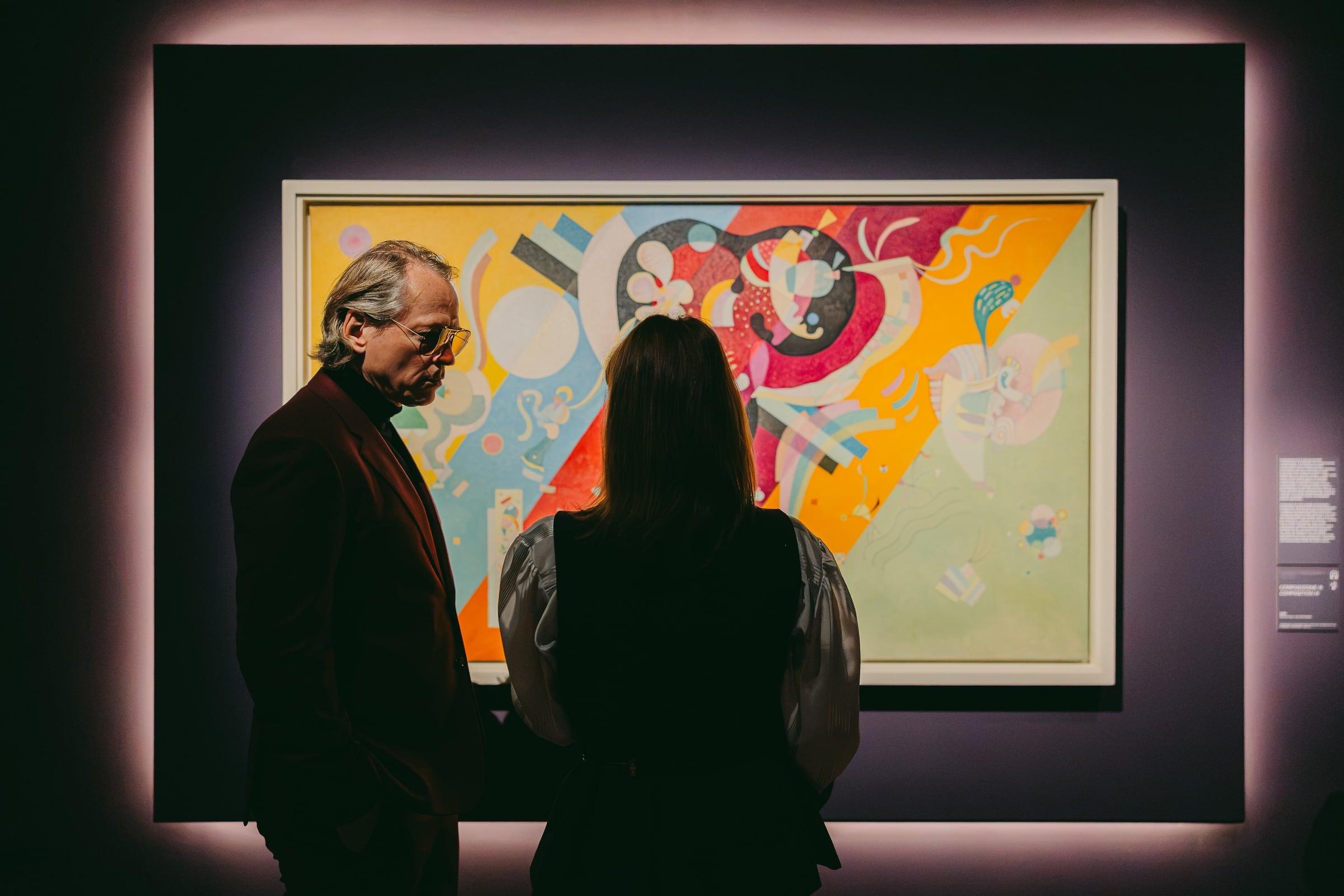
Pl. 82 · Kandinsky at Palazzo Bonaparte.
Pl. 83
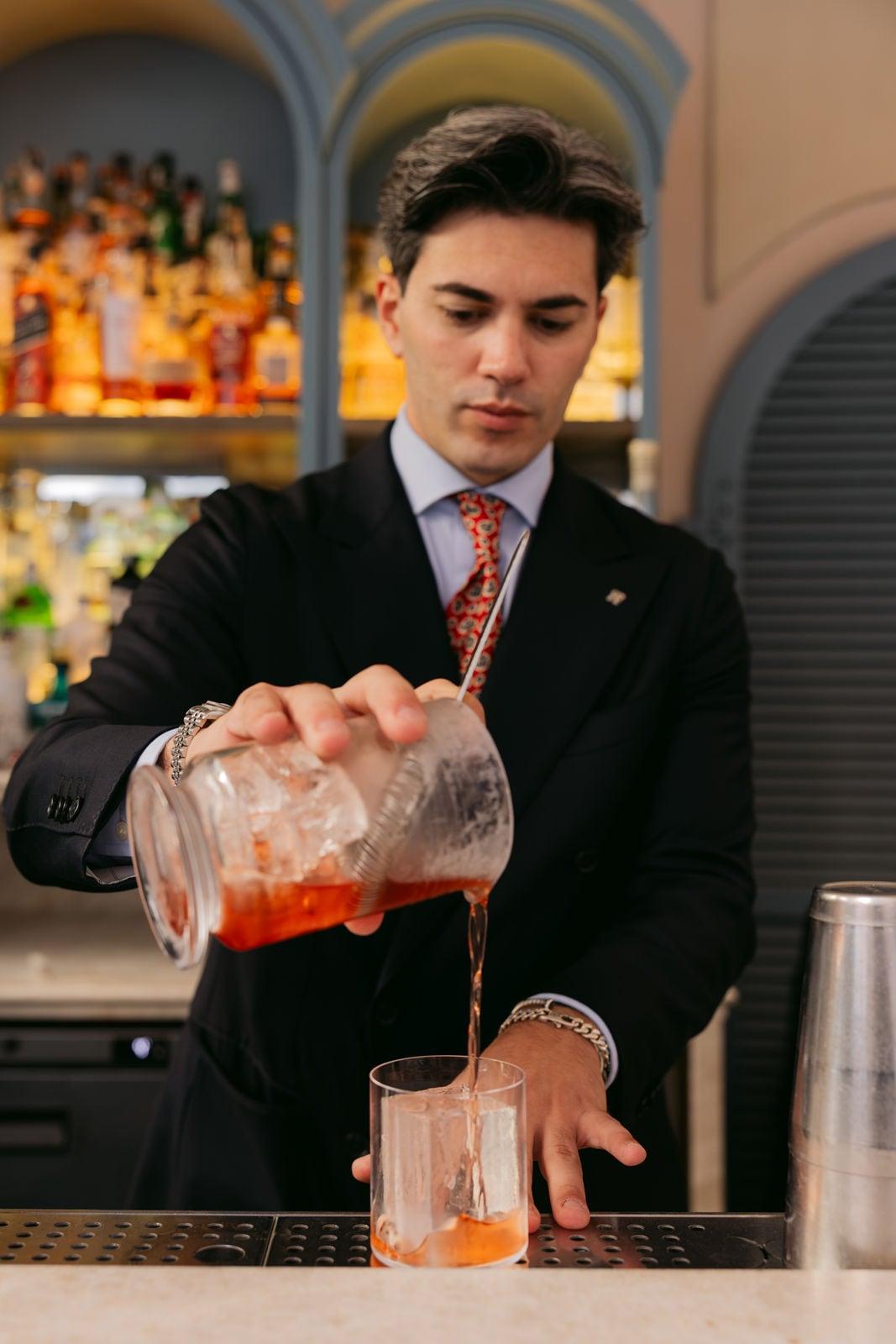
At the Stravinskij Bar, back at the hotel, a young bartender in a dark suit stirred a drink with the concentration of a watchmaker. It came in a heavy tumbler with a slice of fig.
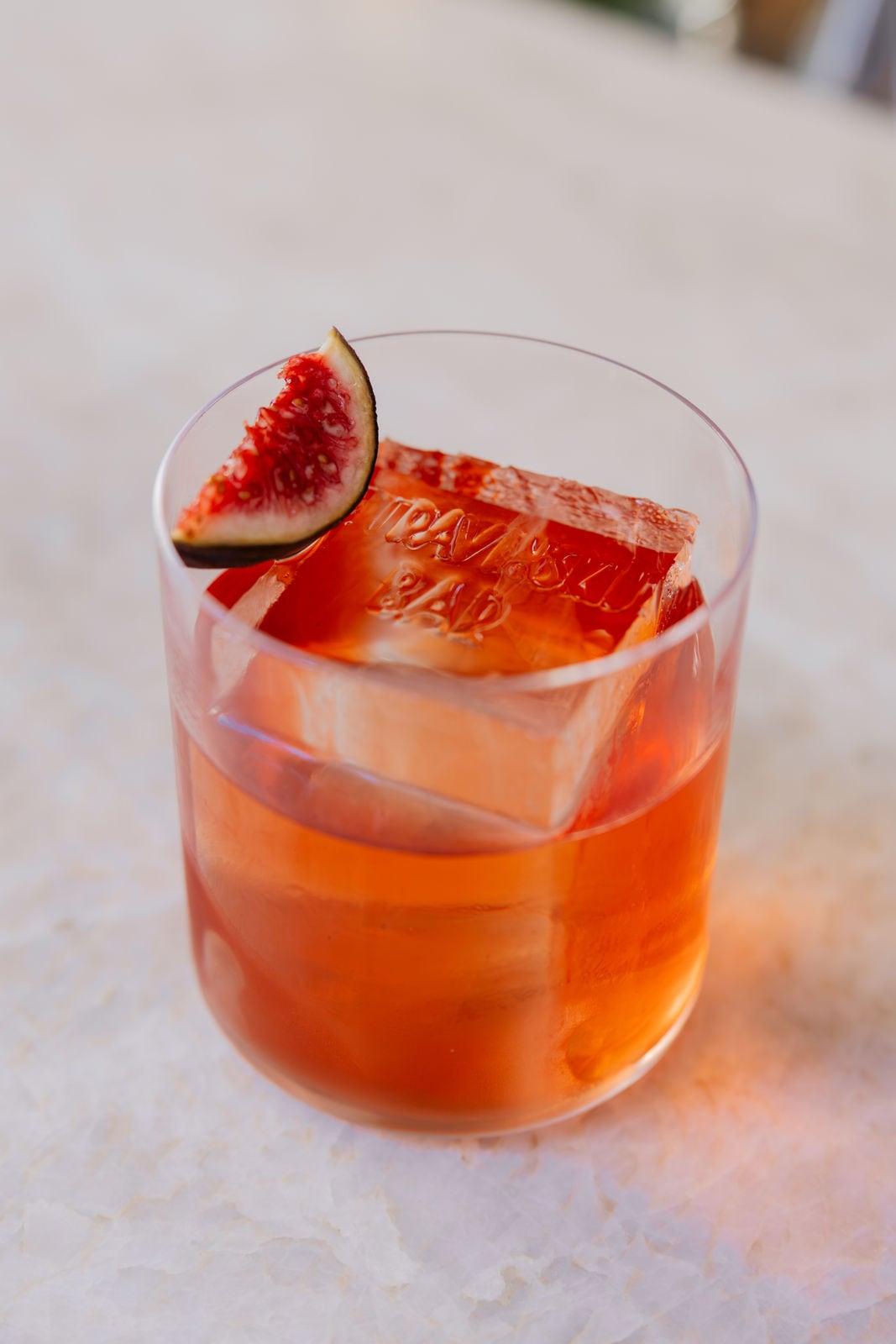
Pl. 84
Pl. 85 · The terraced garden in the afternoon.
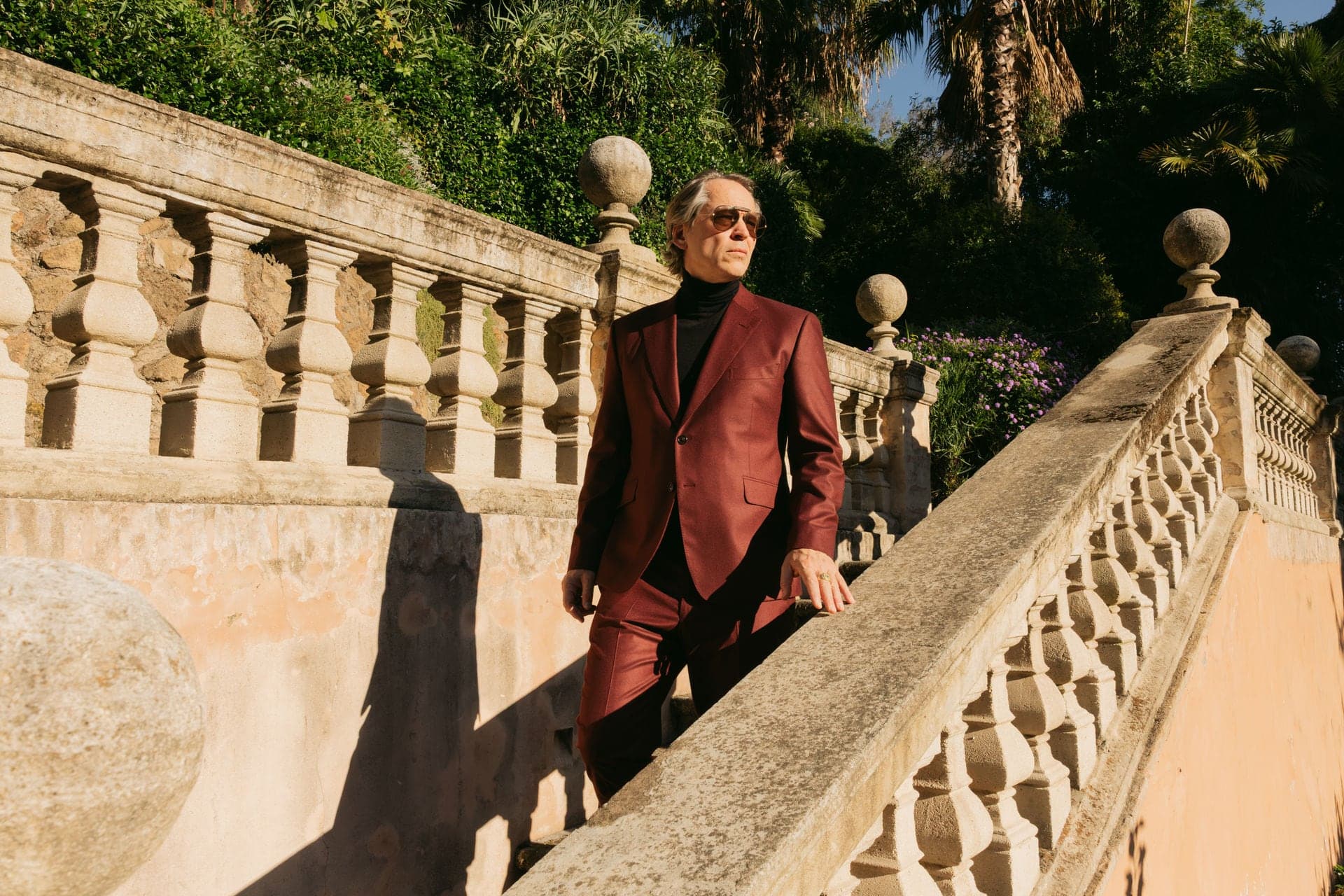
In the afternoon Michel put on the burgundy suit again and we went to the Colosseum, which in the late afternoon is backlit and almost too much. Then along the ochre walls of the streets behind it, past the Forum in the low sun, and up to look down on Piazza del Popolo as the light went.
Pl. 86
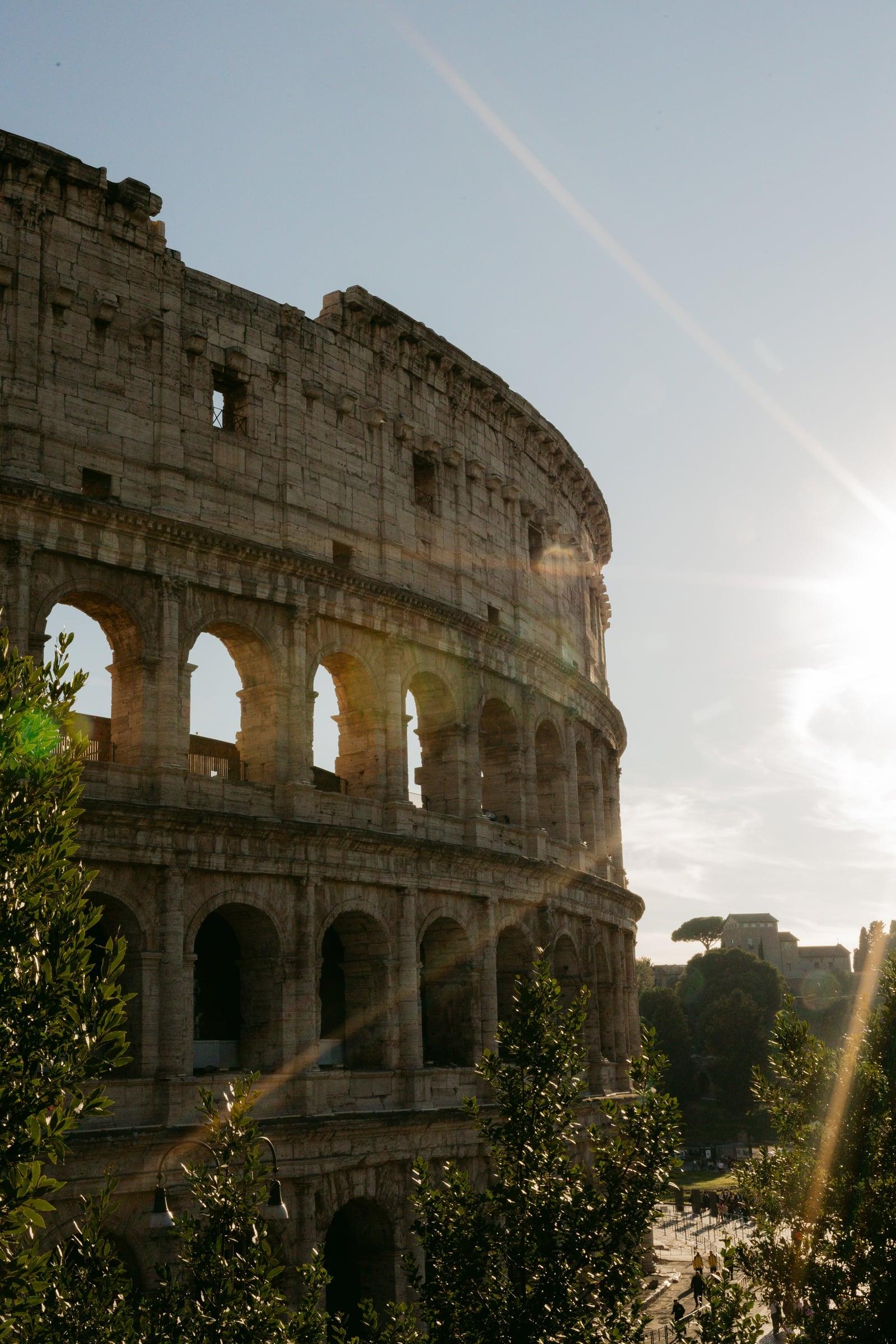
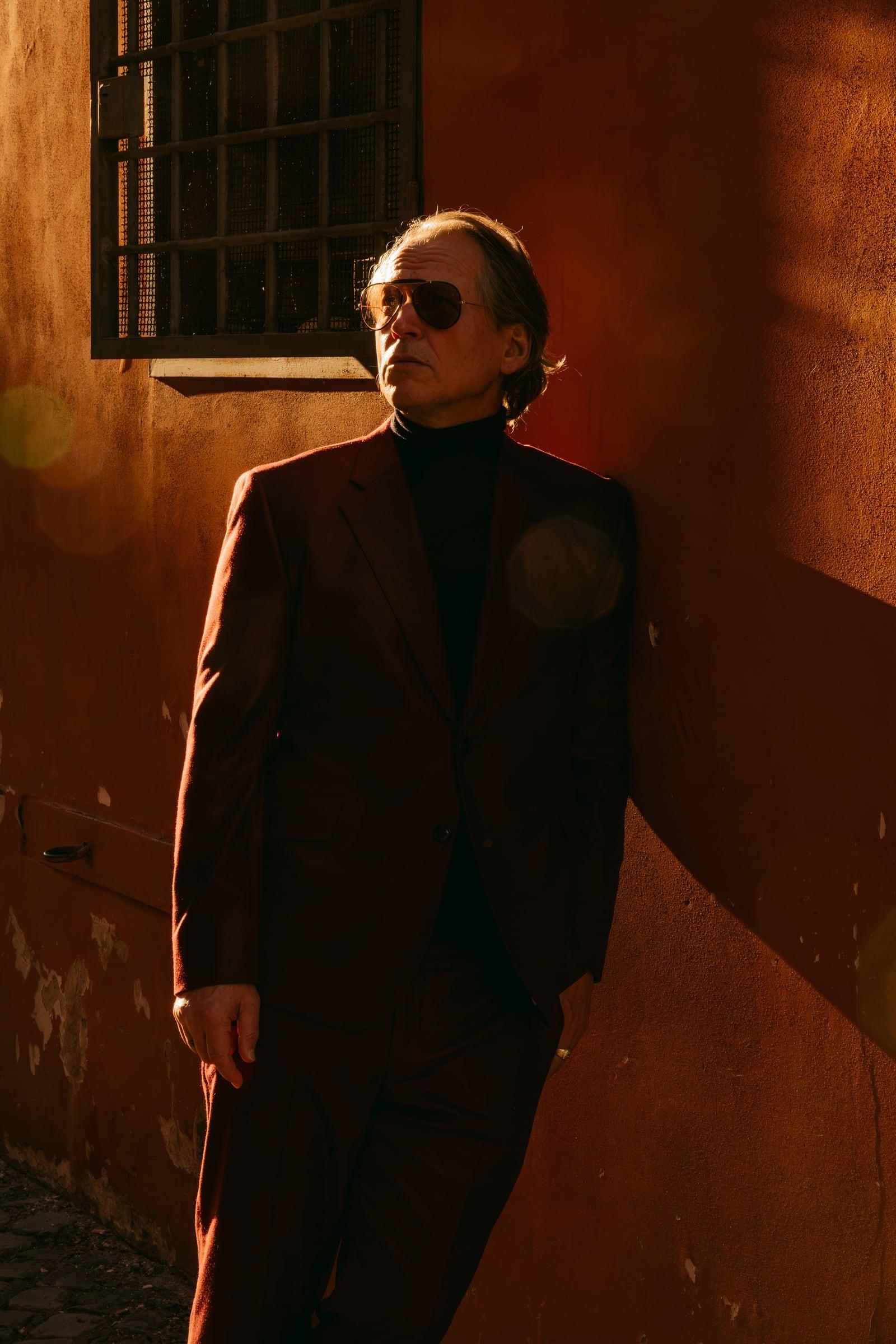
Pl. 87–88 · The Colosseum; an ochre wall around the corner.
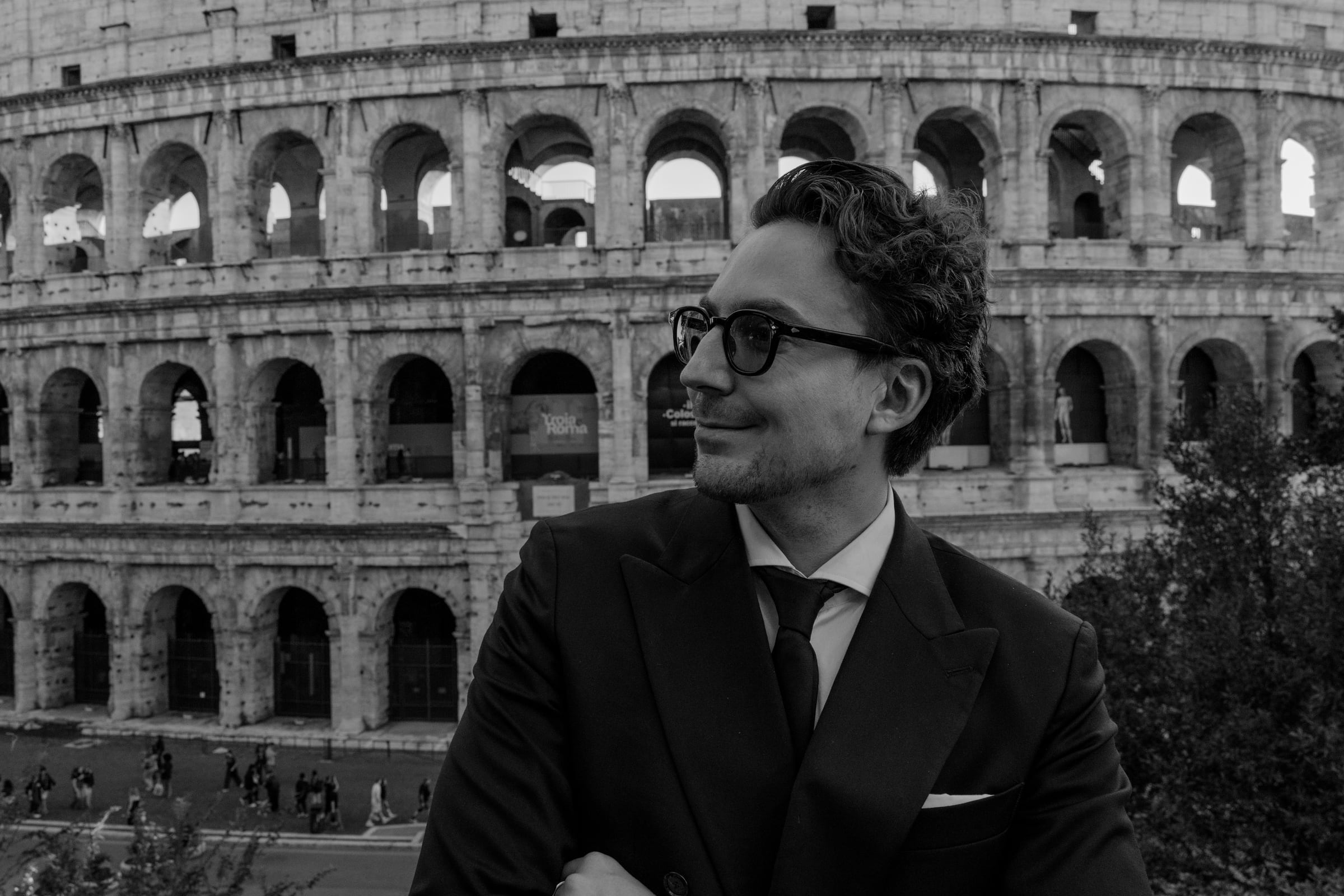
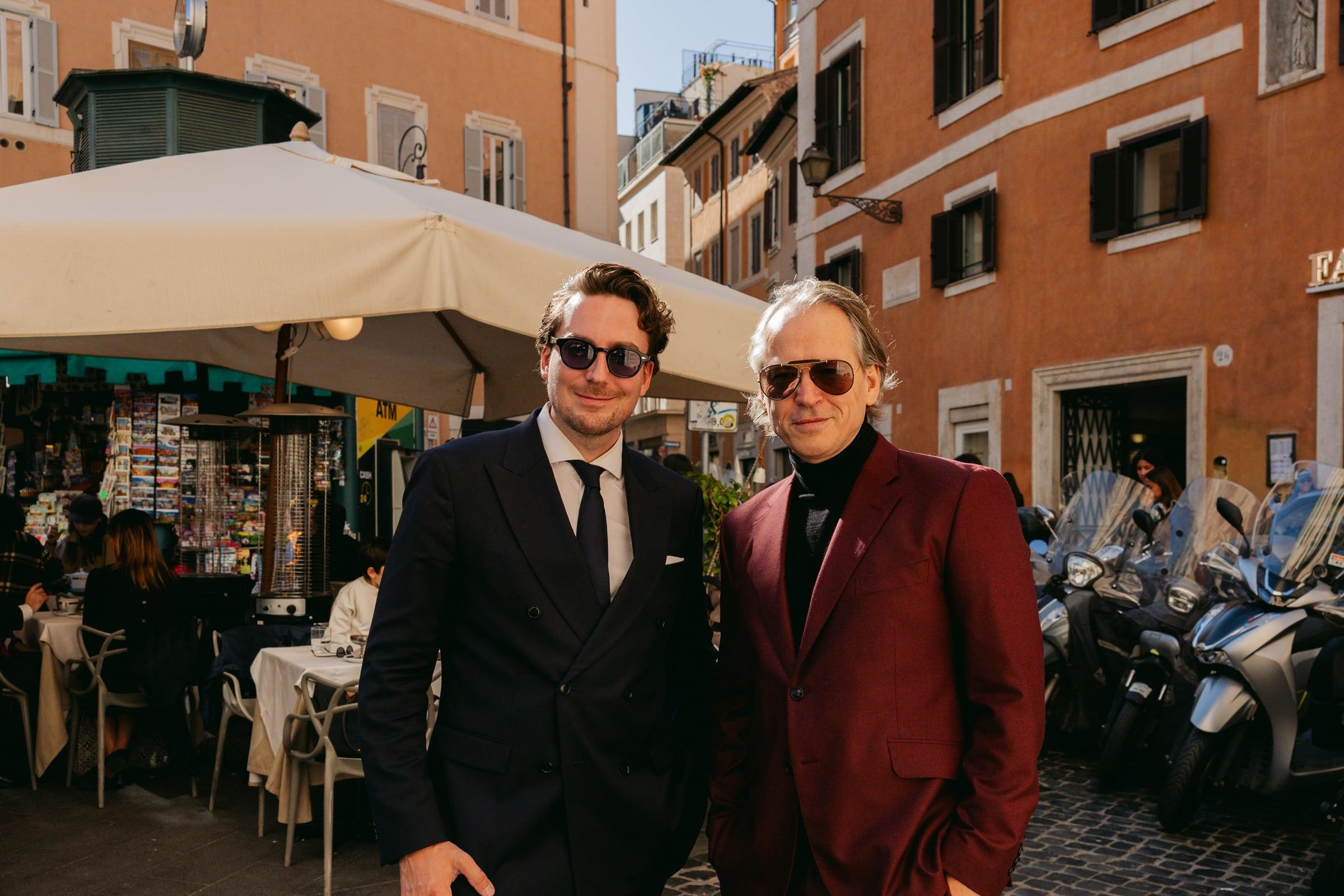
Pl. 89–90 · For once in front of the camera: Marcel at the Colosseum, and the two of us in Rome.
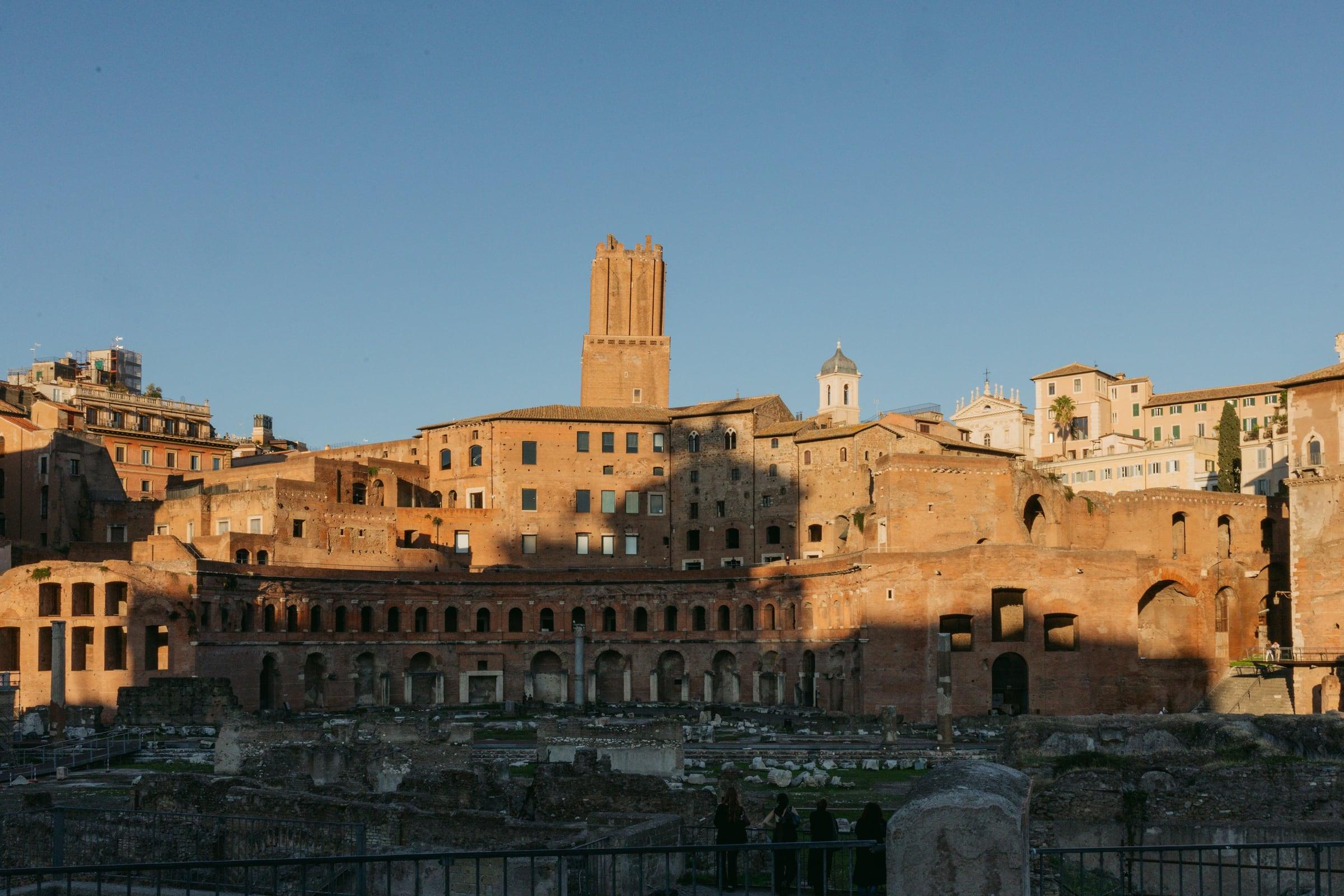
Pl. 91 · The Forum and Trajan's Market.
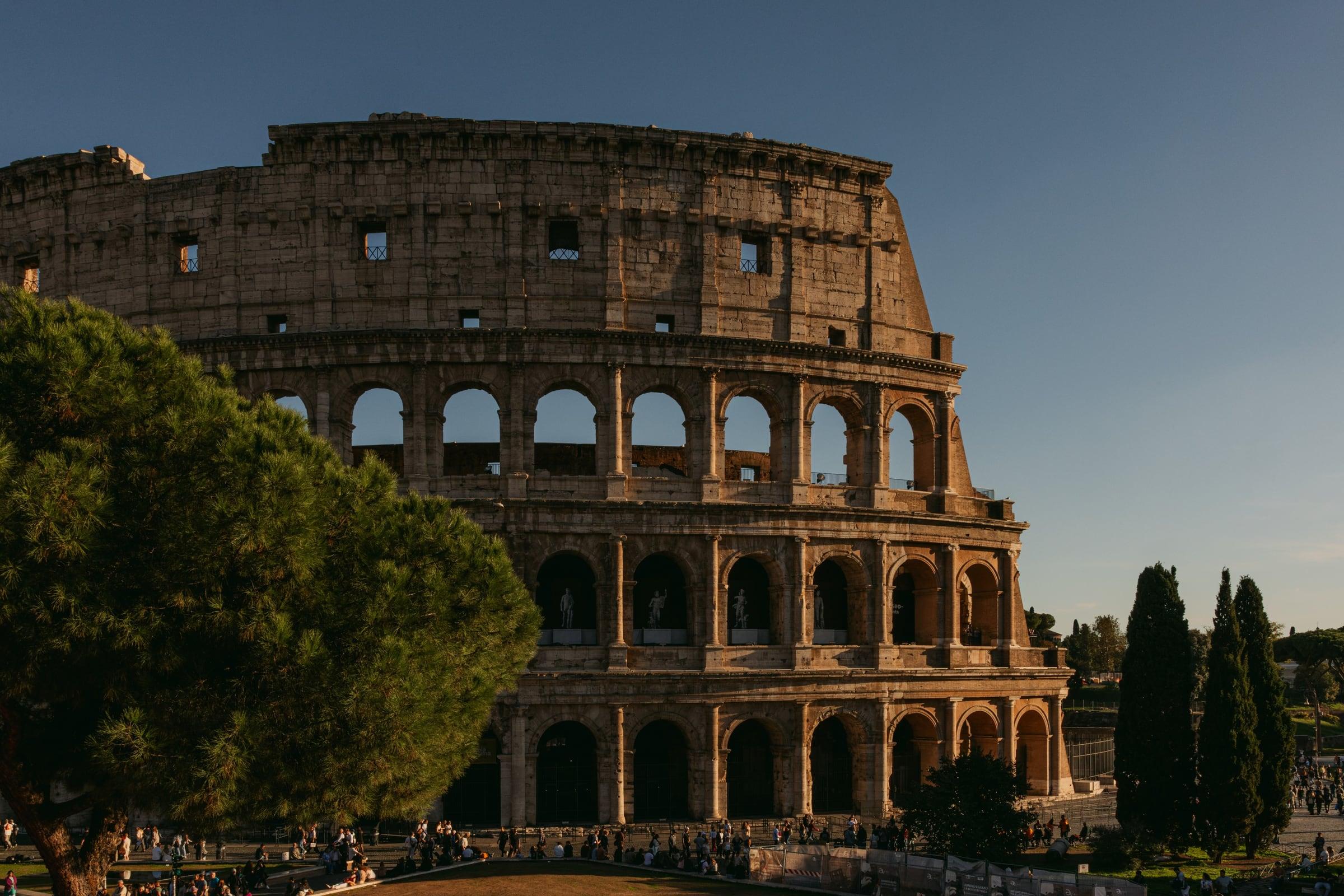
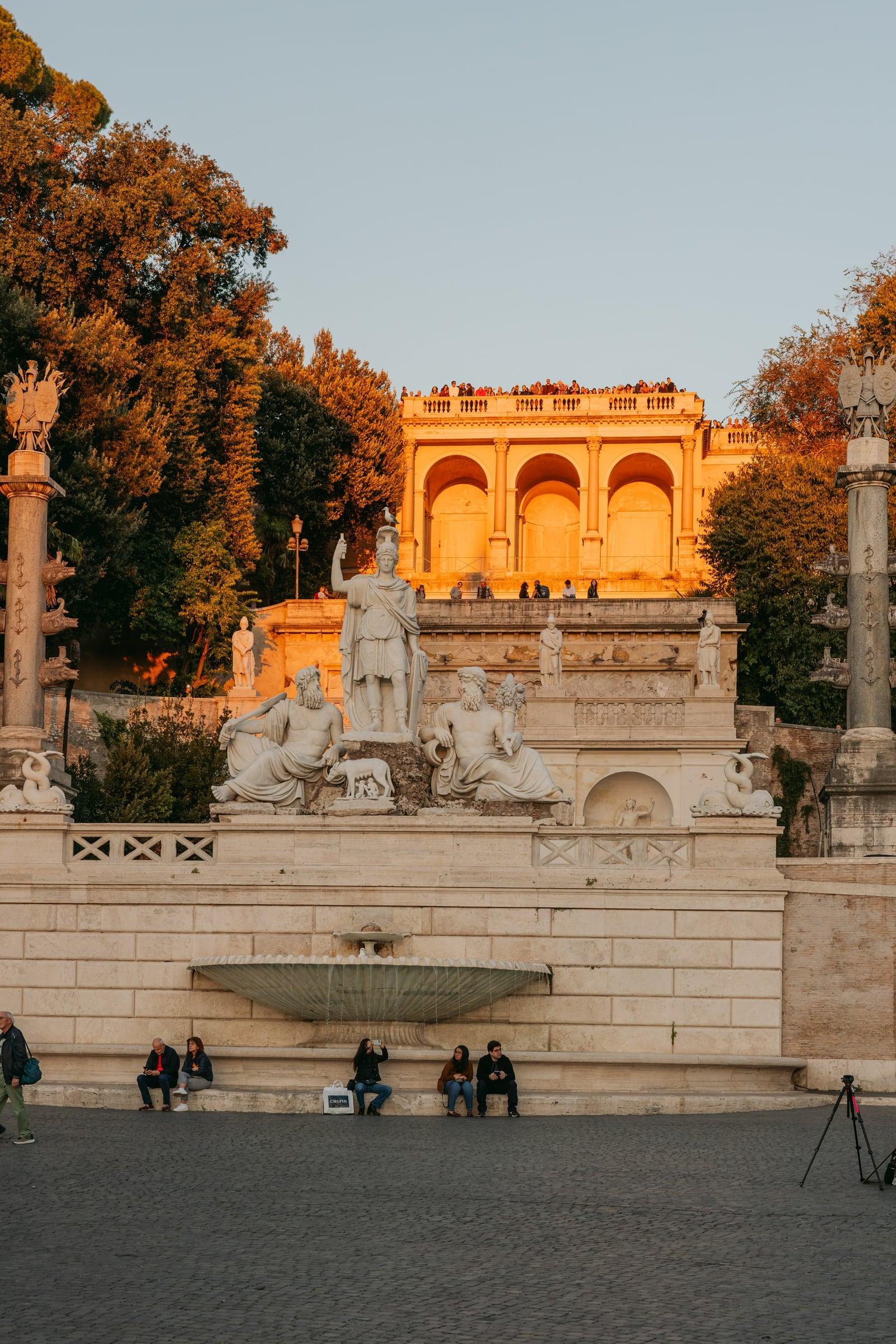
Pl. 92–93 · The Colosseum; Piazza del Popolo at five.
The last dinner was late, at a trattoria a few streets away, at a table near the door. Michel wore a red jacket and ordered without looking at the menu.
The next morning we had breakfast on the terrace under the umbrellas, in white shirts, with nowhere to be until the car came. Six nights earlier Michel had been standing on an airport terrace in a camel coat. The old Grand Tour ended in Rome too. Some things should not be improved upon.
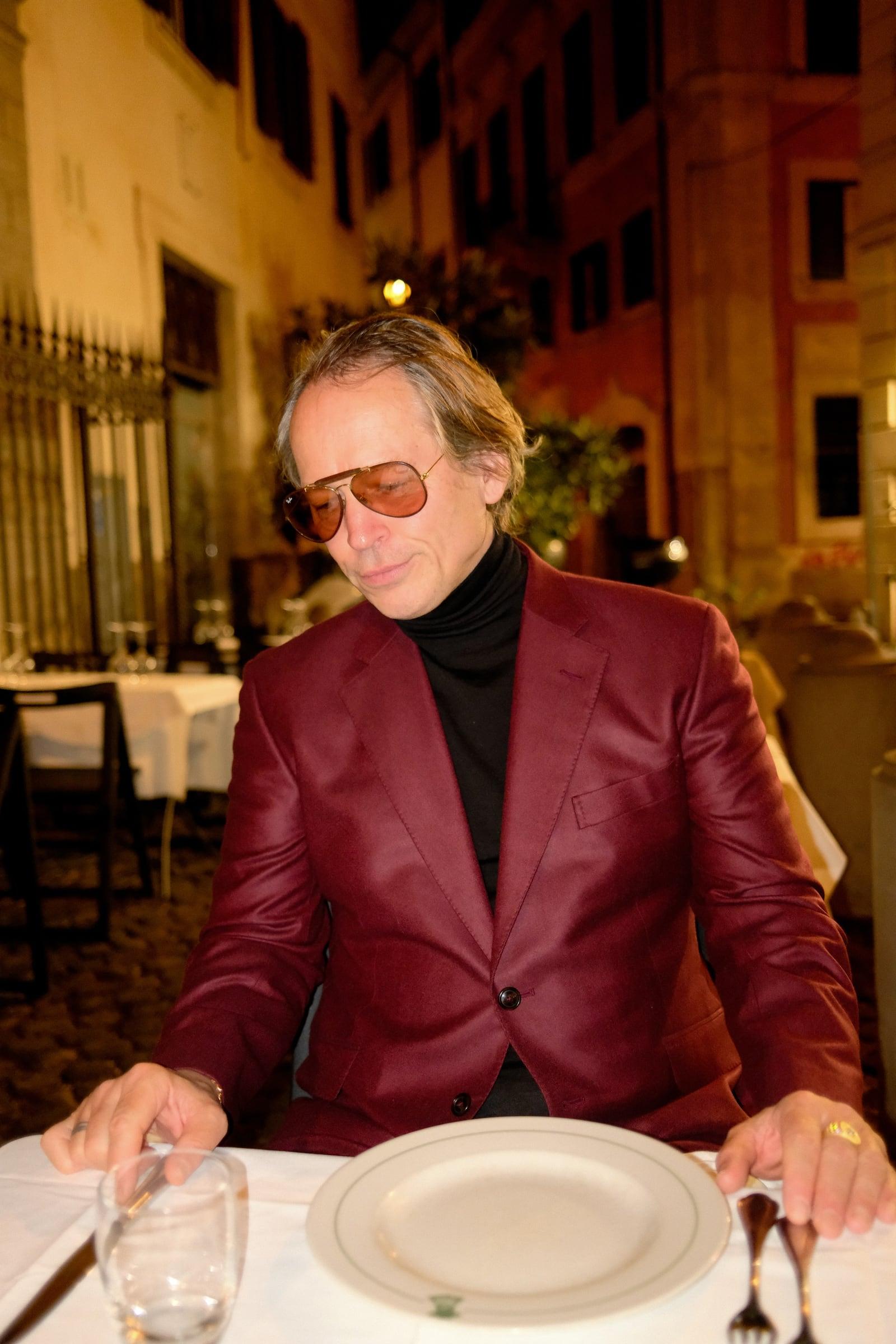
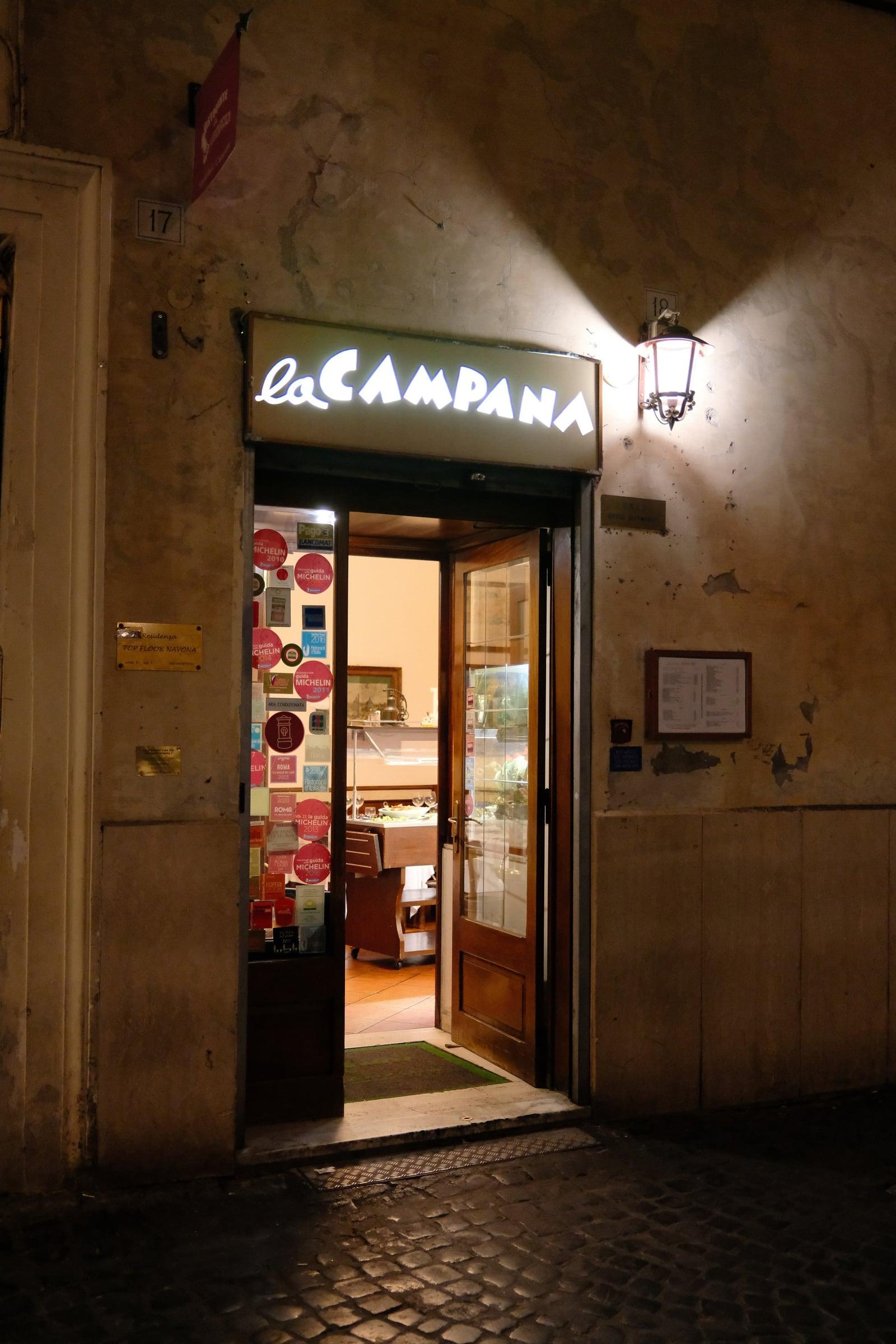
Pl. 94–95 · The last dinner.
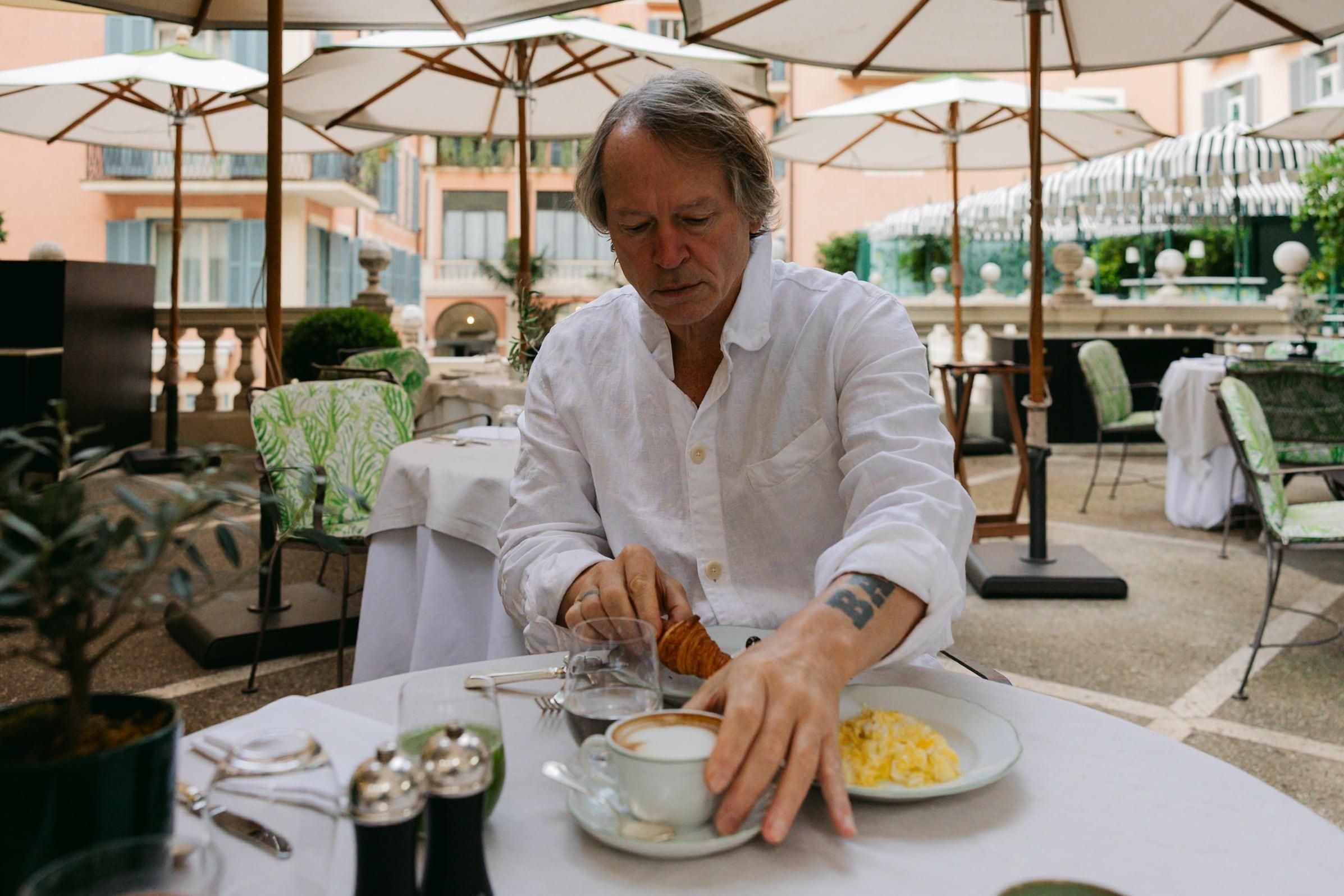
Pl. 96 · The last morning, Friday 30 October.